



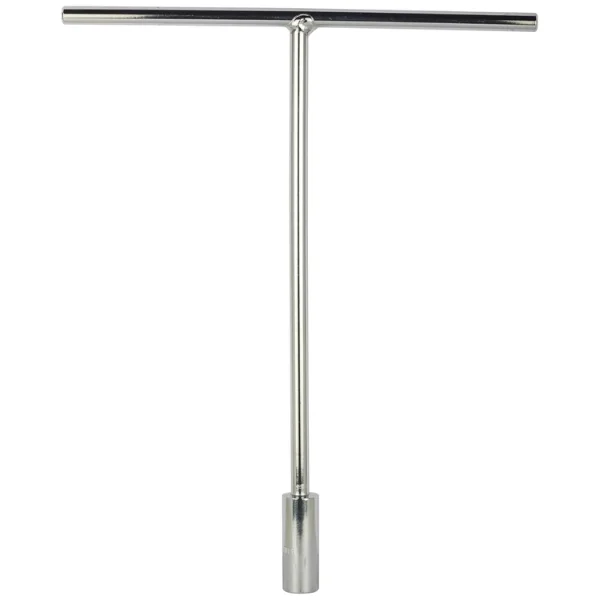
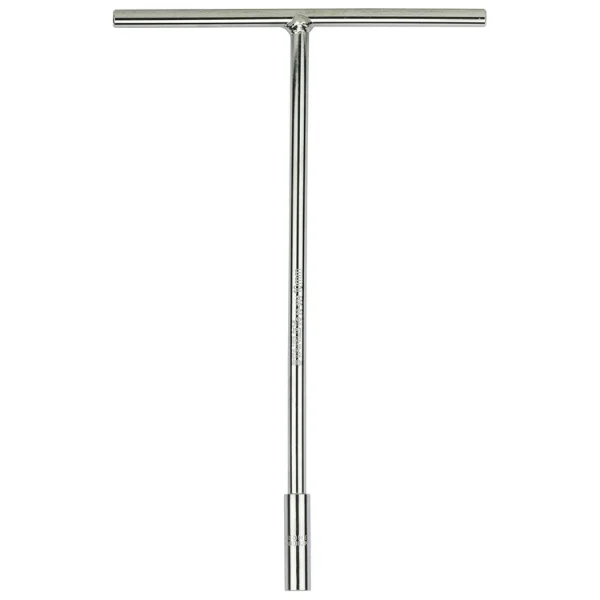
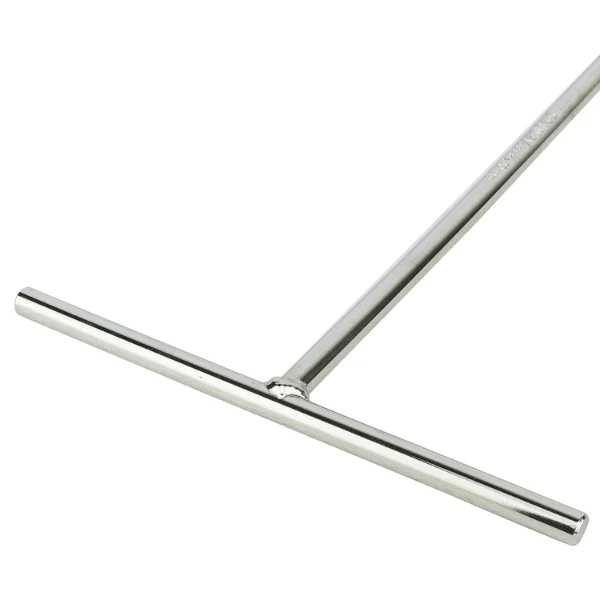
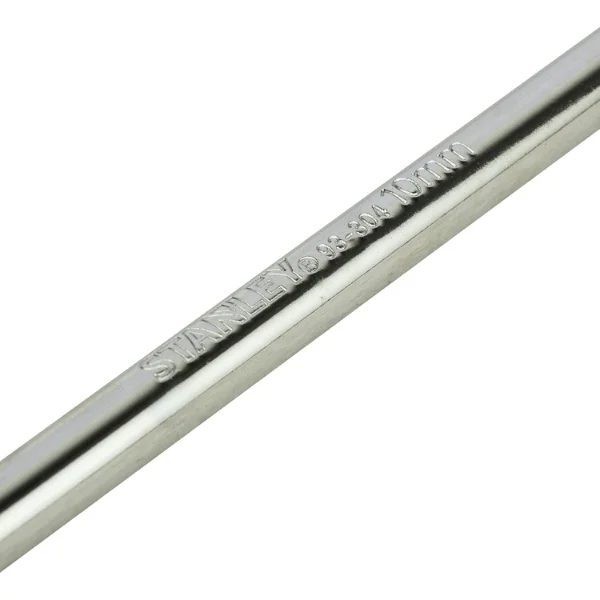
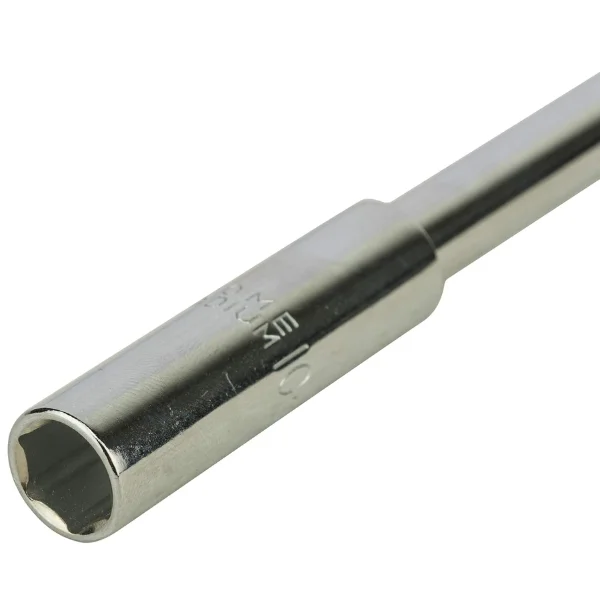
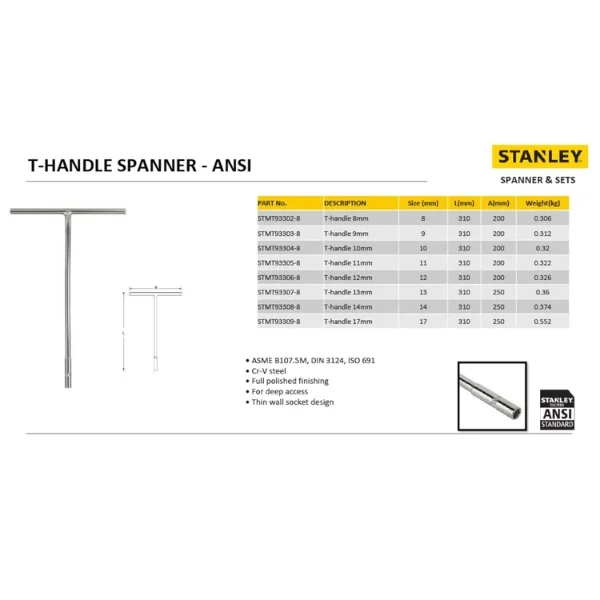



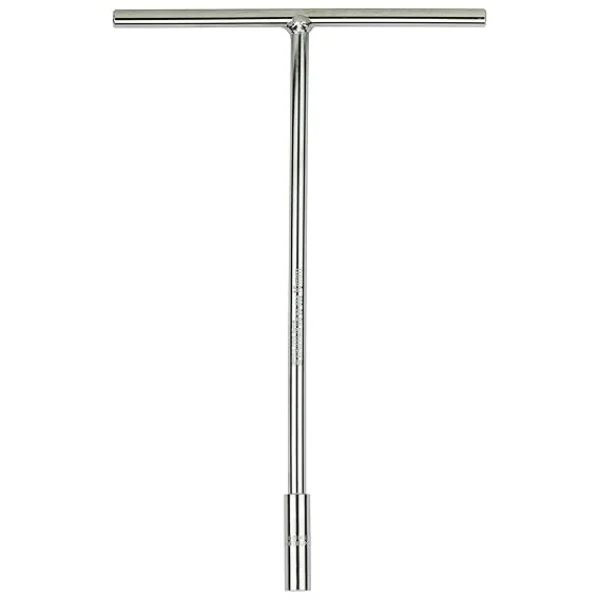
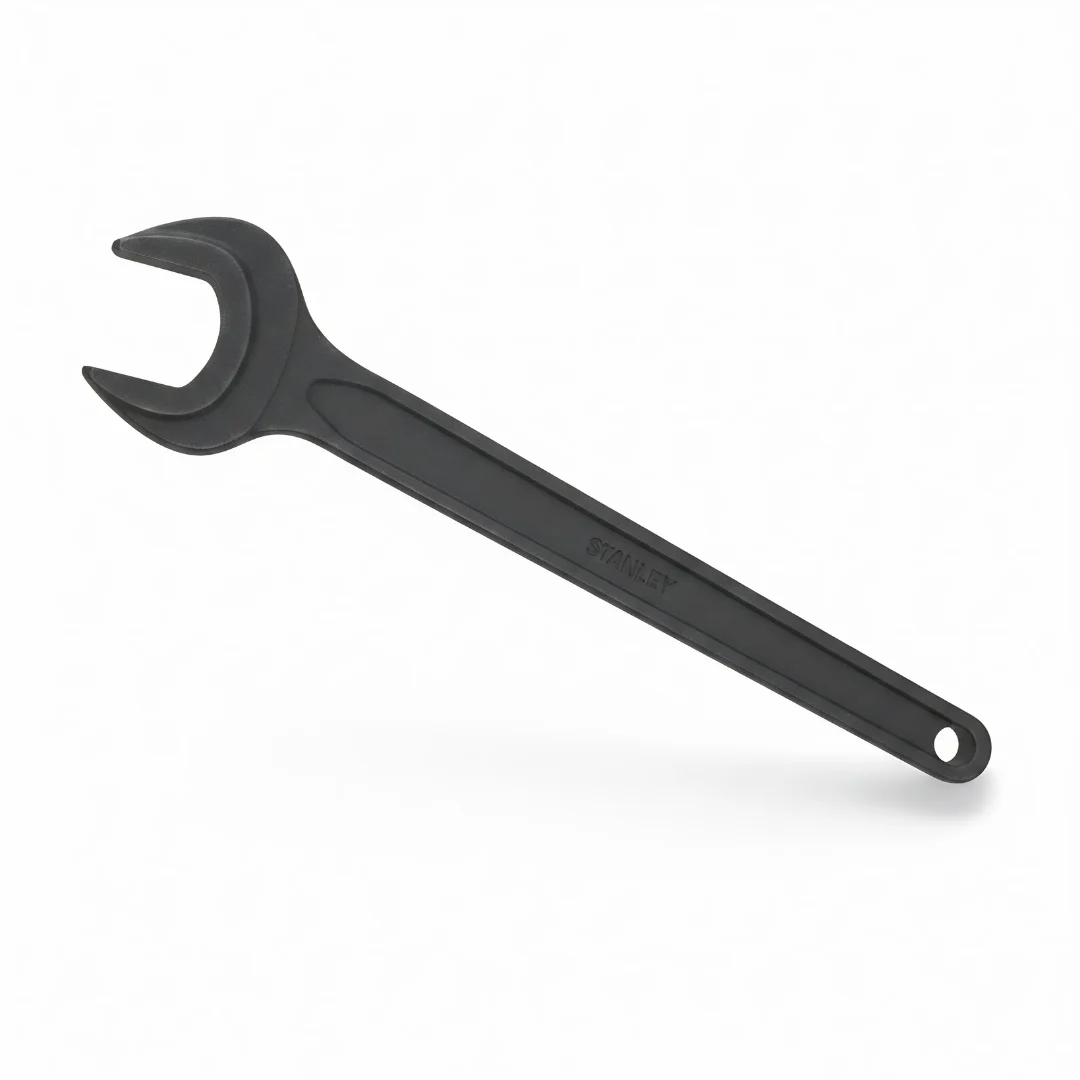
The T-handle configuration provides increased leverage and grip stability compared with conventional spanners, enabling technicians to tighten or loosen fasteners in automotive, mechanical, and industrial maintenance environments.
Application Context & Use Cases
The tool is typically selected when technicians require higher torque control with manual handling in confined or repetitive maintenance tasks.
Industrial Maintenance
Maintenance teams use T-handle spanners for equipment servicing where fasteners must be tightened or loosened repeatedly with controlled leverage. The cross-handle design distributes torque across both hands, reducing wrist strain.
Typical Environments
- manufacturing plants
- machine assembly lines
- equipment servicing departments
- maintenance workshops
Automotive Repair
Automotive technicians frequently require 9 mm tools during servicing of small mechanical assemblies.
Example Applications
- engine component servicing
- vehicle accessory installation
- motorcycle maintenance
- brake or sensor assembly work
Machinery Installation
During installation of industrial equipment, technicians often tighten multiple fasteners sequentially. The T-handle configuration allows faster rotation compared with traditional wrench designs.
Typical Installation Tasks
- machine guard mounting
- mechanical frame assembly
- small equipment installation
- electrical enclosure fastening
Selection Guidance
Selecting the correct T-handle spanner ensures both fastener protection and operational efficiency.
Size Verification
Always confirm that the fastener head matches 9 mm exactly.
Using an incorrect size may cause:
- fastener rounding
- tool slip
- mechanical damage
Tool Clearance
Check available working space around the fastener.
The T-handle design requires lateral space for handle rotation.
Torque Requirement
For small fasteners requiring moderate torque, T-handle spanners provide better leverage than straight tools.
For high-torque applications, consider a socket wrench instead.
Capacity / Calculation Example
Torque application depends on handle length and applied force.
Basic Torque Calculation
Torque = Force × Lever Arm Length
If a technician applies 20 N of force on a handle with 0.12 m lever length:
Torque = 20 × 0.12
Torque = 2.4 Nm
This leverage allows controlled tightening without over-stressing small fasteners.
Failure Conditions & Misuse Risks
Incorrect use of a T-handle spanner can lead to tool damage or fastener failure.
Over-Torque Application
Applying excessive force may:
- deform the fastener
- damage threads
- stress the tool head
Incorrect Fastener Size
Using the 9 mm tool on mismatched fasteners may cause slipping and rounding.
Hammer Impact
T-handle spanners are not designed for impact force. Striking the handle with a hammer may damage the tool.
Extension Use
Adding pipes or extensions to increase leverage can exceed the design torque limit.
Material / Compatibility Table
|
Fastener Type |
Compatibility |
Notes |
|
Hex bolts |
Compatible |
Correct size required |
|
Hex nuts |
Compatible |
Standard mechanical fastening |
|
Precision machine screws |
Compatible |
Use controlled torque |
|
Corroded fasteners |
Limited |
Penetrating oil recommended |
|
Impact fasteners |
Not suitable |
Use impact tools instead |
Operational Handling & Installation Considerations
Proper handling ensures both safety and tool longevity.
Grip Position
Hold the cross handle evenly to distribute torque across both hands.
Fastener Alignment
Ensure the tool head fully engages the fastener before applying torque.
Controlled Rotation
Use smooth rotational motion instead of sudden force.
Maintenance
To extend service life:
- clean after use
- store in dry tool storage
- avoid exposure to corrosive chemicals
Commercial Clarity
Lead Time
Most standard hand tools are maintained in regular distribution inventory. Dispatch timelines depend on order quantity and delivery location.
Dispatch Capability
Pan-India dispatch is typically arranged through:
- courier logistics
- transport services for bulk shipments
Minimum Order Quantity
Single-unit supply may be available depending on order value. Bulk procurement is common for workshops and maintenance teams.
Customization Availability
Standard STANLEY tools are supplied as manufactured. Custom modifications are generally not applicable.
Compliance / Certification
STANLEY tools are manufactured according to professional tool manufacturing standards and quality controls typical for industrial hand tools.
Tender Compatibility
Bulk supply may be aligned with procurement documentation requirements where necessary.
Procurement Process
To ensure accurate quotation and dispatch planning, buyers should provide the following information when enquiring.
Required Information
- product model: STMT93303-8
- quantity required
- delivery location
- procurement type (workshop / distributor / industrial use)
- urgency level
Providing these details helps suppliers confirm stock availability and dispatch timelines.
Comparison Table
|
Feature |
T-Handle Spanner |
Standard Spanner |
Socket Wrench |
|
Torque leverage |
Moderate |
Low |
High |
|
Speed of rotation |
Fast |
Moderate |
Moderate |
|
Fastener size |
Fixed |
Fixed |
Interchangeable |
|
Access in confined space |
Moderate |
Good |
Good |
|
Repetitive fastening |
Efficient |
Less efficient |
Efficient |
Selection Checklist
Before purchasing the STMT93303-8 T-Handle Spanner, confirm the following:
- Fastener size is 9 mm
- Work area allows T-handle rotation
- Required torque is within manual tool range
- Application involves maintenance or assembly tasks
- Impact tools are not required
- Standard chrome vanadium tool material is acceptable
This checklist helps ensure the tool matches the intended application.
High-Intent FAQs
What is the primary use of the STMT93303-8 T-Handle Spanner?
The tool is used for tightening or loosening 9 mm fasteners during equipment assembly, mechanical servicing, and automotive maintenance. The T-handle provides improved leverage and control compared with straight spanners.
Is the STMT93303-8 suitable for industrial maintenance?
Yes. T-handle spanners are commonly used in maintenance departments, workshops, and installation teams where repetitive fastening tasks require controlled manual torque.
Can this tool be used for high-torque applications?
This tool is intended for moderate manual torque. For heavy torque applications, a socket wrench or ratchet system is generally more suitable.
Is the tool compatible with all 9 mm fasteners?
It is compatible with standard hex fasteners of 9 mm size. Fastener condition and alignment should be checked before applying torque.
Can the handle be extended to increase torque?
Extensions or pipes should not be used. Increasing leverage beyond the design limits may damage both the tool and the fastener.
Is the tool suitable for confined spaces?
The T-handle requires lateral rotation space. For tight areas, a socket wrench or compact spanner may be more appropriate.
How should the tool be maintained?
Clean the tool after use, store it in dry conditions, and avoid corrosive exposure. Proper storage ensures longer service life.
Technical Configuration Overview
Technical Specifications
Product Specification Table
Parameter |
Specification |
|
Product Model |
STMT93303-8 |
|
Brand |
STANLEY |
|
Tool Type |
T-Handle Spanner |
|
Size |
9 mm |
|
Drive Type |
Fixed head |
|
Material |
Chrome Vanadium Steel |
|
Finish |
Corrosion-resistant plated finish |
|
Handle Configuration |
T-shape ergonomic handle |
|
Typical Application |
Mechanical fastening |
|
Usage Environment |
Industrial / Automotive |
Structural Characteristics
T-Handle Configuration
The horizontal handle bar increases torque leverage and allows two-hand operation when required.
Chrome Vanadium Construction
Chrome vanadium steel provides a balance of strength, durability, and corrosion resistance, which is standard for professional hand tools.
Fixed-Size Head
The fixed head ensures dimensional accuracy and prevents size variation common in adjustable tools.







Customer reviews