





Application Context & Use Cases
Large open-jaw spanners are used in environments where industrial-scale fasteners require high mechanical leverage and quick access without socket tools.
Industrial Maintenance
Maintenance teams frequently use a 55 mm open-jaw spanner when servicing:
Heavy process pumps
Industrial compressors
Structural bolt assemblies
Pipeline flanges
Power plant equipment
In these situations, bolt heads are often large and exposed, allowing open-end spanners to provide quick positioning.
Construction & Infrastructure Projects
During infrastructure projects, large spanners are required for:
Steel structure assembly
Bridge erection hardware
Tower structure installation
Crane and heavy equipment setup
The open-jaw design allows rapid engagement without removing adjacent components.
Heavy Equipment Servicing
Service workshops working on equipment such as:
Earthmoving machinery
Mining equipment
Large diesel engines
Truck axle assemblies
Often require large spanner sizes like 55 mm to handle oversized fasteners.
Selection Guidance
Selecting the correct spanner requires evaluating fastener size, access conditions, and torque requirements.
Confirm Fastener Size
A 55 mm spanner must match the exact hex dimension of the bolt or nut.
Using a smaller or larger size may cause:
Jaw slipping
Fastener rounding
Tool damage.
Evaluate Accessibility
Open-jaw spanners are suitable when:
Fastener is exposed
Socket access is restricted
Speed of engagement is important.
If the bolt is recessed or requires full contact, ring spanners or sockets may be more appropriate.
Assess Torque Requirement
Large fasteners generate significant torque during tightening or loosening.
Factors influencing torque include:
Bolt diameter
Thread friction
Surface condition.
The STMT96988 is designed for high-load industrial use, but torque should always be applied with controlled leverage.
Capacity & Real-World Calculation Example
Torque applied to large fasteners increases significantly with bolt diameter.
Example Scenario
A 55 mm hex nut is typically associated with large structural or industrial fasteners.
Assuming:
Bolt diameter: ~36–39 mm
Recommended torque range: approx. 1200–1800 Nm depending on grade.
Torque Calculation Logic
Torque = Force × Lever Arm Length
If a mechanic applies:
Force: 400 N
Spanner length: 0.6 m
Torque generated:
400 × 0.6 = 240 Nm
This means multiple leverage methods (extension bars or impact tools) may be required to reach the specified torque.
The open-jaw spanner is therefore commonly used for:
Initial positioning
Holding counter-fasteners
Secondary tightening.
Failure Conditions & Misuse Risks
Improper use of large spanners may result in tool damage or fastener failure.
Using Incorrect Size
If the jaw size is slightly larger than the fastener:
Edges of the bolt may round off
Slippage occurs under load.
Using Extension Pipes
Operators sometimes increase leverage by attaching pipes to the handle.
Risks include:
Excessive torque beyond tool design
Bending or cracking.
Misaligned Force Application
Applying torque at an incorrect angle may cause:
Jaw spreading
Bolt head deformation.
Alternative Tools May Be Required When
Fastener is recessed
Torque accuracy is critical
Space constraints exist.
In these cases, socket or torque tools are more appropriate.
Material & Compatibility Table
|
Fastener Material |
Compatibility |
Notes |
|
Carbon steel bolts |
Fully compatible |
Common in industrial structures |
|
Alloy steel bolts |
Compatible |
High torque applications |
|
Stainless steel fasteners |
Compatible |
Care needed to prevent galling |
|
Brass fasteners |
Use caution |
Softer material may deform |
|
Aluminum fasteners |
Not recommended |
Risk of rounding edges |
Operational Handling & Installation Considerations
Large spanners must be handled carefully to maintain safety and mechanical efficiency.
Positioning
Ensure the spanner sits fully against the hex surface before applying torque.
Partial engagement increases the risk of slipping.
Direction of Force
Whenever possible:
Pull the spanner toward the operator
Maintain body balance.
This reduces injury risk if the tool slips.
Multi-Tool Operations
Large fasteners often require:
One tool holding the bolt head
Another turning the nut.
The STMT96988 is commonly used for counter-holding operations.
Commercial Clarity
Industrial buyers often require procurement clarity before submitting enquiries.
Lead Time
Typical dispatch depends on:
Current stock availability
Order quantity.
Standard tools such as this model are commonly available for short dispatch cycles.
Dispatch Capability
Supply support available for Pan-India industrial buyers, including:
Manufacturing facilities
Maintenance contractors
Industrial distributors.
Minimum Order Quantity (MOQ)
Small quantity procurement is possible for maintenance use, while bulk orders may be required for distributor supply.
Customization Availability
This product is a standard manufacturer specification tool and is not customizable.
Compliance / Certification Clarity
Product specifications follow the original manufacturer’s engineering standards established by Stanley Black & Decker.
Tender Compatibility
Industrial procurement and tender-based sourcing may require:
Product specification confirmation
Brand and model verification.
Documentation support may be required depending on procurement policies.
Procurement Process
Industrial buyers should provide key information when requesting quotations.
How to Enquire
Provide the following:
Product name and model
Quantity required
Delivery location
Organization details.
Typical Procurement Flow
Model confirmation
Quantity confirmation
Stock availability check
Quotation issuance
Dispatch arrangement.
Comparison Table – Open-Jaw vs Common Alternatives
|
Tool Type |
Accessibility |
Torque Control |
Best Use |
|
Open-Jaw Spanner |
High |
Moderate |
Quick access fasteners |
|
Ring Spanner |
Moderate |
High |
High torque fastening |
|
Combination Spanner |
Moderate |
Moderate |
Mixed use |
|
Socket Wrench |
Limited access |
Very high |
Precision torque work |
Open-jaw spanners remain preferred when fast access and large bolt engagement are required.
Selection Checklist
Before purchasing a 55 mm spanner, verify the following:
Fastener hex size is exactly 55 mm
Application requires open-end access
Tool will be used for industrial mechanical work
Torque loads fall within manual tool range
Manufacturer model number is confirmed
Supplier provides genuine branded product
Completing this checklist ensures the tool matches operational requirements.
High-Intent FAQs
Is the STMT96988 suitable for high-torque industrial bolts?
Yes. The tool is designed for heavy mechanical applications involving large fasteners. However, torque should be applied within normal manual tool limits.
What type of fasteners require a 55 mm spanner?
Large hex bolts commonly found in heavy machinery, structural assemblies, and industrial equipment often require this size.
Can this spanner be used for pipe fittings?
It may be used where hex nuts are present, but dedicated pipe wrenches are typically better suited for round surfaces.
Is this tool used for tightening or loosening bolts?
It can perform both functions. Many maintenance teams use it primarily for loosening large fasteners or counter-holding operations.
Is this a standard industrial tool size?
Yes. 55 mm spanners are standard tools used in heavy engineering, infrastructure construction, and equipment maintenance.
Does the tool require calibration like torque tools?
No. Open-end spanners are manual tools and do not require calibration. Torque accuracy depends on operator technique.
How do buyers confirm they are ordering the correct model?
Procurement teams should verify the model number STMT96988, jaw size (55 mm), and brand identification before placing an order.
Technical SpecificationsTool Identification
|
Parameter |
Specification |
|
Brand |
STANLEY |
|
Model |
STMT96988 |
|
Tool Type |
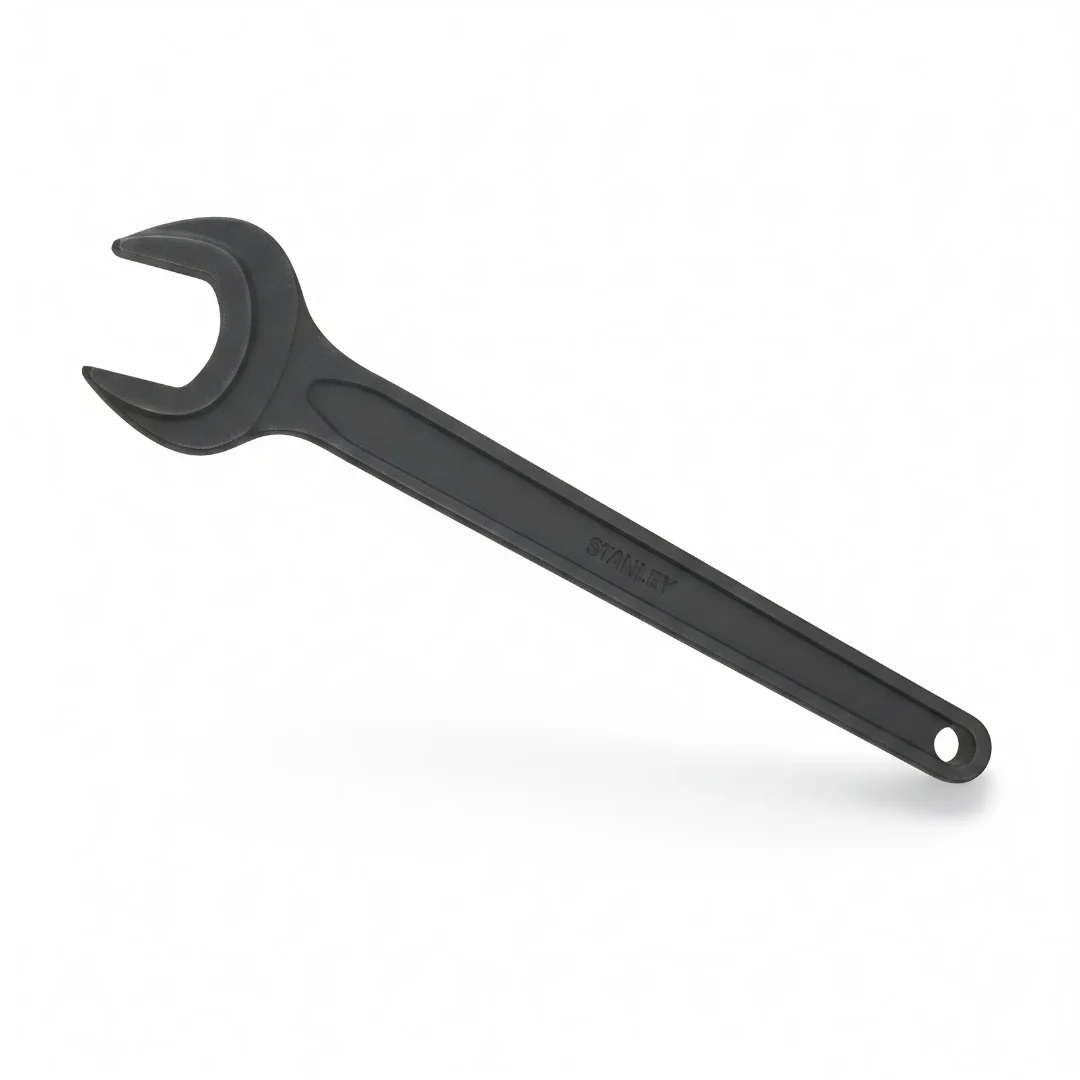
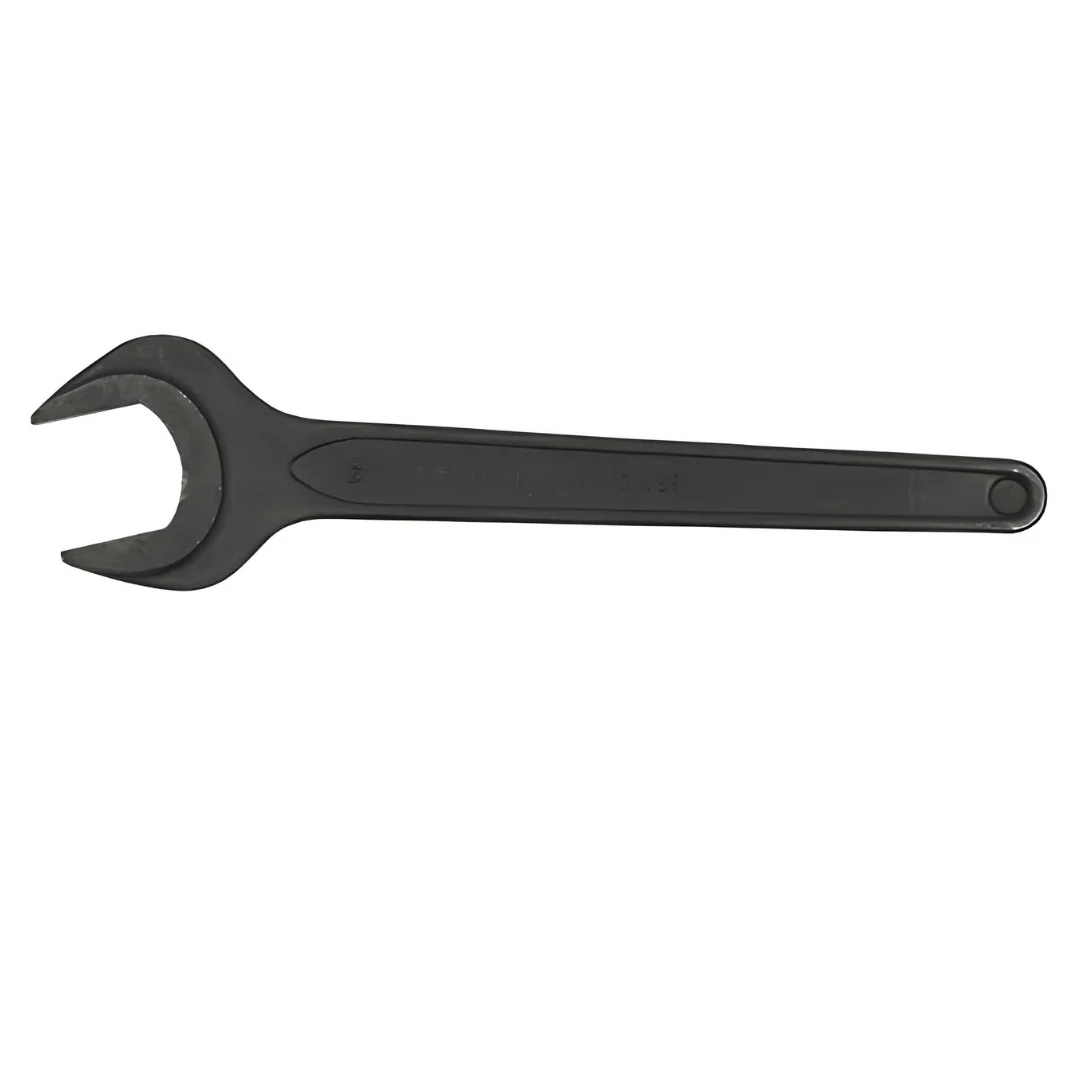
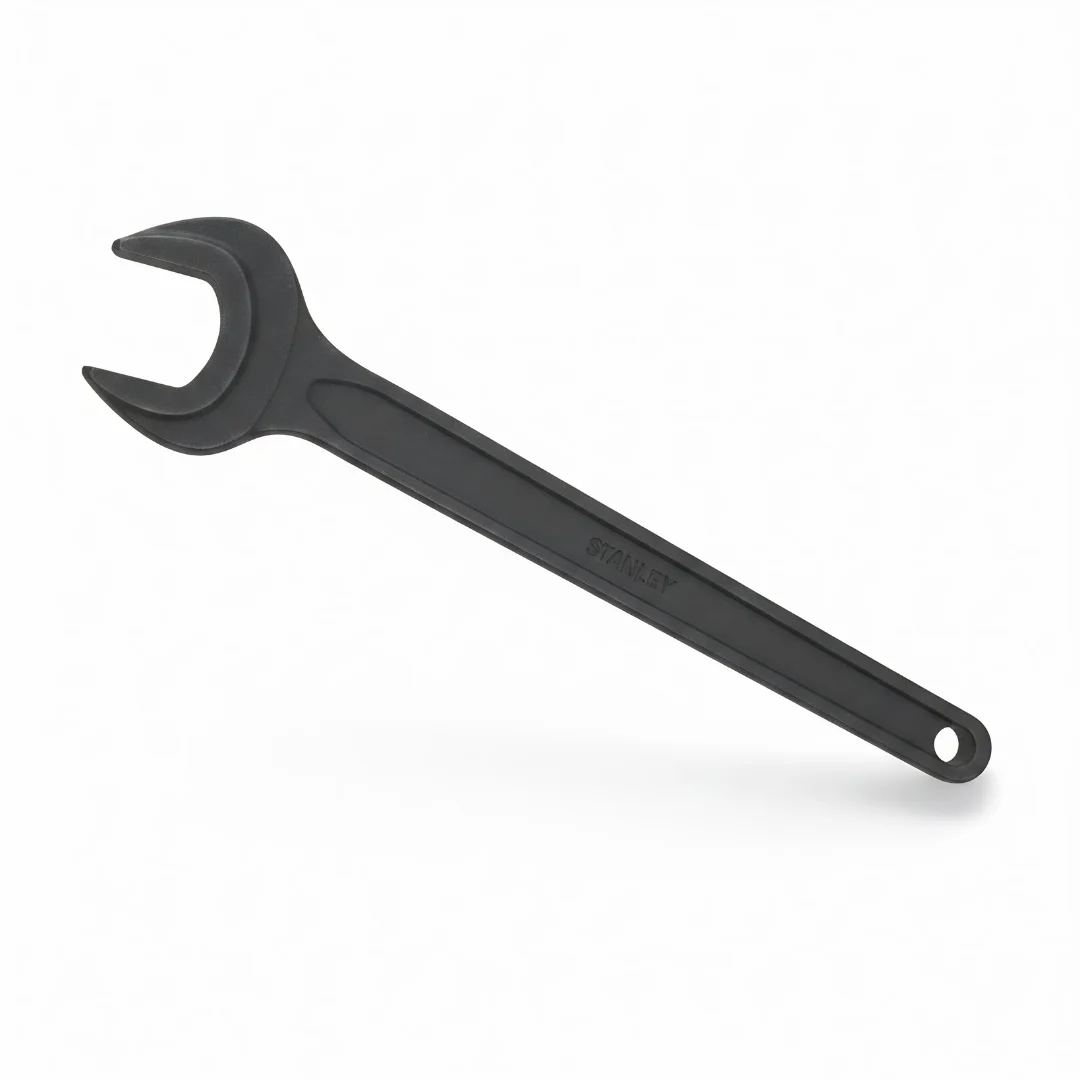
Single-End Open-Jaw Spanner |
|
Jaw Size |
55 mm |
|
Application |
Industrial mechanical fastening |
|
Usage Category |
Heavy-duty maintenance and assembly |
Physical Construction
|
Parameter |
Specification |
|
Tool Design |
Single open-end |
|
Jaw Orientation |
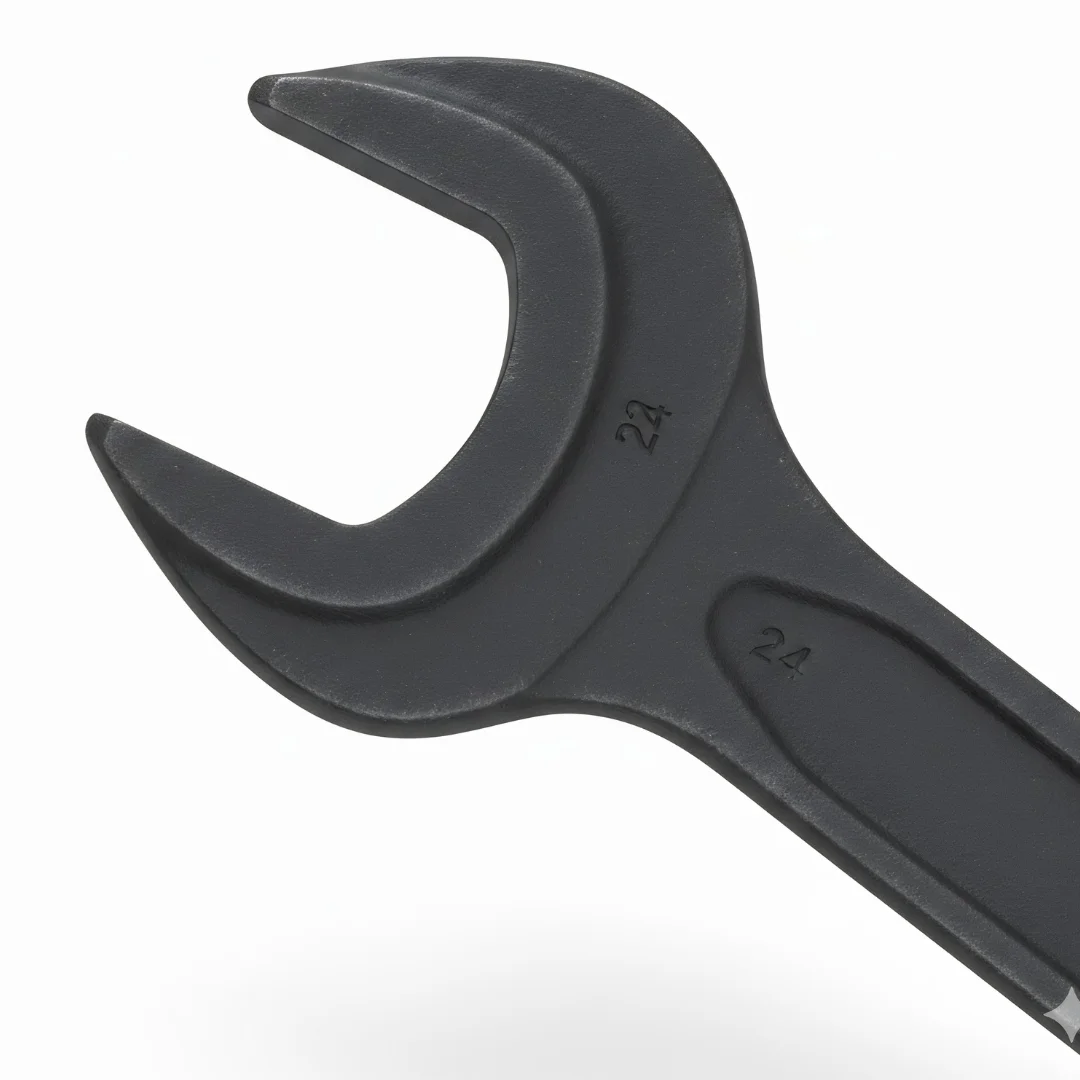
Angled for accessibility |
|
Construction Material |
Industrial-grade alloy steel |
|
Surface Finish |
Corrosion-resistant finish |
|
Mechanical Strength |
Designed for high torque application |
Mechanical Performance Characteristics
|
Characteristic |
Operational Benefit |
|
Wide jaw capacity |
Handles large fasteners |
|
Open-end configuration |
Quick engagement |
|
High-torque durability |
Supports heavy mechanical loads |
|
Controlled jaw tolerance |
Prevents fastener rounding |






Customer reviews