



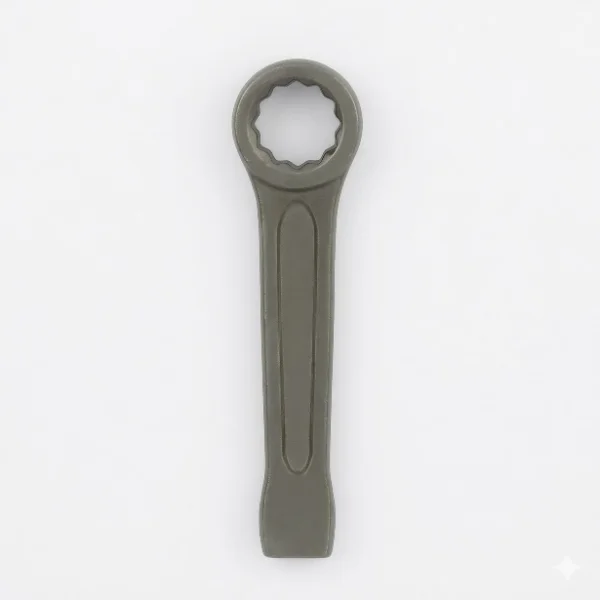
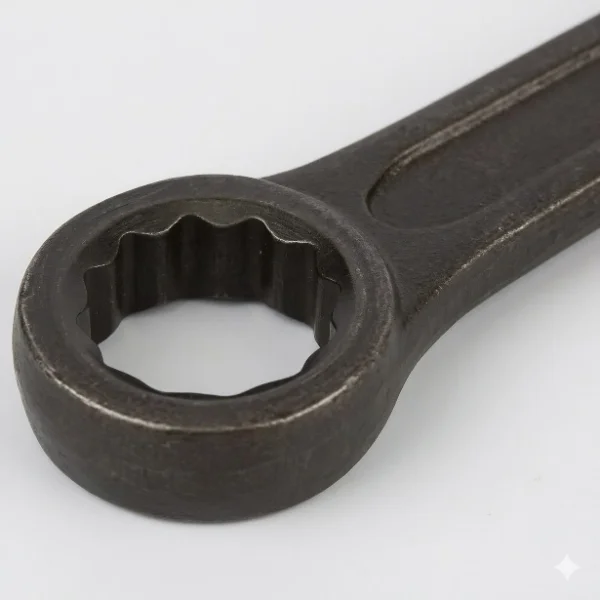
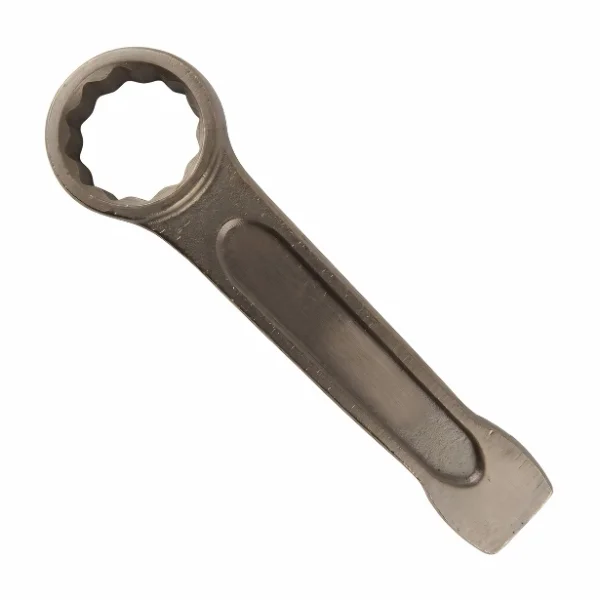
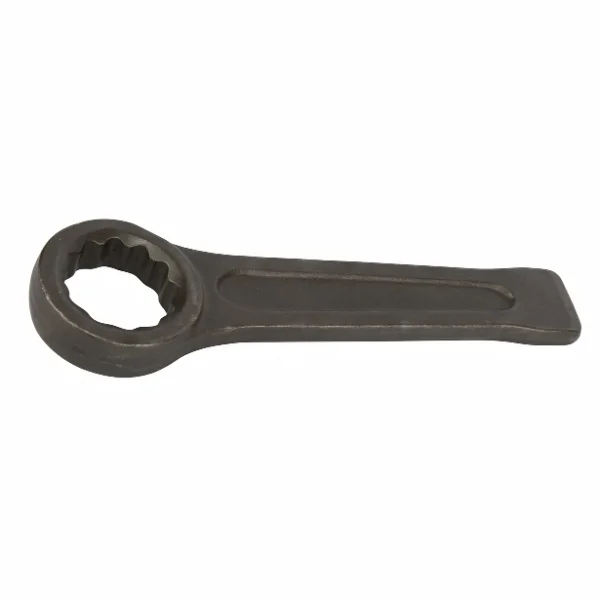


It is typically used in refinery maintenance, heavy equipment assembly, structural steel erection, and industrial bolting operations where high torque must be applied safely to large bolts.
Application Context & Use Cases
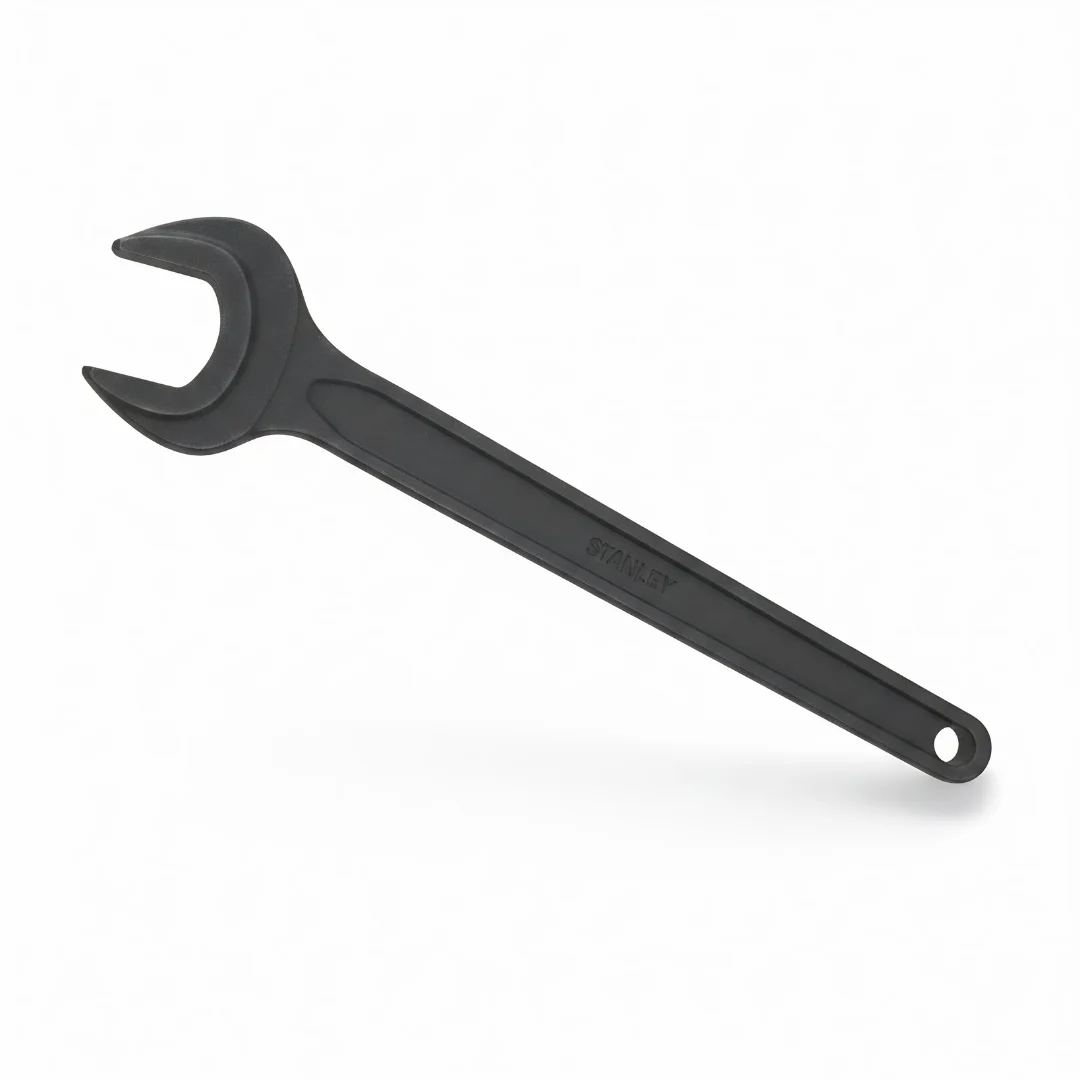
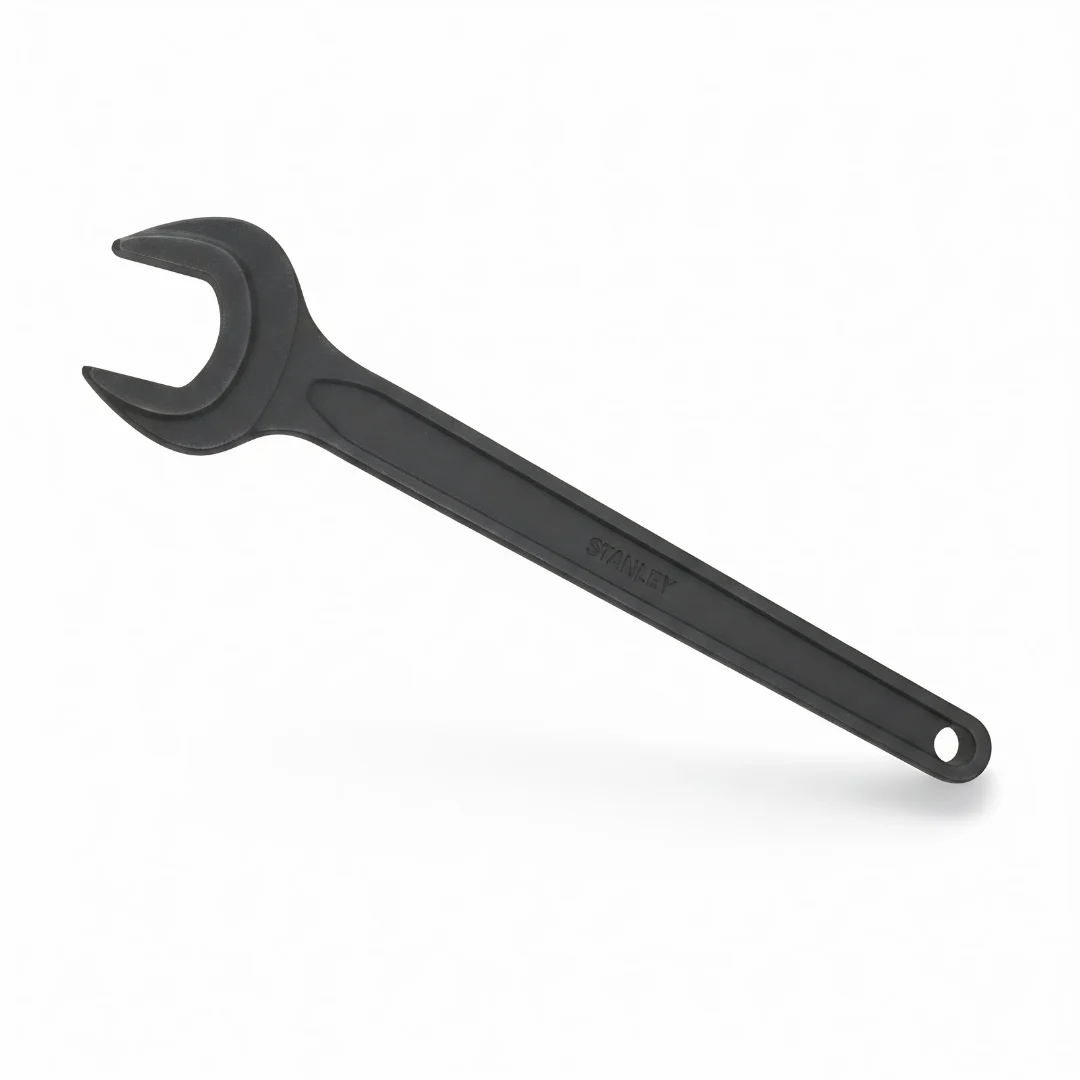
Slogging spanners are used when standard hand torque is insufficient and mechanical leverage must be increased through controlled hammer impact. The 41 mm ring-end configuration allows the tool to engage hex bolts or nuts securely while absorbing repeated striking forces.
Industrial Maintenance Environments
Oil & Gas Facilities
Slogging spanners are widely used during:
Pipeline flange assembly
Refinery shutdown maintenance
Pressure vessel bolting
The closed ring-end improves engagement with large flange bolts where slippage could damage fasteners.
Steel Plants & Heavy Fabrication
Large structural assemblies often require controlled bolt tightening during:
Structural steel installation
Crane component assembly
Heavy machinery maintenance
Mining Equipment Maintenance
Mining operations regularly involve bolts exceeding 36 mm diameter. Maintenance crews rely on slogging spanners when dismantling:
Excavator components
Crusher housings
Conveyor frame assemblies
Power Plants
Power generation facilities use these tools for maintenance of:
Turbine housings
Boiler structures
High-pressure piping joints
Structural Characteristics
Ring-End Profile
The closed ring-end design allows full engagement with hex fasteners, distributing impact forces evenly across the nut.
Slogging Handle
The extended handle is engineered to withstand repeated hammer impact during high-torque loosening or tightening operations.
Forged Construction
Industrial slogging spanners are typically manufactured using forged alloy steel to ensure:
Impact resistance
Structural rigidity
Fatigue durability
Selection Guidance
Selecting the correct slogging spanner depends primarily on fastener size, operating environment, and torque requirements.
Matching Spanner Size to Fastener
The 41 mm spanner size corresponds to the nut or bolt head width across flats.
Typical Bolt Pairing
Bolt Size |
Nut Width |
Suitable Spanner |
|
M27 |
~41 mm |
41 mm slogging spanner |
Incorrect sizing results in:
Poor contact surface
Fastener rounding
Unsafe torque application
Selecting Ring-End vs Open-End
Ring-end slogging spanners are preferred when:
Full fastener engagement is possible
Torque loads are high
Slippage risk must be minimized
Open-end slogging spanners may be used where side access is required, but they distribute load across fewer contact surfaces.
Impact Environment Considerations
When selecting a slogging spanner, maintenance teams must consider:
Hammer weight used during striking
Accessibility around the fastener
Presence of corrosion or seized bolts
These factors influence how effectively the spanner can transfer torque.
Capacity / Calculation Example
Understanding the torque generated during hammer-driven operations helps maintenance teams evaluate the suitability of a slogging spanner.
Example Scenario
A technician uses a 4 kg hammer to strike the end of the slogging spanner handle.
Estimated Torque Generation
Torque generated depends on:
Hammer impact force
Handle length
Striking angle
Assuming:
Impact force = 400 N
Handle length = 0.35 m
Approximate Torque
Torque = Force × Lever Arm
Torque ≈ 140 Nm
Repeated impacts increase effective torque, allowing operators to loosen heavily seized fasteners without using powered equipment.
This is particularly useful during field maintenance where hydraulic torque tools are unavailable.
Failure Conditions & Misuse Risks
Improper usage can lead to tool damage, fastener damage, or operator injury.
Common Failure Conditions
Incorrect Tool Size
Using an oversized spanner may cause:
Nut rounding
Impact shock concentration
Low-Quality Striking Tools
Hammering with unsuitable striking tools can damage the spanner handle.
Severe Corrosion Conditions
Fasteners heavily seized due to corrosion may require:
Penetrating lubricants
Controlled heating
Hydraulic torque tools
Attempting to remove such fasteners using repeated hammering may overstress the tool.
Material / Compatibility Table
Fastener Compatibility
Fastener Standard |
Typical Application |
Compatibility |
|
Metric Hex Bolts |
Structural assemblies |
Compatible |
|
Heavy Hex Nuts |
Pipeline flanges |
Compatible |
|
Industrial Stud Bolts |
Pressure equipment |
Compatible |
Material Compatibility
Fastener Material |
Suitability |
|
Carbon Steel Bolts |
Suitable |
|
Alloy Steel Fasteners |
Suitable |
|
Stainless Steel Fasteners |
Suitable with caution (avoid excessive hammering) |
Operational Handling & Installation Considerations
Positioning the Spanner
Before striking:
Ensure the ring-end fully engages the fastener
Confirm the tool is aligned with the bolt axis
Misalignment can cause:
Tool rebound
Partial contact loading
Hammer Selection
Maintenance teams typically use:
3–5 kg sledge hammers
The hammer face must strike squarely against the spanner end to transfer maximum torque.
Operator Safety
Operators should maintain:
Stable footing
Controlled hammer swing
Protective gloves and eye protection
Slogging operations involve significant kinetic energy.
Commercial Clarity
Lead Time
Typical supply timelines depend on stock availability.
Supply Condition |
Dispatch Time |
|
Ready stock |
Same or next working day dispatch |
|
Non-stock item |
Procurement lead time applicable |
Dispatch Capability
Supply is available for Pan-India industrial delivery, including:
Manufacturing plants
EPC project sites
Maintenance contractors
Minimum Order Quantity
Order Type |
MOQ |
|
Standard supply |
Single unit |
|
Bulk supply |
Project quantity |
Customization Availability
Customization is generally not applicable for branded tools such as STANLEY products. However, bulk industrial procurement may involve:
Multi-size tool sets
Project tool kits
Compliance / Certification Clarity
Industrial buyers may require documentation such as:
Product catalog references
Manufacturer specification sheets
Tender Compatibility
The tool may be supplied as part of:
Industrial tool tenders
Maintenance equipment packages
EPC procurement requirements
Procurement Process
Industrial procurement teams typically follow a structured RFQ process.
Information to Provide in Enquiry
To ensure correct supply, buyers should specify:
Product model (STMT96963)
Required quantity
Delivery location
Required dispatch timeline
Procurement Flow
Submit RFQ with product specification
Supplier confirms availability
Quotation issued
Purchase order confirmation
Dispatch and delivery
This process helps ensure accurate supply of the correct industrial tool.
Comparison Table
Slogging Spanner Type Comparison
Feature |
Ring-End Slogging Spanner |
Open-End Slogging Spanner |
Standard Spanner |
|
Fastener Engagement |
Full 360° |
Partial |
Full |
|
Torque Capability |
High |
Moderate |
Low |
|
Hammer Striking |
Yes |
Yes |
No |
|
Industrial Use |
Heavy maintenance |
Limited access applications |
General mechanical work |
Ring-end versions are generally preferred where maximum torque transfer and fastener protection are required.
Selection Checklist
Before purchasing a 41 mm slogging spanner, verify the following:
Fastener width across flats is 41 mm
Application involves heavy industrial bolting
Hammer-driven torque is required
Full ring-end access to the fastener is available
Impact operations can be performed safely
Confirming these points ensures correct tool selection.
High-Intent FAQs
What size bolt typically requires a 41 mm slogging spanner?
A 41 mm spanner is typically used for M27 metric hex bolts, which are common in heavy structural and industrial bolting applications.
Can a ring-end slogging spanner be used for tightening bolts?
Yes. Slogging spanners can be used for both loosening and tightening operations where high torque must be applied through hammer impact.
Is a ring-end slogging spanner better than an open-end version?
Ring-end slogging spanners provide better contact with the fastener, reducing the risk of rounding under heavy torque conditions.
What hammer weight is typically used with slogging spanners?
Maintenance crews commonly use 3 kg to 5 kg sledge hammers to strike the spanner handle and generate sufficient torque.
Can slogging spanners replace torque wrenches?
No. Slogging spanners apply impact torque, which is not controlled or measured. Precision torque requirements should be handled using calibrated torque tools.
Are slogging spanners suitable for stainless steel fasteners?
They can be used cautiously, but excessive hammering may damage softer stainless fasteners.
Is the STANLEY STMT96963 suitable for refinery maintenance?
Yes. Slogging spanners of this size are commonly used for pipeline flange bolting and heavy equipment maintenance in refinery environments.
Technical SpecificationsTool Specification Overview
|
Parameter |
Specification |
|
Product Model |
STANLEY STMT96963 |
|
Tool Type |
Ring-End Slogging Spanner |
|
Nominal Size |
41 mm |
|
Brand |
STANLEY |
|
Construction |
Forged alloy steel |
|
Operation Method |
Hammer striking |
|
Application |
Industrial bolting and heavy maintenance |







Customer reviews