



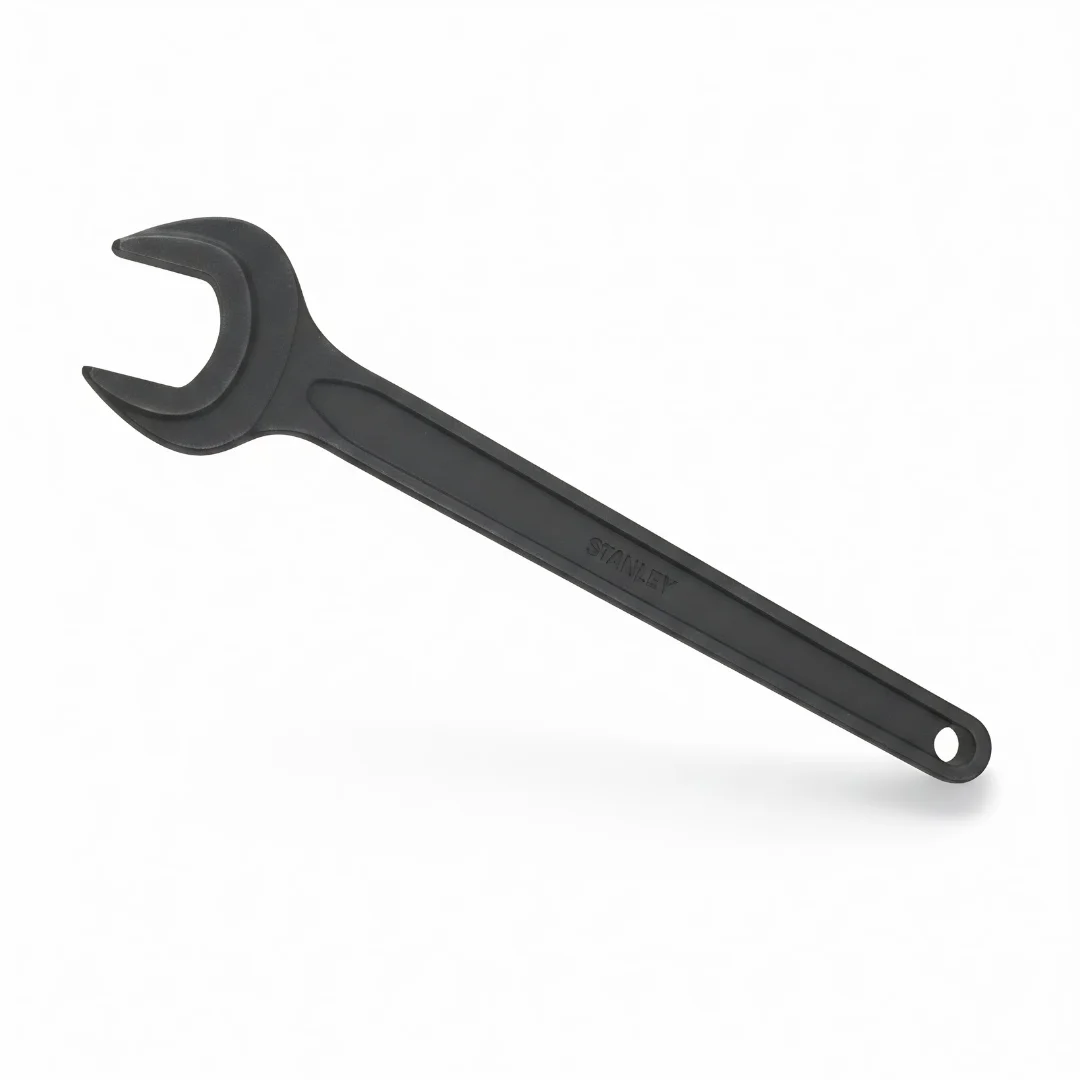
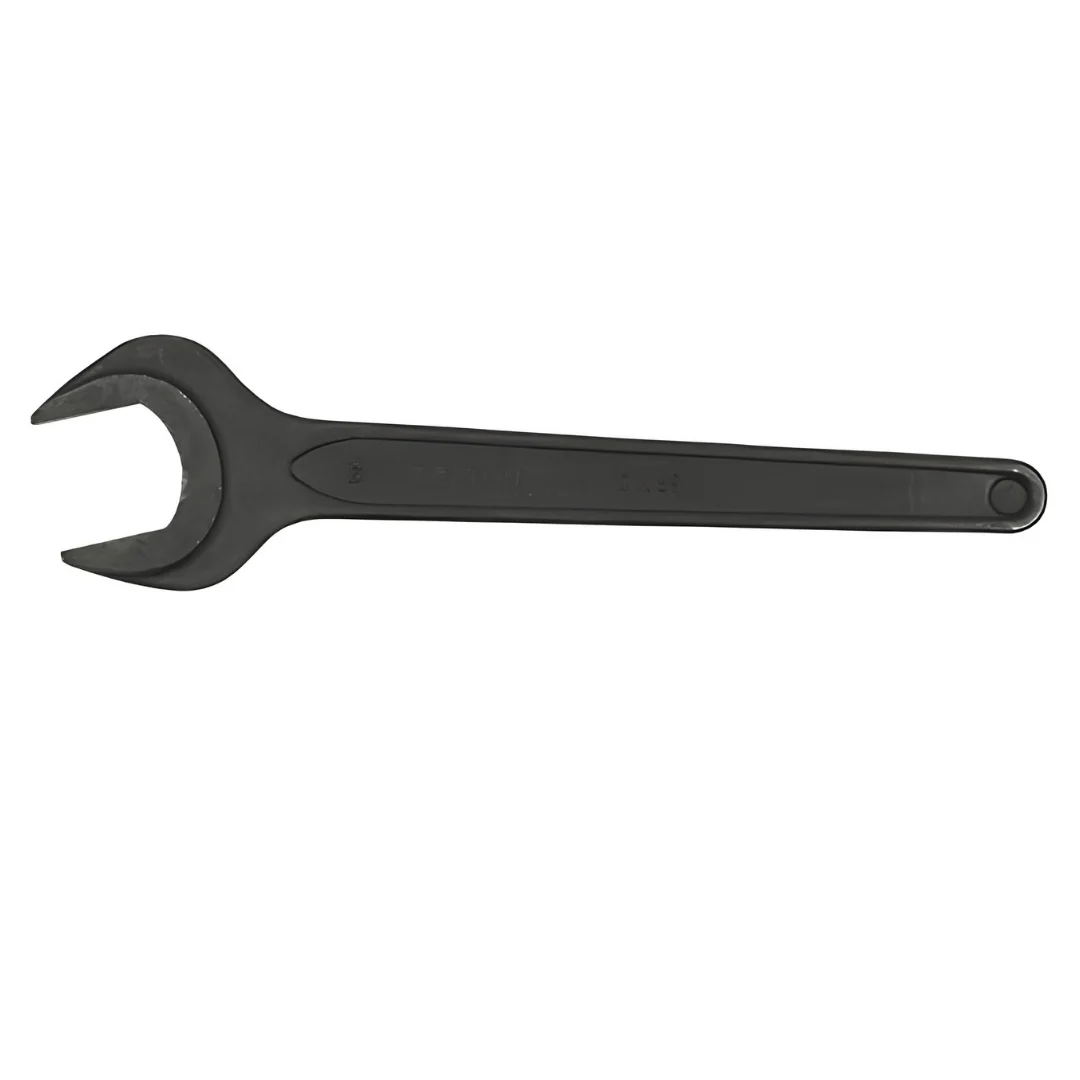
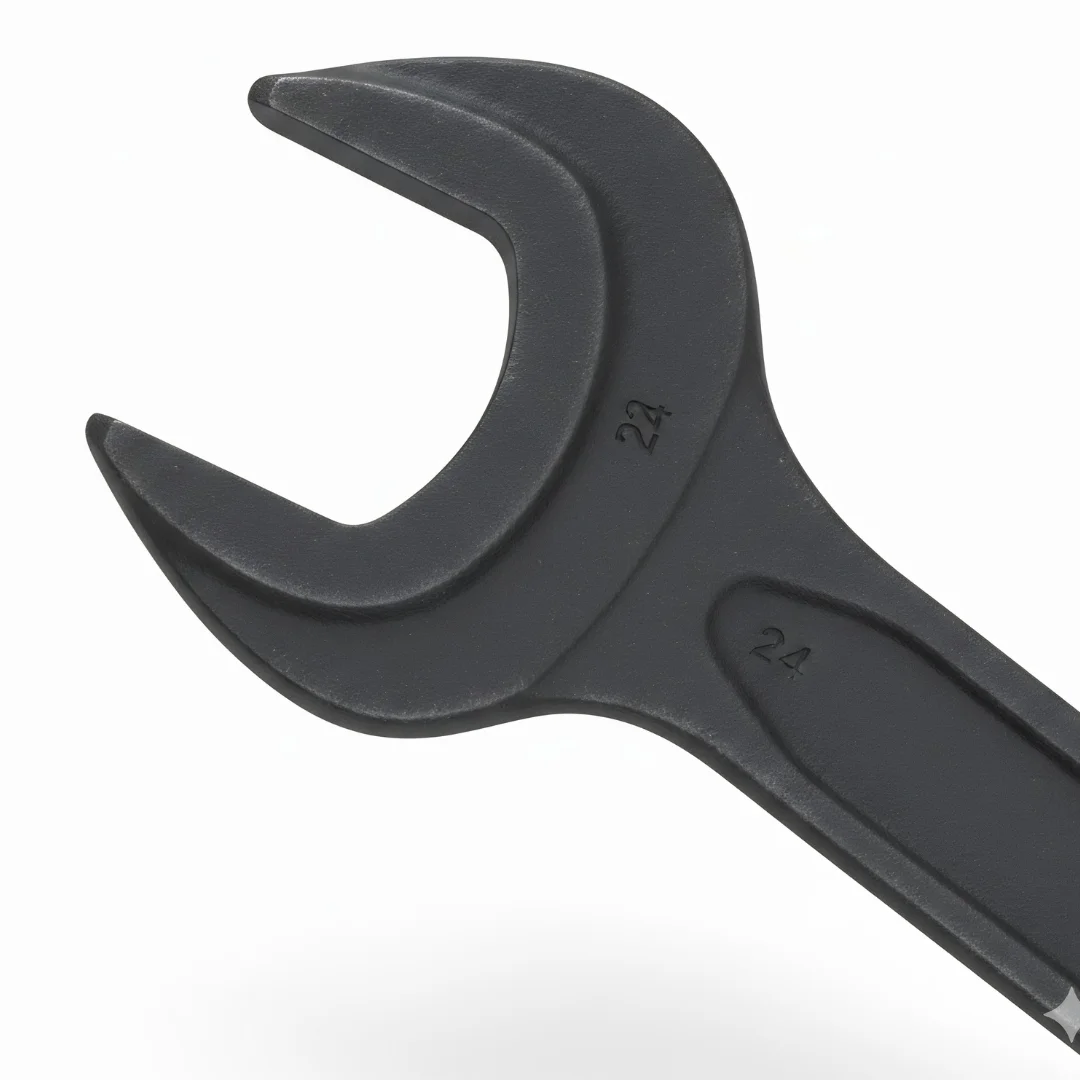
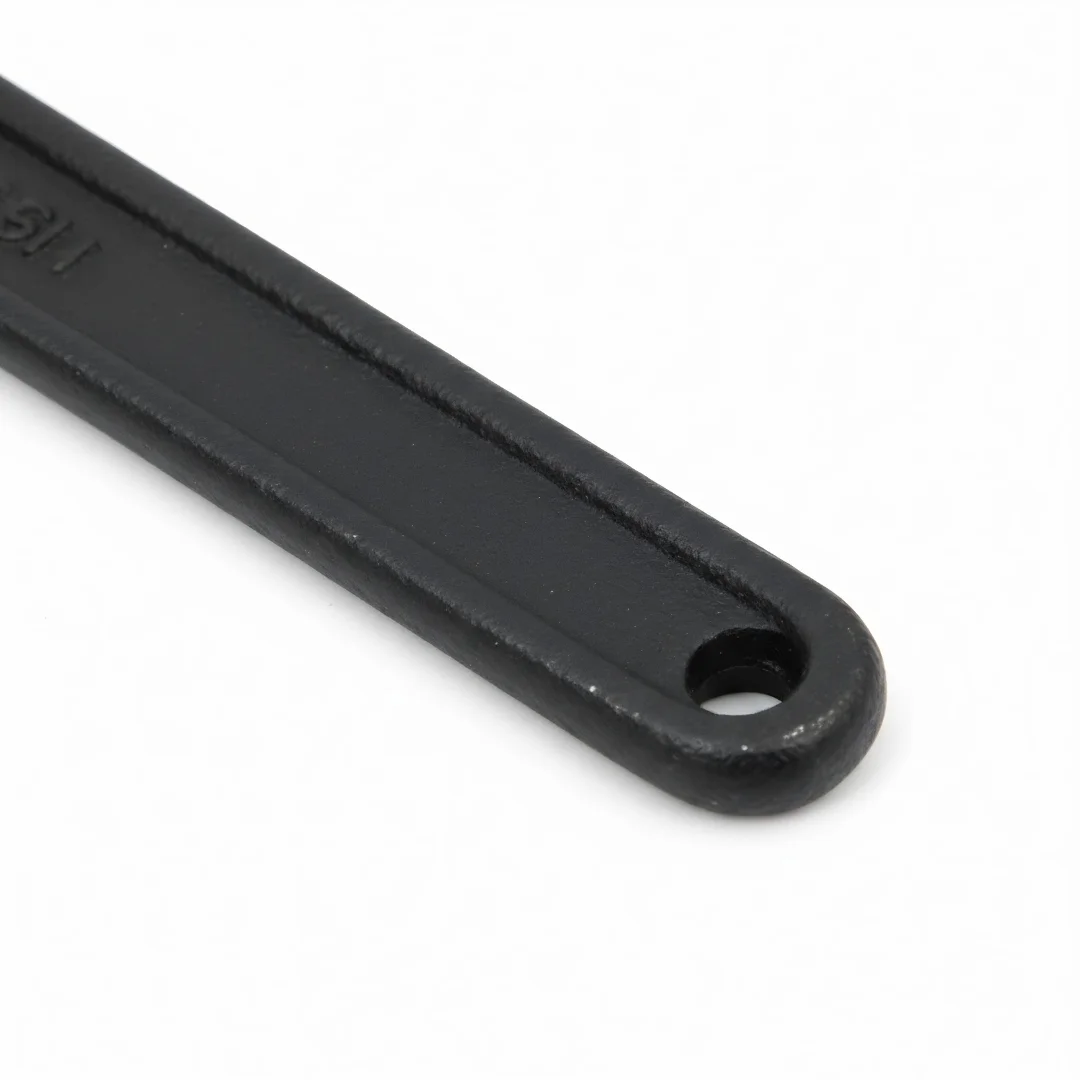


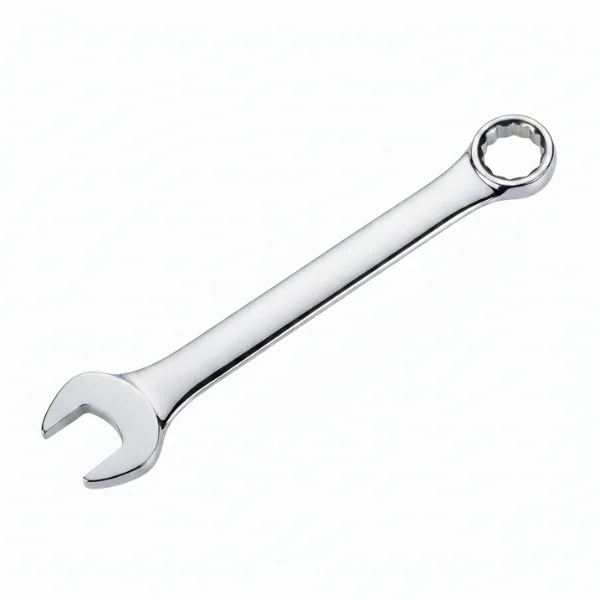
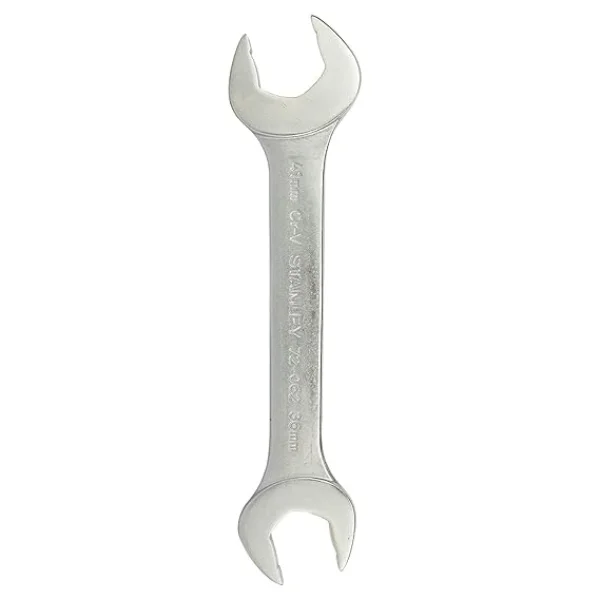
The single-end jaw profile enables controlled torque application in high-load maintenance environments where large bolt heads require precise manual engagement.
Application Context & Use Cases
Large open-jaw spanners of this size are typically used in industrial mechanical environments where standard workshop spanners cannot handle bolt diameters or torque requirements.
Heavy Equipment Maintenance
Maintenance teams servicing earthmoving equipment, crushers, and large pumps frequently require 75 mm spanner capacity for structural bolt assemblies.
Infrastructure Construction
Bridge structures, steel fabrication assemblies, and rail infrastructure often use large hex bolts during erection and alignment work.
Power Generation Facilities
Thermal plants and turbine service contractors rely on large spanners for maintenance tasks involving turbine housing bolts and large coupling fasteners.
Mining and Material Handling Systems
Mining conveyors, crushers, and stacker reclaims contain oversized mechanical fasteners that require large open-jaw tools during service intervals.
In these environments, technicians prioritize durable forged tools capable of handling high torque loads without jaw deformation.
Selection Guidance
Selecting a 75 mm open-jaw spanner requires verifying several operational factors.
Fastener Size Compatibility
The spanner must match the across-flat dimension of the hex fastener. A mismatch between the jaw opening and the bolt head can cause:
Slippage during torque application
Bolt head rounding
Excessive tool wear
Access Constraints
Open-jaw spanners are typically chosen when ring spanners or sockets cannot be positioned due to surrounding equipment or clearance limitations.
Torque Requirement
For large bolt assemblies, technicians evaluate whether manual torque is sufficient or if hydraulic torque tools are required. A 75 mm spanner is typically used for:
Maintenance loosening operations
Controlled manual tightening
Tool Length and Leverage
Longer spanners provide higher mechanical advantage, enabling technicians to apply torque safely without using extension pipes or improvised leverage.
Capacity / Calculation Example
Understanding torque application helps determine when a manual open-jaw spanner is appropriate.
Torque Estimation
Assume:
Fastener size = 75 mm
Handle length = 800 mm (approximate industrial tool length)
Torque is calculated as:
Torque = Force × Lever Arm Length
If a technician applies 200 N of force:
Torque = 200 N × 0.8 m
Torque ≈ 160 Nm
This level of torque is typically sufficient for:
Maintenance disassembly
Fastener alignment during installation
However, structural torque requirements may exceed manual capacity, requiring hydraulic or impact tools.
Failure Conditions & Misuse Risks
Improper use of large open-jaw spanners can cause equipment damage or safety hazards.
Jaw Slippage
Using the wrong jaw size or worn tool edges can cause:
Bolt rounding
Loss of grip
Technician injury
Excessive Torque Application
Applying extension pipes or striking the tool with a hammer can exceed design limits and cause:
Jaw spreading
Tool cracking
Fastener Damage
Misaligned spanner engagement can concentrate force on one corner of the bolt head, damaging the fastener surface.
Material / Compatibility Table
|
Material Type |
Compatibility |
|
Carbon Steel Fasteners |
Fully compatible |
|
Alloy Steel Bolts |
Suitable for maintenance tasks |
|
Structural Bolts |
Used during assembly and removal |
|
Stainless Steel Bolts |
Suitable with controlled torque |
|
High-Tensile Bolts |
Used for loosening and alignment |
The forged steel construction ensures reliable engagement with industrial-grade fasteners used in infrastructure and heavy equipment.
Operational Handling & Installation Considerations
Correct Engagement
The spanner must be positioned fully across the flat surfaces of the bolt head, ensuring even load distribution.
Orientation
Technicians typically apply force in a direction that tightens the jaw against the bolt flats, reducing the chance of slippage.
Workspace Clearance
Large spanners require adequate swing clearance. Maintenance planners often verify whether:
Adjacent structures block tool movement
Alternative tools such as slugging spanners are required
Controlled Force Application
Force should be applied gradually rather than through sudden impacts to prevent tool or fastener damage.
Commercial Clarity
Industrial buyers typically require procurement clarity before placing an order.
Lead Time
Stock-based supply enables fast dispatch for maintenance requirements, depending on inventory availability.
Dispatch Capability
Pan-India dispatch supports supply to:
Industrial plants
Construction sites
Infrastructure contractors
Maintenance service companies
Minimum Order Quantity
Single-unit supply is typically possible for maintenance needs, while bulk procurement is common for contractor toolkits.
Customization Availability
Standard branded tools are supplied without modification. For project toolkits, bulk packaging or consolidated supply may be arranged.
Compliance / Certification
The product belongs to the professional hand tool range from STANLEY Tools, widely used in industrial maintenance operations.
Tender Compatibility
Industrial contractors and procurement departments often include brand-specified tools in tender documentation, making model-level identification important.
Procurement Process
Industrial buyers typically follow a structured enquiry process.
Step 1 – Identify Requirement
Provide:
Product model
Quantity required
Delivery location
Step 2 – Verify Availability
Supplier confirms:
Stock availability
Dispatch timeline
Step 3 – Commercial Quotation
Quotation includes:
Unit pricing
Delivery terms
Dispatch schedule
Step 4 – Order Confirmation
Buyer issues purchase order or confirms order via procurement channel.
Comparison Table – Open Jaw vs Other Spanner Types
|
Feature |
Open-Jaw Spanner |
Ring Spanner |
Socket Tool |
|
Access to Tight Spaces |
High |
Medium |
Low |
|
Torque Capacity |
Moderate |
High |
Very High |
|
Fastener Engagement |
Two contact points |
Full hex contact |
Full hex contact |
|
Speed of Positioning |
Fast |
Moderate |
Slow |
|
Typical Use |
Maintenance access |
Precision tightening |
High torque tightening |
Open-jaw spanners are primarily used where tool positioning flexibility is more important than maximum torque capacity.
Selection Checklist
Before ordering a 75 mm open-jaw spanner, verify the following:
Bolt head across-flat size is 75 mm
Clearance does not allow socket tools
Manual torque is sufficient for the application
Tool length provides adequate leverage
Industrial-grade forged spanner is required
If all conditions above apply, this tool is typically appropriate.
High-Intent FAQs
Is the STANLEY STMT96992 suitable for structural bolt tightening?
It can be used for alignment and maintenance tightening, but final structural torque may require calibrated torque tools.
Can this spanner be used with extension pipes for extra torque?
Using extension pipes is generally discouraged because it may exceed the design limits of the tool and cause jaw deformation.
What industries typically use a 75 mm spanner?
Industries include heavy equipment maintenance, steel fabrication, mining operations, and infrastructure construction.
Is this tool suitable for high-tensile bolts?
Yes, it can engage high-tensile fasteners during maintenance operations, but final torque tightening may require specialized torque tools.
How should technicians prevent bolt rounding when using an open-jaw spanner?
The tool should be positioned fully across the bolt flats, and force should be applied in a direction that keeps the jaw pressed against the fastener.
Can this spanner replace ring spanners?
No. Ring spanners provide higher torque transfer and better fastener contact. Open-jaw spanners are used primarily when access restrictions prevent ring or socket use.
Is the spanner typically stocked individually or in sets?
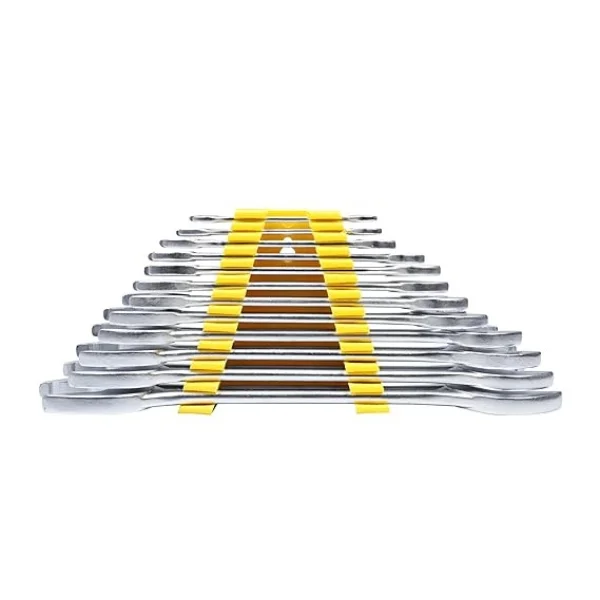
Large industrial spanners are usually supplied as individual tools, while smaller sizes are often sold in sets.
Technical SpecificationsTool Specifications
|
Parameter |
Specification |
|
Product Model |
STMT96992 |
|
Tool Type |
Single-End Open-Jaw Spanner |
|
Jaw Opening |
75 mm |
|
Application |
Large hexagonal fasteners |
|
Construction |
Forged steel |
|
Surface Finish |
Industrial corrosion-resistant finish |
|
Typical Use |
Heavy equipment maintenance |
|
Handling |
Manual torque application |
Physical Characteristics
|
Feature |
Description |
|
Jaw Profile |
Open-ended for quick positioning |
|
Handle Length |
Extended leverage design |
|
Forging Process |
Drop-forged steel construction |
|
Edge Profile |
Machined contact surfaces |
|
Strength Category |
Heavy-duty industrial hand tool |






Customer reviews