



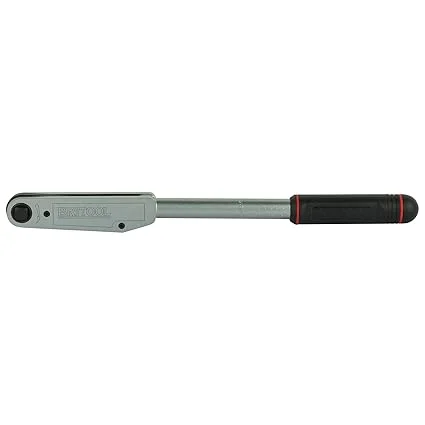
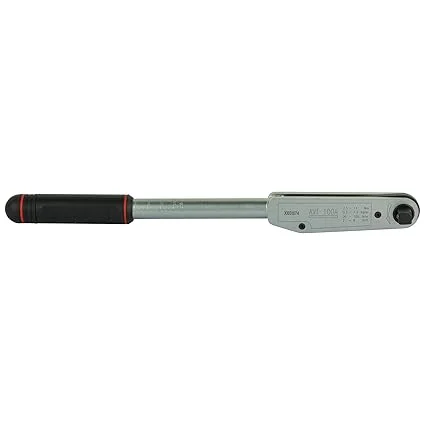
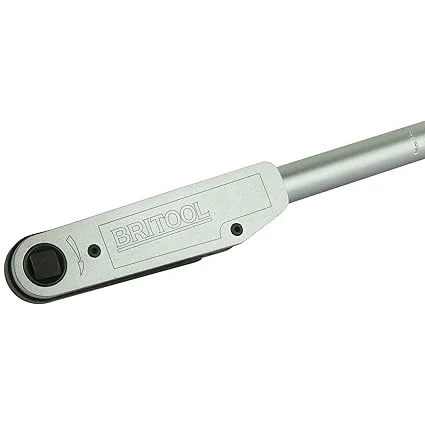
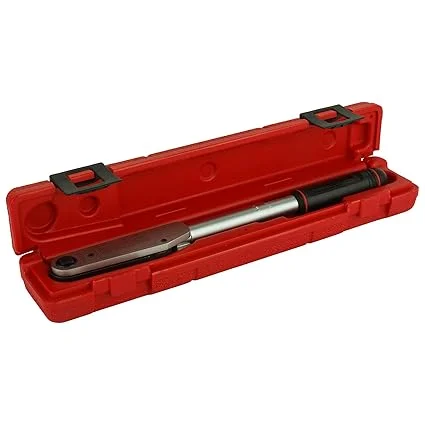
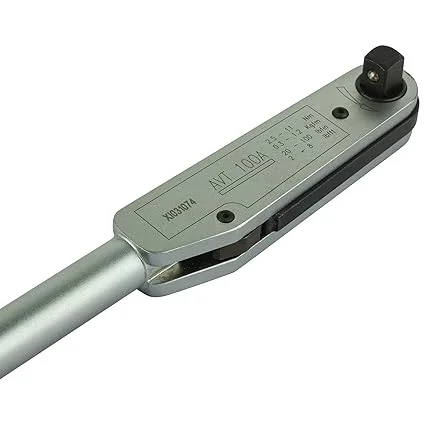


It is typically used in precision fastening environments such as automotive service, equipment assembly, and maintenance operations where accurate torque application is required to prevent component damage or loosening.
Application Context & Use Cases
Torque-controlled fastening is required whenever fastener preload must meet a defined engineering specification. The AVT300A torque wrench falls within the low-to-mid torque range, making it suitable for smaller fasteners typically used in mechanical assemblies.
Typical Industrial Applications
Automotive Service & Repair
Controlled tightening of small mechanical fasteners used in vehicle components.
Examples include:
Engine cover fasteners
Brake component fittings
Electrical bracket assemblies
Fuel system components
Industrial Equipment Maintenance
Maintenance technicians often require torque tools for controlled reassembly.
Typical examples:
Machine guard bolts
Sensor bracket mounts
Control panel hardware
Assembly Line Operations
In assembly environments where fasteners require consistent torque values.
Common assembly tasks:
Electrical equipment assembly
Small mechanical assemblies
Precision mechanical fastening
Selection Guidance (How to Choose Correctly)
Selecting the correct torque wrench depends primarily on fastener torque requirements and drive compatibility.
Torque Range Selection
Torque wrenches should ideally operate within 20–80% of their rated capacity for highest accuracy.
For the AVT300A:
Range Parameter |
Value |
|
Minimum Torque |
5 Nm |
|
Maximum Torque |
33 Nm |
|
Optimal Accuracy Band |
7–26 Nm |
This range is appropriate for small-to-medium mechanical fasteners.
Drive Size Compatibility
3/8" square drive torque wrenches are typically selected for:
M5 to M10 fasteners
Medium mechanical fittings
Precision mechanical components
If fasteners require higher torque values, a 1/2" drive wrench is usually more appropriate.
Fastener Accessibility
3/8" drive torque wrenches provide:
Better access in confined assemblies
Compatibility with smaller sockets
This makes them preferred in automotive and equipment maintenance environments.
Capacity / Calculation Example
Torque requirements are normally defined in engineering manuals or manufacturer specifications.
Example Scenario: M8 Bolt Assembly
Typical torque specification for an M8 class 8.8 bolt may fall within:
Bolt Size |
Typical Torque |
|
M8 |
20–25 Nm |
In this case:
Required torque = 22 Nm
AVT300A operating range = 5–33 Nm
Therefore the wrench operates within its optimal accuracy band, making it suitable for the application.
Failure Conditions & Misuse Risks
Torque tools must be used within their design limits. Misuse may lead to incorrect fastening or tool damage.
Common Misuse Scenarios
Exceeding Maximum Torque
Applying torque above 33 Nm may:
Damage the internal mechanism
Cause calibration drift
Using for Loosening
Most click torque wrenches are not designed for breaking tight fasteners.
Using them for loosening can:
Damage ratchet components
Affect accuracy
Incorrect Torque Setting
Improper adjustment may lead to:
Under-torque (fastener loosening)
Over-torque (thread damage)
Heavy Industrial Fastening
Applications requiring torque above 50 Nm should use a higher-capacity wrench.
Impact Tool Applications
Torque wrenches should never be used with impact tools.
Material / Compatibility Table
Compatible Fastener Types
|
Fastener Type |
Compatibility |
|
Hex Bolts |
Yes |
|
Socket Head Cap Screws |
Yes |
|
Flange Bolts |
Yes |
|
Stud Nuts |
Yes |
Compatible Socket Sizes
|
Drive |
Typical Socket Range |
|
3/8" Drive |
8 mm – 19 mm |
Operational Handling & Installation Considerations
Proper handling ensures consistent torque accuracy.
Adjustment Procedure
Step 1
Unlock the torque adjustment mechanism.
Step 2
Rotate the handle to the desired torque value.
Step 3
Lock the adjustment before use.
During Operation
Apply steady pressure until the click is felt. Once the click occurs:
Stop applying force
Do not continue turning
Post-Use Handling
To maintain calibration stability:
Reset wrench to minimum torque setting after use
Store in protective case
Commercial Clarity
Lead Time
Typical dispatch timelines depend on stock availability.
Supply Status |
Typical Dispatch |
|
Stock Item |
1–3 working days |
|
Procurement Item |
5–10 working days |
Dispatch Capability
Supply available across India through standard industrial logistics channels.
Minimum Order Quantity
Product |
MOQ |
|
Britool AVT300A Torque Wrench |
1 Unit |
Customization
Torque wrenches are standard manufactured tools and typically not customizable.
However, suppliers may support:
calibration verification
supply of related accessories
Compliance / Certification
Precision torque tools are typically supplied with:
manufacturer documentation
model identification traceability
Calibration certification availability depends on supplier arrangements.
Tender Compatibility
Industrial tool procurement through tenders may require:
manufacturer identification
product specification sheet
brand confirmation
Documentation support can typically be provided during procurement.
Procurement Process
Industrial buyers generally follow a structured procurement process.
Information Required for Enquiry
Providing the following information helps ensure correct supply:
Product model (AVT300A)
Required quantity
Delivery location
Purchase format (direct order or tender)
Enquiry Flow
Submit RFQ with product details
Supplier confirms availability
Commercial quotation issued
Dispatch arranged upon order confirmation
Comparison Table
AVT300A vs Common Torque Wrench Alternatives
Feature |
AVT300A (3/8") |
Typical 1/2" Torque Wrench |
|
Torque Range |
5–33 Nm |
40–200 Nm |
|
Drive Size |
3/8" |
1/2" |
|
Fastener Size |
Small–Medium |
Medium–Large |
|
Assembly Type |
Precision mechanical |
Heavy fastening |
|
Accessibility |
Better in confined areas |
Less flexible |
Selection Checklist
Before purchasing a torque wrench, verify the following:
Torque specification falls within 5–33 Nm
Fastener size compatible with 3/8" drive
Application requires controlled tightening
Workspace allows use of a manual torque wrench
Assembly specification requires torque verification
If these conditions apply, the AVT300A is generally an appropriate tool.
Frequently Asked Questions
Is the AVT300A suitable for automotive work?
Yes. The torque range of 5–33 Nm is commonly used for small automotive fasteners such as covers, brackets, and light mechanical assemblies.
Can this torque wrench be used to loosen bolts?
Torque wrenches are designed for controlled tightening. They should not be used for breaking tight fasteners.
What socket size works with this wrench?
The wrench uses a 3/8" square drive, compatible with standard 3/8" drive sockets.
What happens if the torque setting is exceeded?
Applying torque above the rated capacity may cause mechanical damage or calibration drift, affecting accuracy.
Is calibration required for torque wrenches?
Periodic calibration is recommended in environments where torque accuracy affects product safety or quality.
What torque range is ideal for this tool?
The AVT300A performs best between 7–26 Nm, which represents the central accuracy band.
Can the wrench be used for industrial assembly?
Yes, provided the required torque specification falls within its operating range.
Technical Configuration Overviews
Product Specifications
Model Information
|
Parameter |
Value |
|
Brand |
Britool |
|
Model |
AVT300A |
|
Tool Type |
Adjustable Click Torque Wrench |
|
Drive Size |
3/8" Square Drive |
|
Torque Range |
5–33 Nm |
Mechanical Characteristics
|
Specification |
Details |
|
Torque Adjustment Mechanism |
Micrometer scale |
|
Drive Type |
Square drive with detent |
|
Measurement Units |
Newton meter (Nm) |
|
Operation Mode |
Click indication |
|
Accuracy |
Typically ±4% within operating range* |
*Typical industry tolerance for click torque wrenches.
Physical Characteristics
|
Parameter |
|
Description |
|
Handle Type |
|
Knurled grip |
|
Adjustment Lock |
|
Mechanical lock system |
|
Construction |
|
Hardened steel mechanism |
|
Direction |
|
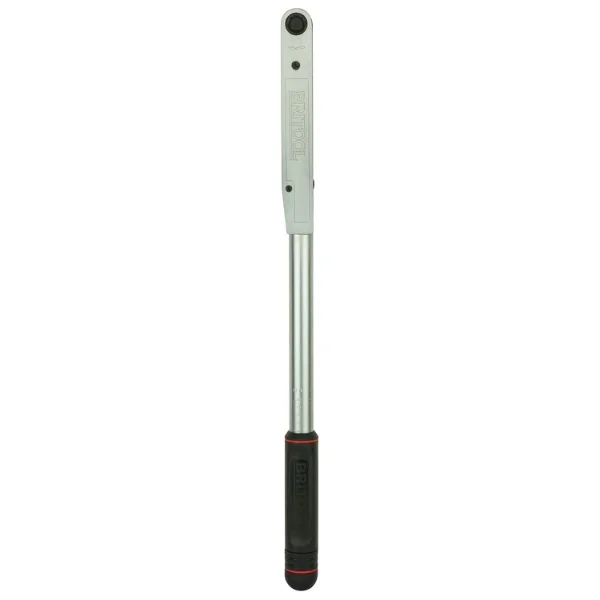
Usually reversible ratchet |







Customer reviews