



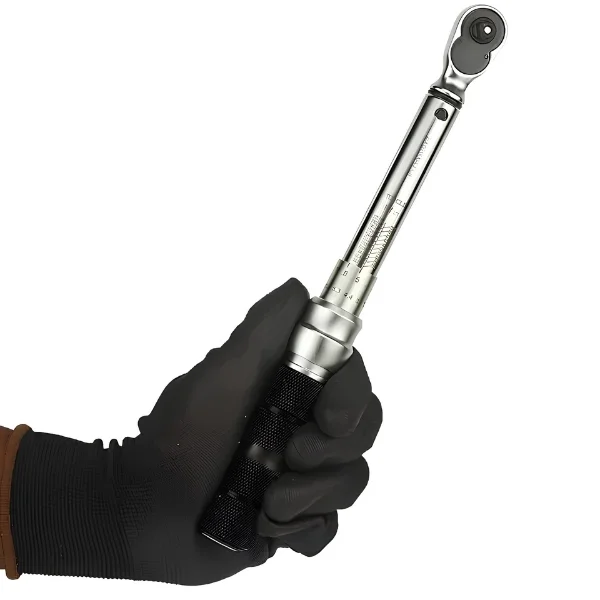
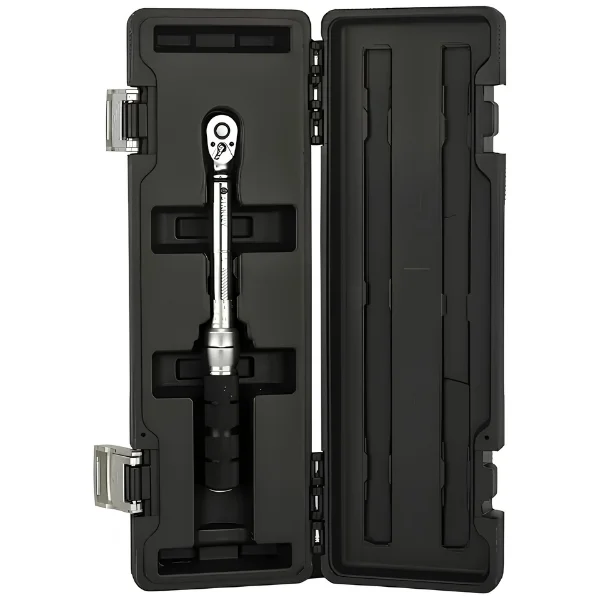
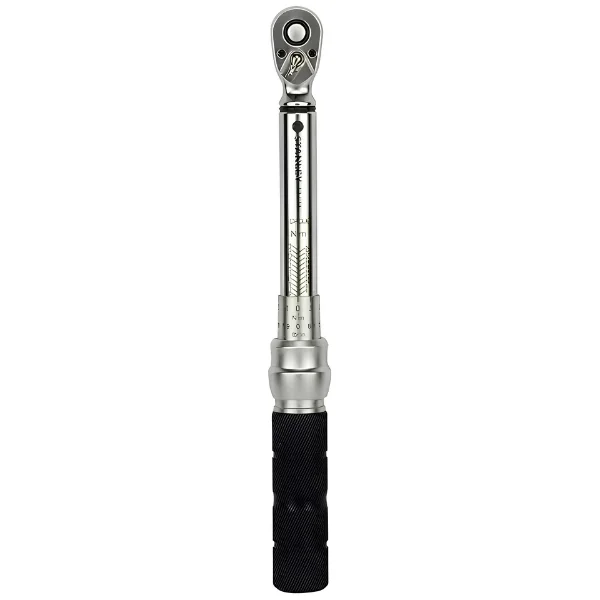
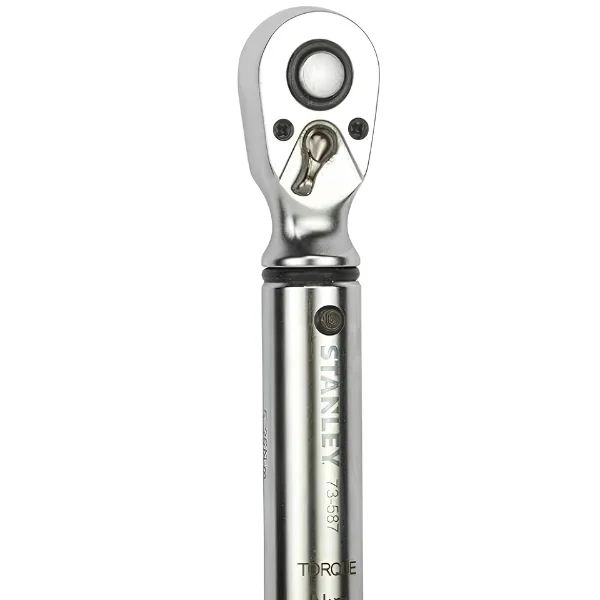
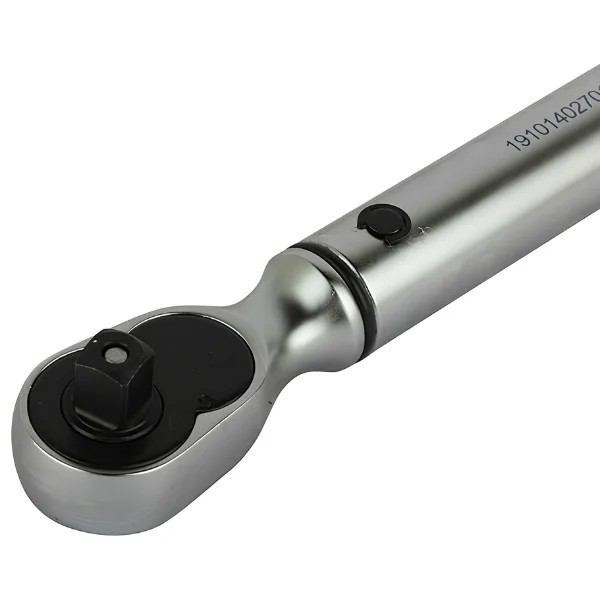


It is used for tightening critical fasteners in automotive, heavy equipment, industrial assembly, and maintenance operations where torque precision directly affects equipment safety and reliability.
Application Context & Use Cases
This torque range places the tool in the mid-to-high torque industrial category, suitable for assemblies where manual torque control is required but pneumatic or hydraulic torque tools are unnecessary.
Typical application environments include:
Automotive Service & Fleet Maintenance
Technicians frequently use torque wrenches in this range for:
truck wheel fasteners
suspension bolts
axle components
brake system assemblies
Incorrect torque on these components can lead to wheel detachment or mechanical failure.
Heavy Equipment Maintenance
Maintenance teams servicing:
excavators
loaders
industrial machinery
require controlled torque application for structural bolts and drivetrain components.
Industrial Assembly Lines
Manufacturing facilities use torque wrenches for:
mechanical assembly
equipment installation
machine frame fastening
In these cases, torque accuracy ensures consistent preload on bolts.
Power Plant & Industrial Maintenance
During shutdown maintenance, technicians often tighten:
flange bolts
mounting brackets
machine housings
Torque control prevents gasket leaks or structural distortion.
Selection Guidance
Choosing the correct torque wrench requires evaluating torque range coverage, accuracy tolerance, and fastener size compatibility.
Torque Range Suitability
The selected wrench should operate within 20–80% of its maximum capacity for optimal accuracy.
For this tool:
Lower operational range: ~70 Nm
Upper operational range: ~270 Nm
Applications outside this range may require a different torque wrench size.
Drive Size Compatibility
The 1/2-inch drive is typically used for:
medium to large bolts
heavy automotive fasteners
structural assemblies
Smaller fasteners may require 3/8-inch torque wrenches.
Accuracy Considerations
±3% accuracy is generally acceptable for:
automotive service
industrial maintenance
heavy machinery assembly
Applications requiring higher calibration accuracy may use specialized laboratory torque tools.
Capacity Calculation Example
Understanding torque requirements helps ensure the selected tool is appropriate.
Example: Truck Wheel Lug Nuts
Typical torque requirement:
180–220 Nm
Using this torque wrench:
Operating point: within the middle of the wrench range
Accuracy range: ±3%
Calculation:
If set to 200 Nm
Actual torque range:
194 Nm – 206 Nm
This falls within acceptable limits for most automotive service specifications.
Failure Conditions & Misuse Risks
Torque wrenches are precision instruments. Incorrect use can result in tool damage or inaccurate torque application.
Over-torque Usage
Applying force beyond the maximum 340 Nm capacity may cause:
internal spring damage
calibration loss
ratchet mechanism failure
Use as Breaker Bar
Torque wrenches should not be used to loosen tight bolts.
Using the tool for this purpose can cause:
calibration drift
ratchet gear wear
Improper Storage
Leaving the wrench stored at high torque settings compresses the internal spring.
This may cause:
reduced accuracy
calibration shift
Recommended practice is to return torque setting to minimum after use.
Material / Compatibility Table
|
Component |
Compatibility |
|
Fasteners |
M12 – M24 typical range |
|
Socket Type |
1/2 inch drive impact or chrome sockets |
|
Extensions |
Compatible with standard drive extensions |
|
Universal joints |
Allowed with torque correction considerations |
|
Adapters |
Possible but may affect torque accuracy |
Operational Handling & Installation Considerations
Correct handling ensures torque accuracy is maintained.
Pre-Use Checks
Before using the tool:
inspect ratchet mechanism
confirm torque scale readability
ensure handle lock is functioning
Torque Application Procedure
Set required torque value
Lock the handle adjustment
Attach correct socket
Apply steady force
Stop when the click signal occurs
Applying additional force after the click may exceed the target torque.
Calibration Considerations
Professional maintenance programs often require periodic calibration verification.
Typical intervals:
every 12 months
after heavy usage cycles
Calibration helps ensure continued torque accuracy.
Commercial Clarity
This page supports industrial procurement enquiries for Pan-India supply.
Lead Time
Typical dispatch timelines depend on stock availability and order quantity.
Industrial buyers should confirm required delivery schedule during enquiry.
Dispatch Capability
Supply coverage includes major industrial regions across India, including:
North India
Western industrial corridors
Southern manufacturing hubs
Shipping methods vary depending on urgency and location.
Minimum Order Quantity
For most industrial buyers:
Single-unit procurement is supported.
Bulk orders may be arranged for:
workshops
industrial tool stores
maintenance departments
Customization Availability
This is a standard manufacturer product.
Customization of the torque wrench itself is not available.
However, procurement support may include:
bulk supply coordination
accessory sourcing
Compliance / Certification
Torque wrenches are manufactured to precision tool standards with specified accuracy ratings.
For regulated industries, buyers may request:
product documentation
technical specifications
Tender Compatibility
Industrial buyers participating in:
government tenders
infrastructure projects
should include:
required quantity
compliance documentation
delivery schedule
during RFQ submission.
Procurement Process
To obtain supply information, buyers typically provide the following details:
Required Information for Enquiry
product model (STMT73591-1-8)
quantity required
delivery location
application industry (optional)
preferred delivery timeline
Procurement Flow
Submit RFQ with product details
Supply confirmation and availability check
Commercial quotation issued
Order confirmation
Dispatch and shipment
This process ensures clear procurement communication before order placement.
Comparison Table
|
Feature |
STANLEY STMT73591-1-8 |
Smaller Torque Wrench (3/8 Drive) |
Heavy Duty Torque Wrench (3/4 Drive) |
|
Torque Range |
60–340 Nm |
10–120 Nm |
200–800 Nm |
|
Typical Use |
Automotive & industrial assembly |
Precision fasteners |
Structural bolts |
|
Drive Size |
1/2 inch |
3/8 inch |
3/4 inch |
|
Portability |
Moderate |
High |
Low |
|
Application Range |
Medium-high torque |
Low torque |
High torque |
Selection Checklist
Before purchasing this torque wrench, confirm the following:
torque requirement falls between 60–340 Nm
fasteners typically require 1/2-inch drive sockets
±3% accuracy is acceptable for the application
manual torque tool is suitable for the task
maintenance team follows proper torque procedures
If these conditions are met, this model is typically appropriate for mid-range industrial torque applications.
High-Intent FAQs
What torque range does the STANLEY STMT73591-1-8 cover?
This torque wrench operates between 60 and 340 Nm, allowing it to handle most medium-to-high torque applications in automotive maintenance and industrial equipment assembly.
Is the ±3% accuracy suitable for industrial maintenance?
Yes. ±3% accuracy is widely accepted for automotive service, equipment maintenance, and general mechanical assembly where torque precision is required but laboratory-grade calibration is unnecessary.
Can this torque wrench loosen bolts?
Torque wrenches are designed for controlled tightening, not loosening. Using the tool to break loose tight bolts may damage the ratchet mechanism and affect calibration.
What size sockets are compatible with this torque wrench?
The wrench uses a 1/2-inch square drive, making it compatible with standard 1/2-inch drive sockets, extensions, and accessories.
How often should torque wrenches be calibrated?
Calibration intervals depend on usage frequency. Many industrial maintenance programs recommend verification every 12 months or after heavy operational cycles.
Is this torque wrench suitable for wheel lug nuts?
Yes. Many heavy vehicle lug nuts require torque values between 180–220 Nm, which falls well within this wrench's operating range.
Can this tool be used for small precision fasteners?
No. For fasteners requiring torque below 50 Nm, a 3/8-inch or smaller torque wrench provides better accuracy and control.
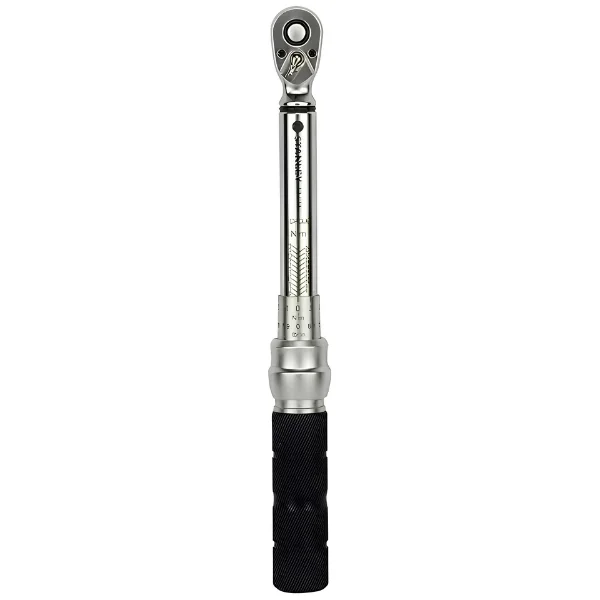
Technical SpecificationsTool Overview
|
Parameter |
Specification |
|
Model |
STMT73591-1-8 |
|
Brand |
STANLEY |
|
Drive Size |
1/2 inch square drive |
|
Torque Range |
60 – 340 Nm |
|
Accuracy |
±3% clockwise |
|
Mechanism |
Click-type torque release |
|
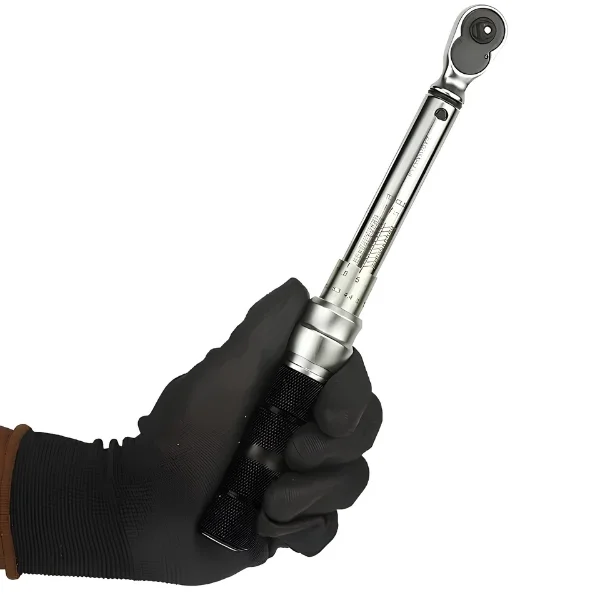
Measurement Scale |
Nm scale with adjustable setting |
|
Ratchet Direction |
Reversible |
|
Handle Type |
Knurled grip handle |
Measurement Units
|
Unit |
Range |
|
Newton-meter (Nm) |
60 – 340 |
|
Foot-pound (ft-lb)* |
approx. 44 – 251 |
*Conversion depends on exact torque calibration reference.
Mechanical Construction
|
Component |
Function |
|
Internal spring mechanism |
Maintains torque calibration |
|
Ratchet head |
Enables controlled tightening |
|
Torque adjustment handle |
Sets required torque value |
|
Locking mechanism |
Prevents torque drift during use |
|
Click release system |
Signals when torque value is reached |






Customer reviews