



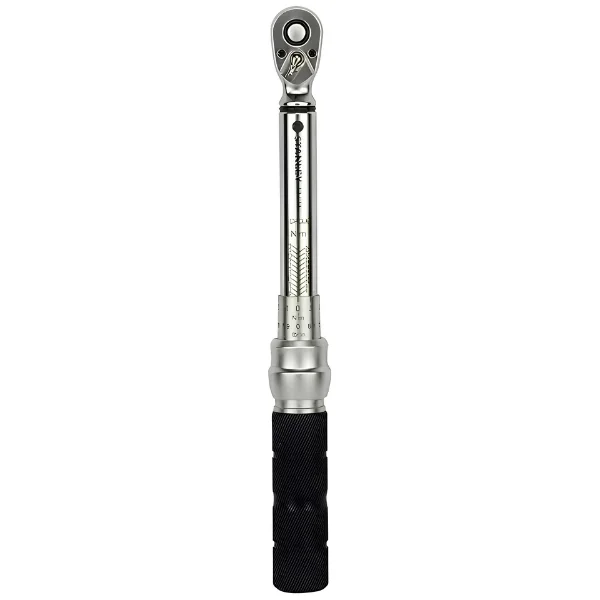
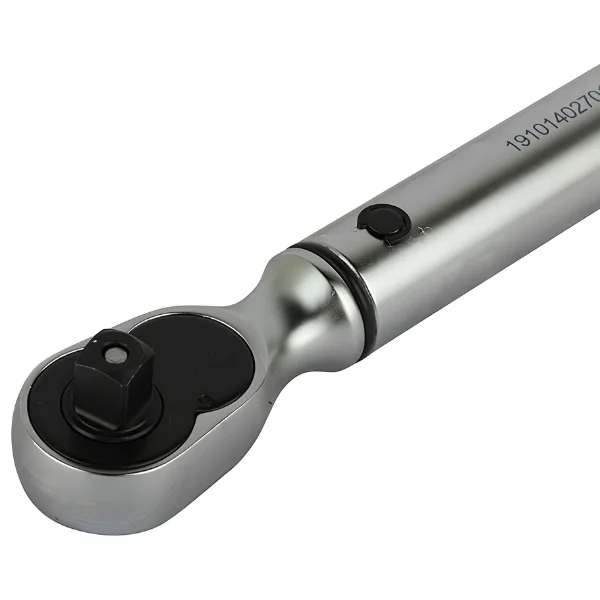
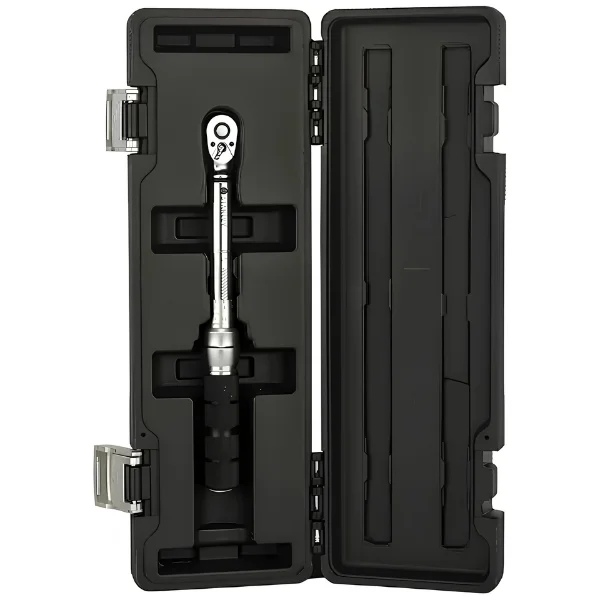
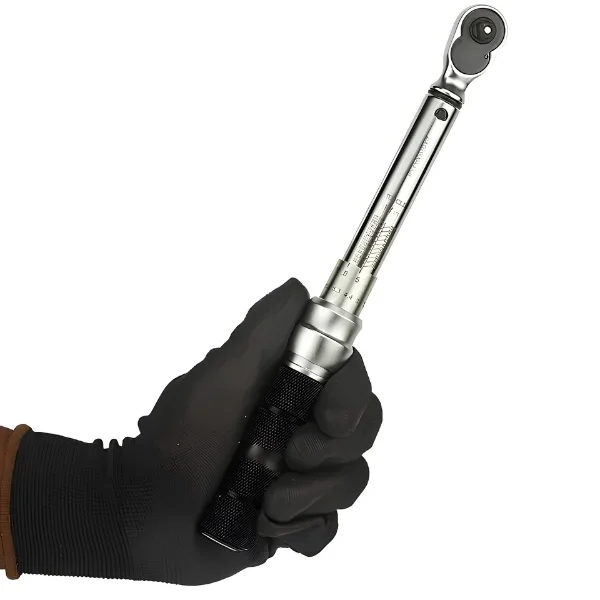
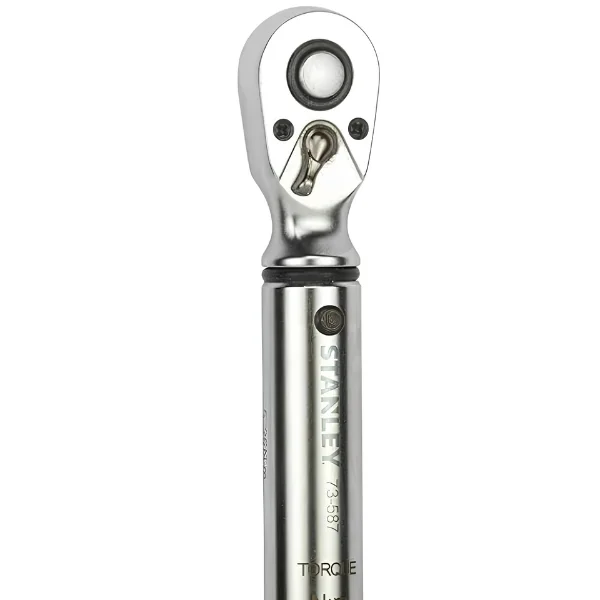


It is commonly used in automotive service, industrial maintenance, and mechanical assembly where precise torque application prevents bolt failure, equipment damage, and safety risks.
Application Context & Use Cases
Torque-controlled tightening is required wherever bolt preload directly affects mechanical reliability. The specified torque range of 20–100 Nm makes this tool suitable for medium-duty fastening tasks typically encountered in mechanical assemblies and maintenance operations.
Automotive Workshop Applications
Wheel & Chassis Fastening
Torque control ensures wheel studs and suspension bolts are tightened within manufacturer specifications.
Engine Component Assembly
Used during assembly or service of components such as:
cylinder head accessories
intake manifolds
mounting brackets
drivetrain components
Industrial Maintenance Applications
Equipment Servicing
Maintenance teams use torque wrenches when servicing:
pumps
compressors
industrial gearboxes
machine frames
Controlled torque prevents thread damage and maintains correct clamping force.
Mechanical Assembly Operations
Manufacturing environments often require torque verification when assembling:
machine housings
structural brackets
electrical enclosures
precision fixtures
Consistency is critical when the same fastener is repeated across production units.
Selection Guidance – How to Choose the Correct Torque Wrench
Selecting the correct torque wrench requires aligning the fastener torque requirement with the wrench operating range.
Rule for Accuracy
A torque wrench performs best when used between 20% and 80% of its maximum capacity.
For this tool:
Minimum recommended operating torque: ~20 Nm
Optimal range: 25–80 Nm
When This Torque Range Is Suitable
Typical bolt sizes and torque values that fall within this range include:
Bolt Size |
Typical Torque Range |
|
M8 |
20–30 Nm |
|
M10 |
40–60 Nm |
|
M12 |
70–100 Nm |
These values vary depending on:
material grade
lubrication
manufacturer specification
Always follow equipment specifications.
When a Different Torque Wrench Is Needed
If the required torque is:
below 20 Nm, use a lower-range torque wrench
above 100 Nm, use a higher capacity wrench
Using incorrect ranges leads to inaccurate tightening.
Capacity Calculation Example
Example: Fastening an M10 Bolt on an Automotive Assembly
Assume a mechanical component requires 50 Nm torque for an M10 bolt.
Step-by-Step Logic
Identify manufacturer torque requirement: 50 Nm
Confirm tool capacity: 20–100 Nm
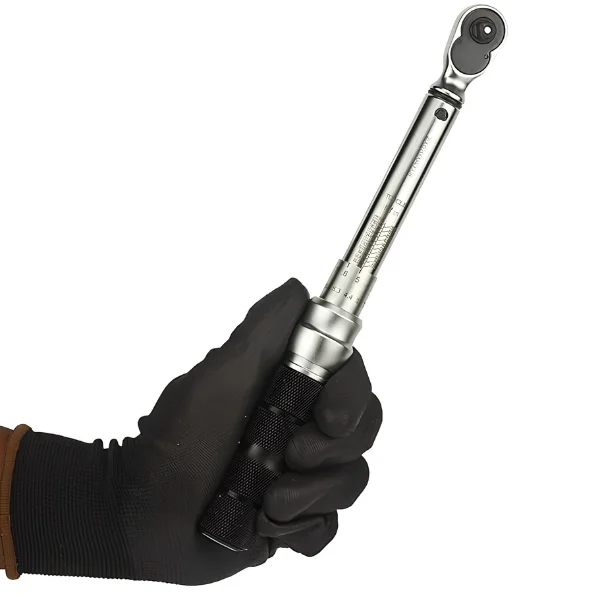
Set torque value using adjustment scale
Tighten bolt until click signal occurs
Why the Range Works
50 Nm falls close to the center of the tool’s working range, which maintains measurement accuracy.
Failure Conditions & Misuse Risks
Torque tools fail primarily due to improper usage rather than mechanical defects.
Over-Torque Application
Applying force after the click occurs may cause:
bolt over-tightening
thread damage
torque mechanism wear
Using for Loosening Bolts
Most click-type torque wrenches are not designed for loosening fasteners.
Doing so may:
damage internal calibration
cause ratchet wear
Using Impact Tools with Torque Wrench
Impact wrenches must never be attached to torque wrenches.
This can permanently damage the calibration mechanism.
Improper Storage
Leaving the wrench set at maximum torque may affect spring tension.
Standard practice is to reset torque to minimum value after use.
Precision Low-Torque Applications
Applications below 20 Nm, including:
electronics assembly
bicycle component fastening
precision instrument assembly
These require smaller torque tools.
Production Lines with Automated Torque Systems
High-volume manufacturing often requires:
digital torque tools
torque-controlled power drivers
Manual torque wrenches may not meet automation needs.
Material & Compatibility Table
|
Component |
Material / Design |
|
Wrench body |
Hardened steel |
|
Handle |
Anti-slip grip |
|
Ratchet mechanism |
Hardened alloy |
|
Torque spring |
Precision calibrated |
|
Drive interface |
Standard 1/2 inch square |
Compatible Fastener Materials
|
Fastener Material |
Compatibility |
|
Carbon steel bolts |
Yes |
|
Alloy steel bolts |
Yes |
|
Stainless steel bolts |
Yes |
|
Aluminum threaded parts |
Use with caution |
Aluminum threads require careful torque control to prevent stripping.
Operational Handling & Installation Considerations
Correct Tightening Method
Install appropriate socket
Set torque value on adjustment scale
Tighten gradually
Stop immediately after click signal
Torque Application Best Practices
To maintain accuracy:
apply steady force
keep wrench perpendicular to fastener
avoid sudden jerking movements
Calibration Maintenance
Torque tools used frequently should be calibrated periodically.
Typical recalibration interval:
6–12 months
depending on usage frequency
Commercial Clarity
Product Availability
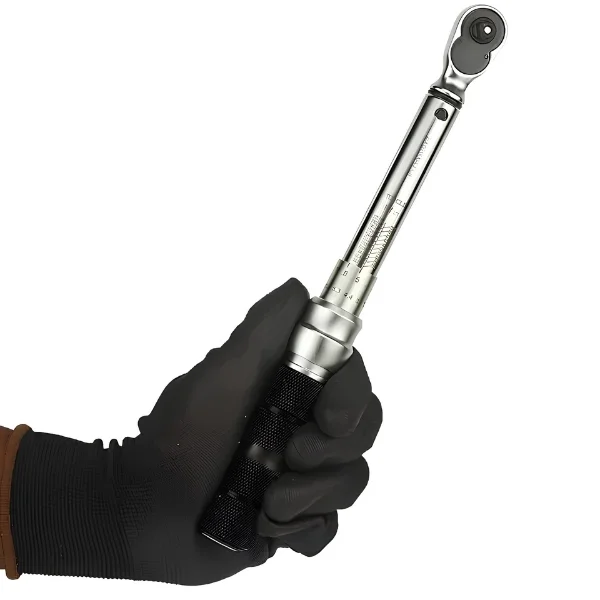
The STANLEY STMT73589-1-8 1/2" Torque Wrench 20–100 Nm is supplied for industrial and workshop procurement requirements.
Dispatch Capability
Pan-India dispatch available for industrial buyers including:
workshops
maintenance departments
procurement teams
Lead Time
Typical supply scenarios:
Order Type |
Lead Time |
|
Stock dispatch |
1–3 working days |
|
Bulk procurement |
Depends on quantity |
Minimum Order Quantity
MOQ generally depends on procurement context:
single unit for maintenance purchase
multiple units for workshop or plant requirements
Customization Availability
This is a standard branded tool and typically not customized.
However, procurement requirements such as:
bulk supply
tool kit integration
may be discussed during enquiry.
Compliance & Certification
Branded torque tools are manufactured according to global torque accuracy standards, supporting professional workshop and industrial usage.
Tender Compatibility
Industrial procurement teams requiring:
model confirmation
specification validation
may request documentation during enquiry.
Procurement Process
Industrial buyers can streamline enquiry by providing:
Required Information
quantity required
delivery location
application use (optional)
procurement deadline
Typical Procurement Flow
Product specification verification
RFQ submission
Commercial quotation
Order confirmation
Dispatch scheduling
Comparison Table – Torque Wrench Options
|
Feature |
STANLEY STMT73589-1-8 |
Lower Range Torque Wrench |
Digital Torque Wrench |
|
Torque Range |
20–100 Nm |
5–25 Nm |
Varies |
|
Accuracy |
±3% |
±4% |
±1–2% |
|
Display |
Mechanical |
Mechanical |
Digital |
|
Maintenance |
Low |
Low |
Higher |
|
Cost Level |
Moderate |
Low |
Higher |
|
Best Use |
Automotive / industrial bolts |
small fasteners |
precision assembly |
Selection Checklist
Before purchasing a torque wrench, confirm the following:
Required torque value falls between 20–100 Nm
Fastener size compatible with 1/2" drive sockets
Application requires manual torque verification
Workshop or maintenance environment requires controlled tightening
No automated torque system is required
Tool will be used within recommended torque range
If these conditions are satisfied, this torque wrench is suitable.
High-Intent FAQs
What torque range does this wrench support?
The STANLEY STMT73589-1-8 1/2" Torque Wrench 20–100 Nm operates within a torque range of 20 to 100 Newton-meters, suitable for medium-duty fastening tasks.
Can this torque wrench be used for wheel nuts?
Many automotive wheel nuts fall within the 80–120 Nm range. This wrench may be suitable for vehicles with torque specifications within 100 Nm or lower.
Always follow manufacturer torque specifications.
How accurate is the torque measurement?
This click-type torque wrench typically maintains ±3% accuracy, which is standard for professional mechanical torque tools.
Is calibration required?
Yes. Periodic calibration is recommended, especially when the tool is used frequently in professional maintenance environments.
Can it loosen tight bolts?
Torque wrenches are designed for controlled tightening, not for loosening seized fasteners. Use a breaker bar for loosening bolts.
What socket size is compatible?
This wrench uses a 1/2 inch square drive, making it compatible with standard 1/2-inch socket sets.
Is this suitable for industrial maintenance?
Yes. The torque range is commonly used in machinery maintenance, automotive repair, and equipment servicing where controlled bolt tightening is required.
Technical SpecificationsProduct Specification Overview
|
Parameter |
Specification |
|
Model |
STMT73589-1-8 |
|
Brand |
STANLEY |
|
Drive Size |
1/2 inch square drive |
|
Torque Range |
20 – 100 Nm |
|
Accuracy |
±3% |
|
Mechanism |
Click-type torque control |
|
Adjustment |
Micrometer style |
|
Locking |
Mechanical torque lock |
|
Direction |
Clockwise torque |
|
Handle Type |
Non-slip grip |
|
Application |
Automotive / Industrial fastening |
Torque Measurement Scale
|
Unit |
Range |
|
Newton-meter |
20 – 100 Nm |
|
Approx. ft-lb equivalent |
15 – 74 ft-lb |
Drive Compatibility
|
Drive Size |
|
Compatible Tools |
|
1/2 inch |
|
Socket sets |
|
1/2 inch |
|
Extension bars |
|
1/2 inch |
|
Universal joints |
|
1/2 inch |
|
Impact sockets (manual use only) |






Customer reviews