



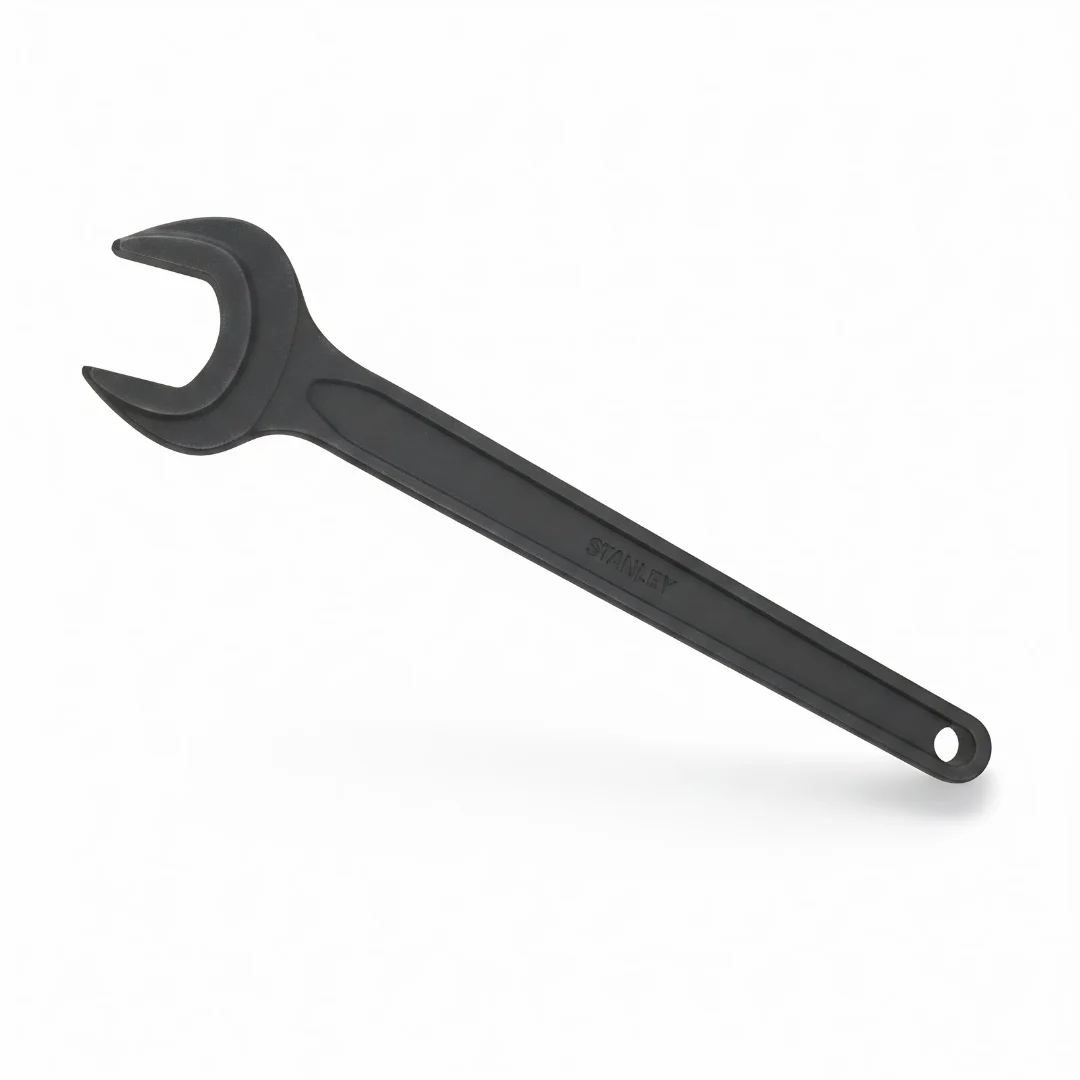
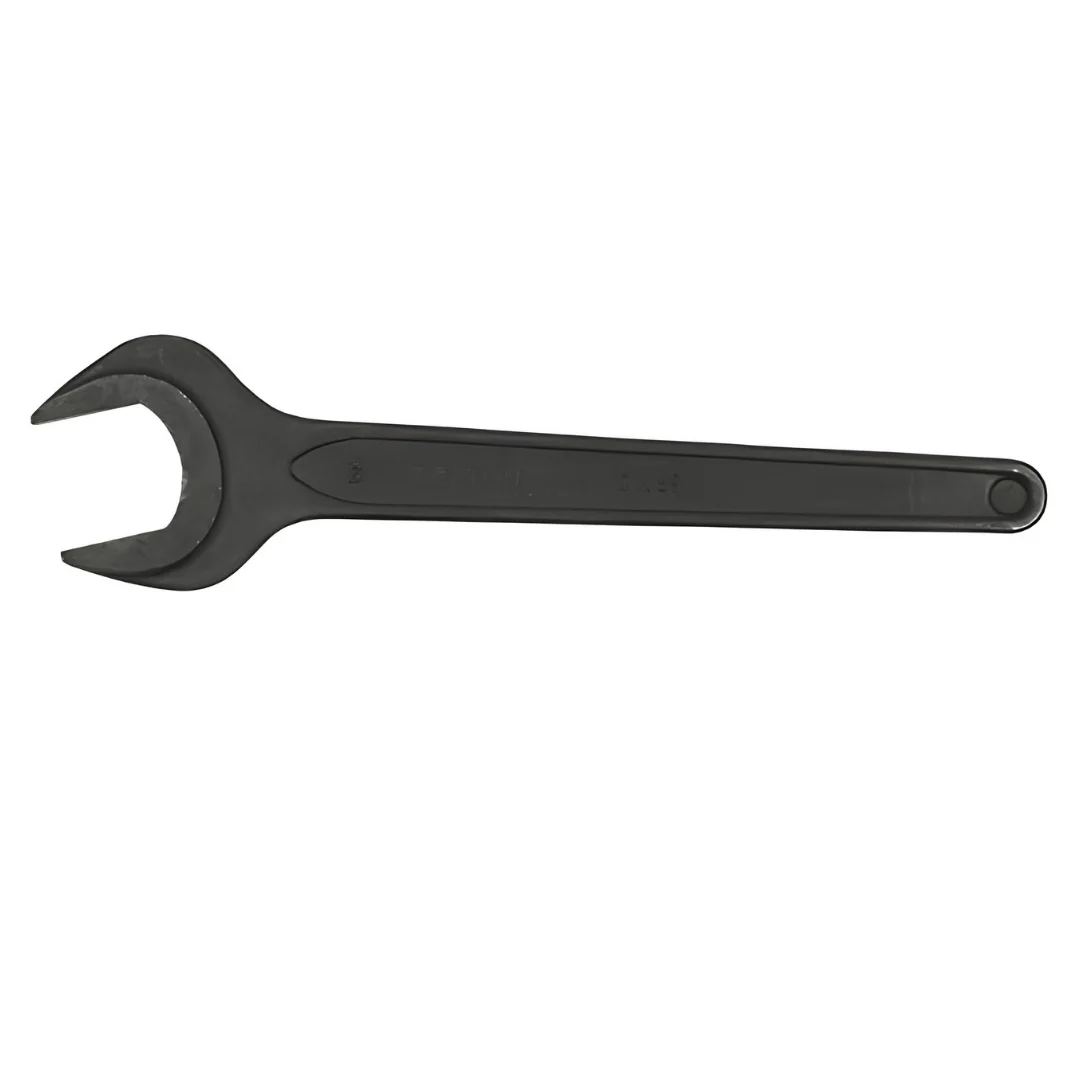
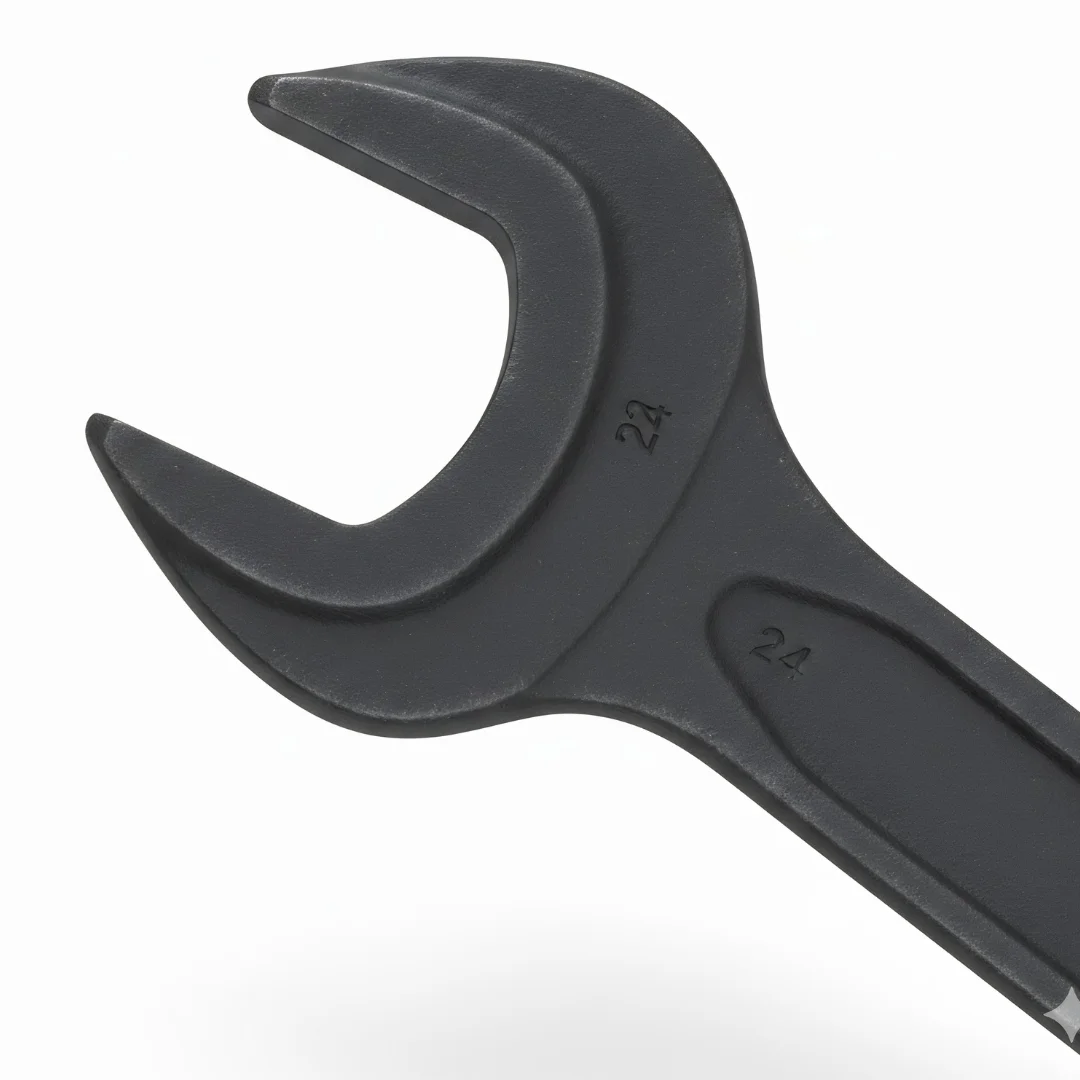


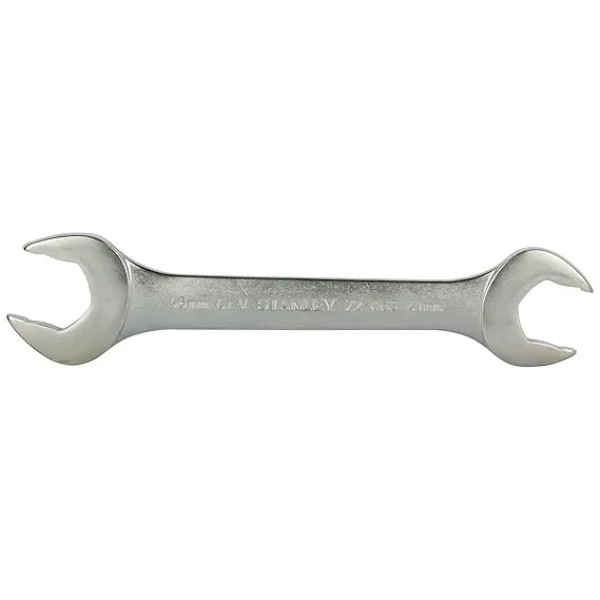
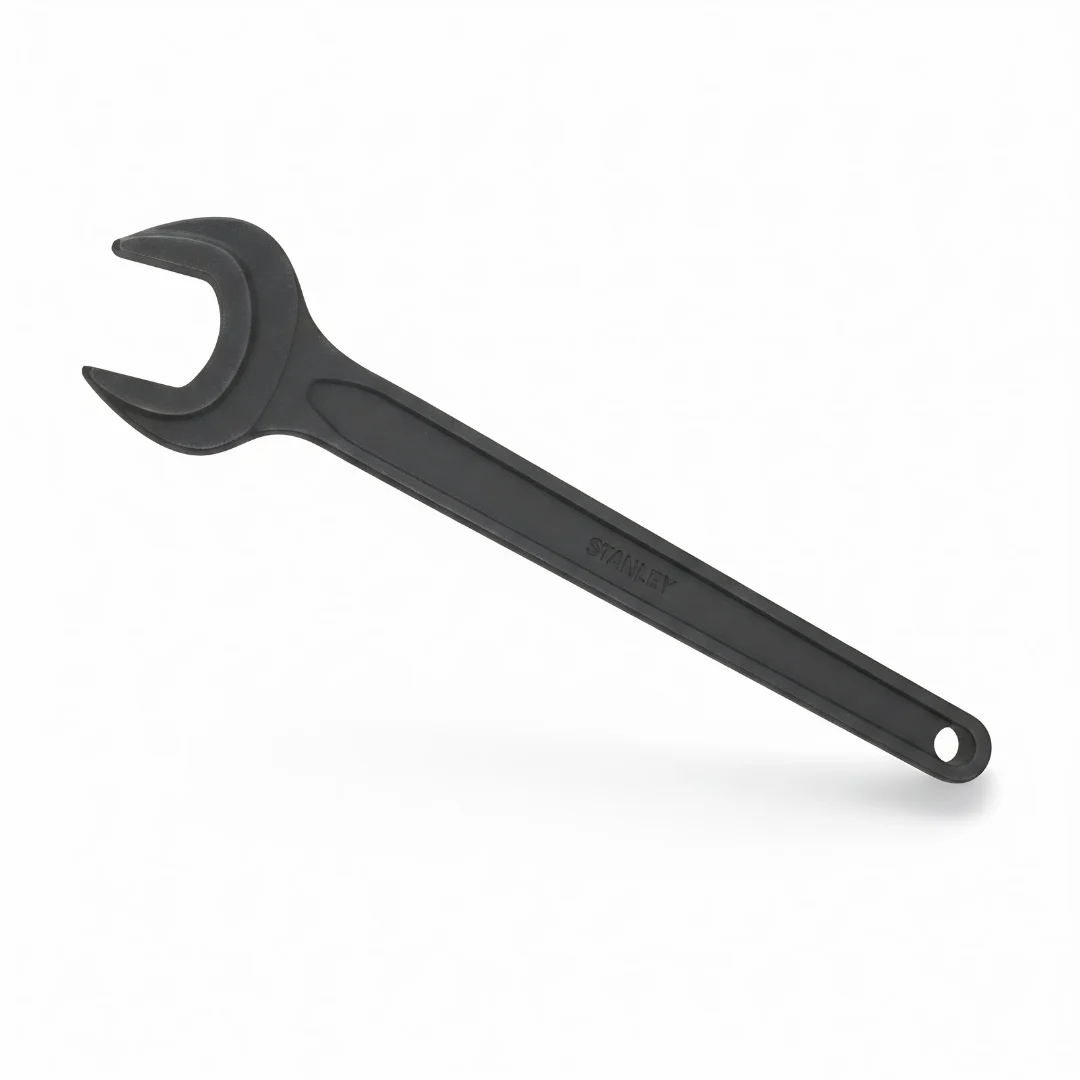
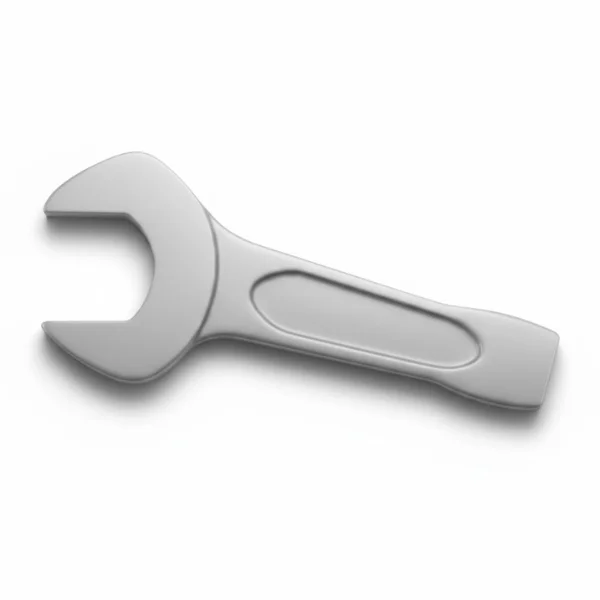
The open-jaw geometry enables lateral engagement with the fastener, making it suitable for maintenance operations on heavy machinery, industrial assemblies, and structural bolting systems.
Application Context & Use Cases
Large spanners in the 40 mm+ range are typically used in environments where structural fasteners and high-load mechanical assemblies are common. The 41 mm open-jaw spanner is primarily a maintenance and service tool rather than an assembly-line tool.
Heavy Machinery Maintenance
Maintenance teams working on equipment such as crushers, conveyors, or large pumps often encounter fasteners that cannot be accessed axially. An open-jaw spanner allows side engagement with the bolt head or nut when clearance is restricted.
Infrastructure & Structural Installations
Steel structures, bridge components, and heavy fabrication assemblies frequently use large hex fasteners. The 41 mm tool size corresponds to large nut standards used in structural hardware.
Industrial Equipment Servicing
Industrial maintenance departments use this size tool when servicing:
Pumps and compressors
Valves and flange assemblies
Gearbox mounts
Structural machine frames
Workshop Toolkits
Large-format spanners are commonly included in heavy mechanical maintenance kits maintained by service contractors and plant engineering departments.
Selection Guidance – Choosing the Correct Spanner
Correct spanner selection depends on fastener size, clearance conditions, and torque requirements.
Confirm the Fastener Size
The spanner size must correspond exactly to the across-flat dimension of the nut or bolt head.
Example:
Fastener Type |
Across Flats Size |
|
Heavy hex nut |
41 mm |
|
Large mechanical bolt |
41 mm |
If the fastener size is smaller or larger than the jaw opening, tool slippage may occur.
Evaluate Access Constraints
A single-end open-jaw spanner is typically selected when:
Socket access is blocked
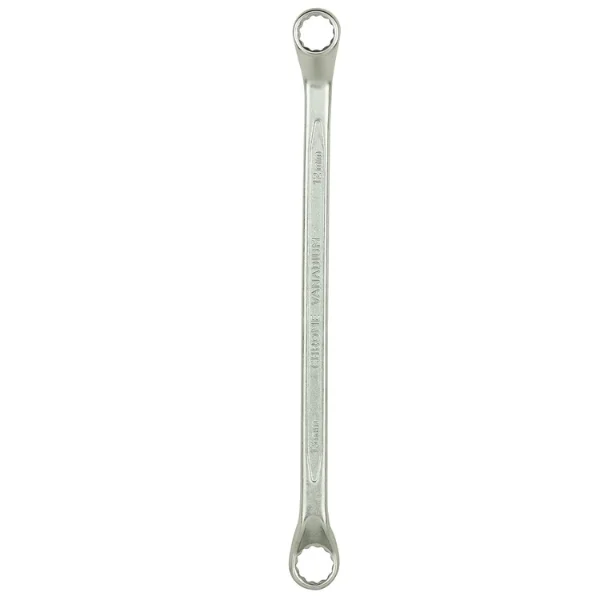
Ring spanners cannot slide over the fastener
Side access is the only available approach
Consider Torque Requirements
Large fasteners require significant torque. Operators should verify that:
The tool length provides adequate leverage
The fastener torque requirement does not exceed manual tool limits
Capacity & Torque Consideration Example
Example Maintenance Scenario
A pump mounting bolt uses a 41 mm heavy hex nut.
Typical torque range for such fasteners in structural or machinery applications may exceed 400–600 Nm depending on bolt grade.
Practical Use Logic
Position the open jaw onto the nut.
Apply steady torque through the handle.
Reposition the spanner after each partial rotation.
This method is commonly used when full rotational clearance is unavailable.
Failure Conditions & Misuse Risks
Large open-jaw spanners can fail prematurely if used outside intended conditions.
Incorrect Fastener Size
Using a 41 mm spanner on undersized fasteners leads to:
Jaw rounding
Fastener corner damage
Loss of torque transfer
Excessive Impact Force
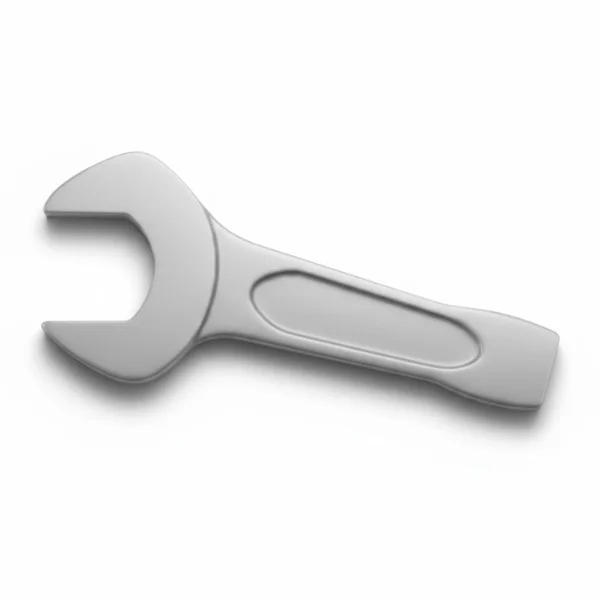
Open-jaw spanners are manual torque tools, not impact tools.
Using hammer force or pipe extensions can cause:
Handle bending
Jaw deformation
Structural failure of the tool
Poor Fastener Engagement
Partial jaw contact increases risk of:
Fastener rounding
Tool slippage
Operator injury
Operators should ensure full jaw contact with the fastener flats.
Material & Compatibility Table
|
Fastener Type |
Compatibility |
Notes |
|
Hex bolts |
Compatible |
Standard use |
|
Heavy hex nuts |
Compatible |
Common industrial application |
|
Structural bolts |
Compatible |
Used in steel assemblies |
|
Square nuts |
Limited |
Depends on dimension |
|
Rounded fasteners |
Not compatible |
Requires different tools |
|
Socket head bolts |
Not compatible |
Requires hex keys or sockets |
Operational Handling & Installation Considerations
Correct handling improves tool life and operational safety.
Jaw Alignment
The spanner jaw must sit parallel to the nut flats to distribute load evenly.
Torque Application
Apply torque gradually rather than sudden force. Sudden torque spikes can lead to tool slippage.
Operator Positioning
When loosening tight fasteners:
Position body weight behind the tool
Maintain stable footing
Avoid pulling toward the face or torso
These practices reduce the risk of injury during high-torque operations.
Commercial Clarity
Industrial procurement teams typically require clear commercial parameters before enquiry.
Lead Time
Lead time depends on stock availability and dispatch location.
Typical scenarios:
In-stock tools: short dispatch window
Bulk orders: coordinated supply scheduling
Dispatch Capability
Supply can be arranged for industrial buyers across India, including plant maintenance teams, engineering contractors, and distributors.
Minimum Order Quantity
For industrial tools, MOQ may vary depending on:
Single tool purchase
Bulk procurement
Distributor orders
Customization Availability
As a branded product, the STANLEY STMT96985 is supplied in its original manufacturer configuration. Structural modifications or customization are generally not applicable.
Compliance & Certification
STANLEY hand tools are typically manufactured under internationally recognized industrial tool standards for:
Material strength
Forging integrity
Dimensional accuracy
Verification may be required during procurement evaluation.
Tender Compatibility
Industrial organizations issuing tool tenders typically require:
Exact product model identification
Brand verification
Supply capability confirmation
The STMT96985 model identification supports clear tender specification referencing.
Procurement Process
Industrial procurement teams can accelerate enquiry processing by providing the following details.
Information to Include in Enquiry
Product model: STMT96985
Required quantity
Delivery location
Buyer organization details
Procurement timeline
Whether supply is for tender or direct purchase
Providing this information enables faster quotation preparation and supply confirmation.
Comparison Table – Common Alternatives
|
Tool Type |
Access Method |
Torque Capability |
Typical Use Case |
|
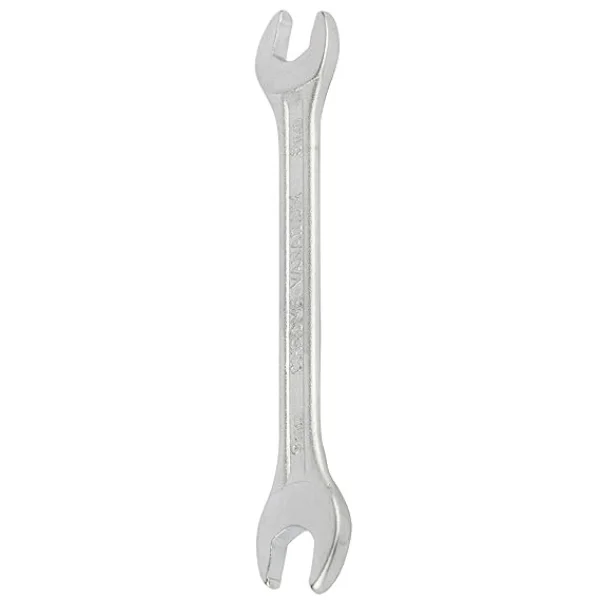
Open-jaw spanner |
Side access |
Moderate |
Restricted access fasteners |
|
Ring spanner |
Full hex engagement |
Higher |
Standard mechanical work |
|
Socket wrench |
Axial access |
High |
High torque applications |
|
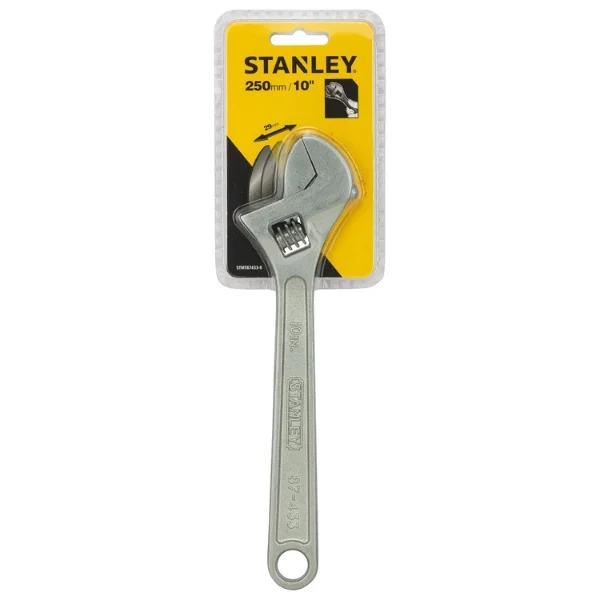
Adjustable spanner |
Variable jaw |
Low |
Light maintenance |
|
Impact socket |
Machine-driven |
Very high |
Industrial torque operations |
Open-jaw spanners remain essential where clearance limitations prevent the use of other tools.
Selection Checklist
Before selecting a 41 mm open-jaw spanner, confirm the following:
Fastener size is exactly 41 mm across flats
Side access is required
Socket tools cannot be applied
Torque requirement falls within manual tool range
The tool will be used for maintenance rather than high-production assembly
If all conditions are satisfied, this spanner size is appropriate.
Decision-Stage FAQs
Is the STMT96985 spanner suitable for heavy industrial fasteners?
Yes. The 41 mm size corresponds to large mechanical fasteners commonly used in industrial equipment, structural assemblies, and heavy machinery installations.
Can this spanner replace a socket wrench for large bolts?
Only when socket access is restricted. Socket tools typically provide higher torque capacity and full fastener engagement.
What happens if the spanner size is slightly larger than the fastener?
Using an oversized spanner increases the risk of fastener rounding and tool slippage. Exact size matching is required.
Is this tool suitable for high-torque tightening?
It can be used for tightening operations within manual torque limits. For extremely high torque requirements, socket tools or torque wrenches are preferred.
Are open-jaw spanners commonly used in industrial maintenance?
Yes. Maintenance technicians rely on open-jaw spanners when fasteners cannot be accessed axially due to equipment layout constraints.
Does the spanner work with structural steel fasteners?
Yes. Many structural fasteners use large hex sizes compatible with spanners in the 36–46 mm range.
Can distributors procure this tool for resale?
Industrial tool distributors frequently procure branded spanners for resale to workshops, contractors, and maintenance departments.
Technical SpecificationsProduct Identification
Product Model Details
|
Parameter |
Specification |
|
Brand |
STANLEY |
|
Model Number |
STMT96985 |
|
Tool Type |
Single-End Open-Jaw Spanner |
|
Nominal Size |
41 mm |
|
Application |
Industrial fastening and maintenance |
|
Jaw Design |
Open-end |
|
Usage Orientation |
Side access to hex fasteners |
Physical Construction
Tool Design Parameters
|
Feature |
Technical Description |
|
Jaw Geometry |
Open-end jaw allowing lateral fastener engagement |
|
Jaw Opening |
Designed to accommodate 41 mm hex fasteners |
|
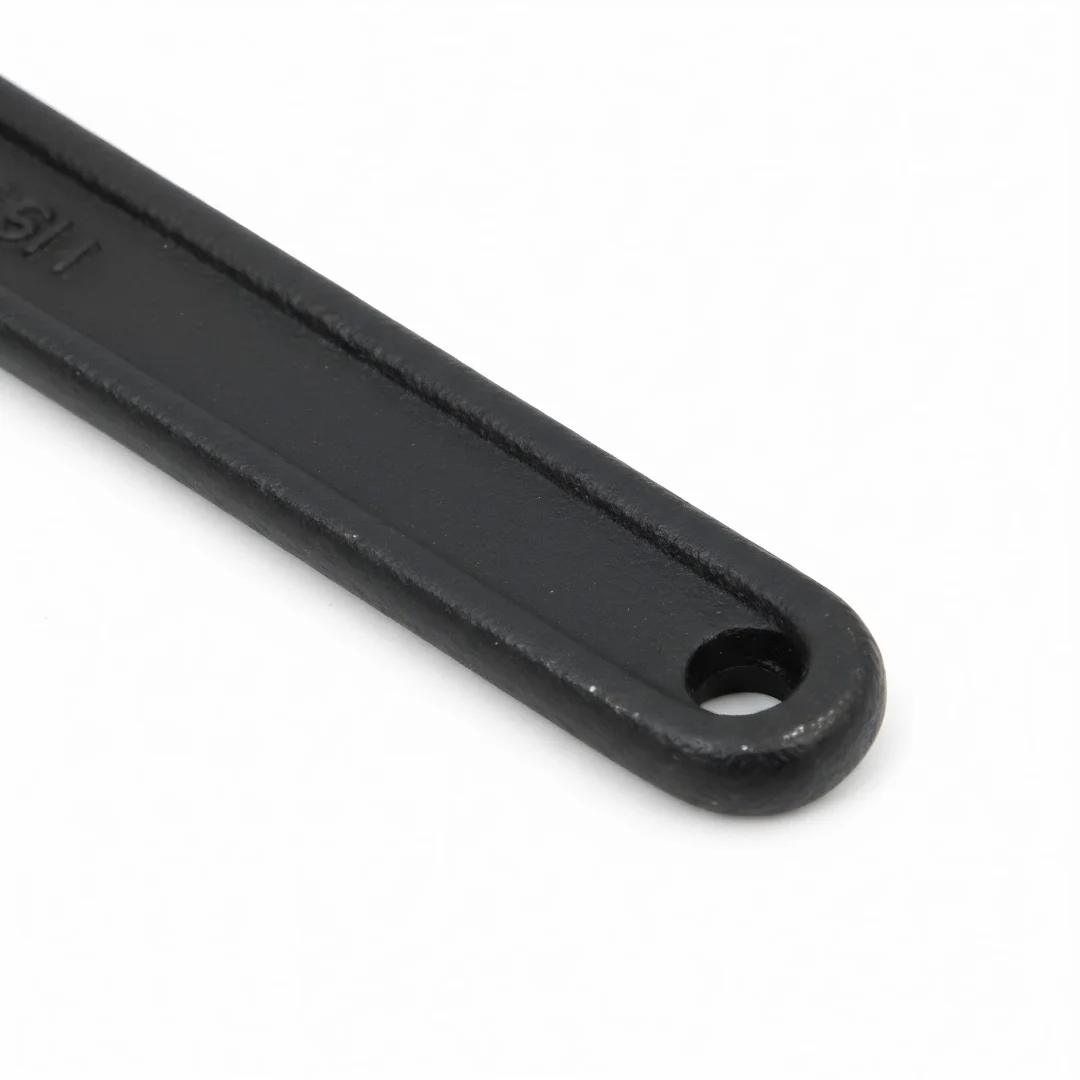
Handle Design |
Straight handle for controlled torque application |
|
Head Orientation |
Fixed open jaw configuration |
|
Surface Finish |
Corrosion-resistant industrial finish |
|
Manufacturing Process |
Forged steel construction typical of industrial spanners |
Dimensional Characteristics
Size Reference Data
|
Specification |
Typical Industrial Value |
|
Nominal Fastener Size |
41 mm |
|
Typical Nut Standard |
Heavy hex industrial fasteners |
|
Spanner Category |
Large-format industrial spanner |
|
Operational Use |
Maintenance and servicing |







Customer reviews