



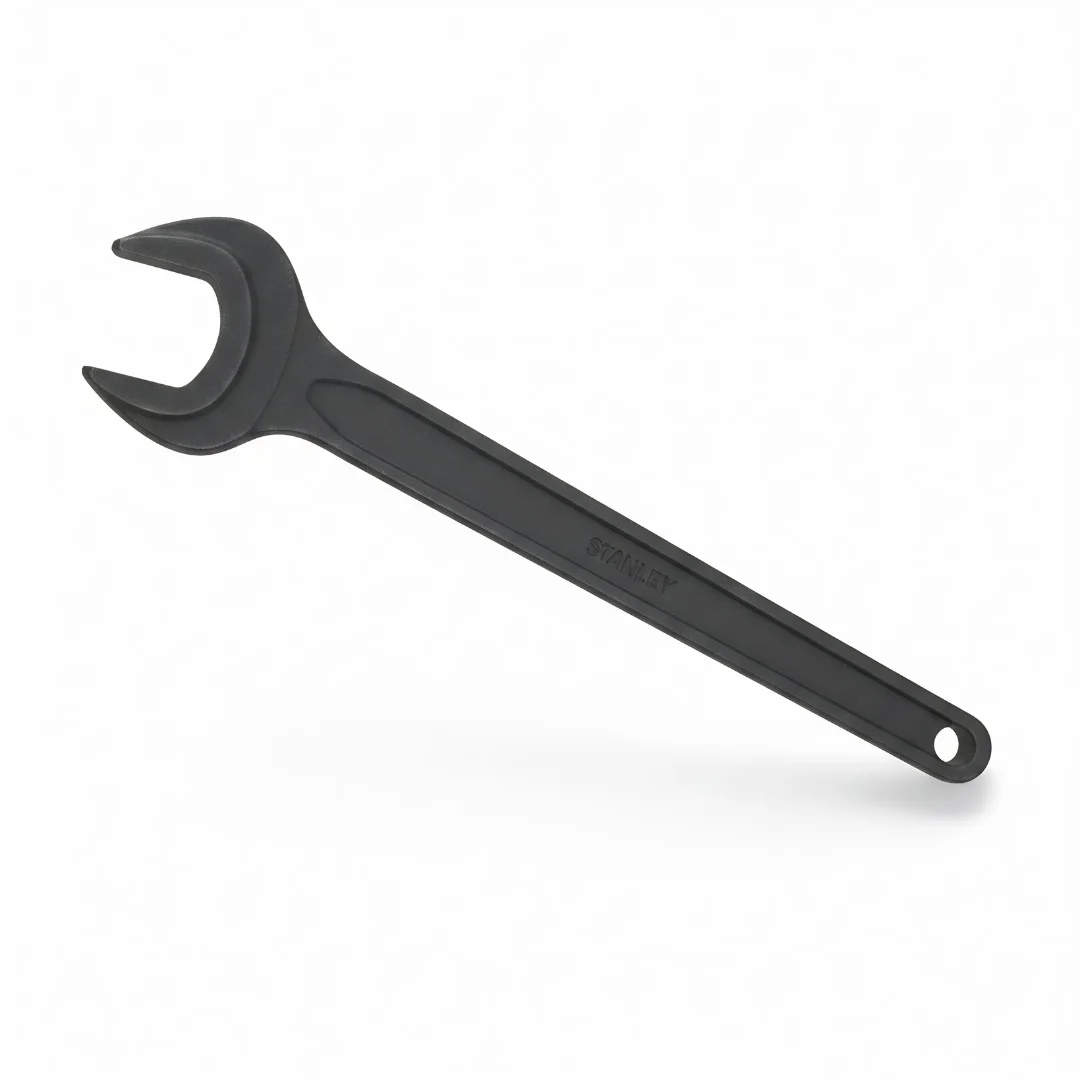
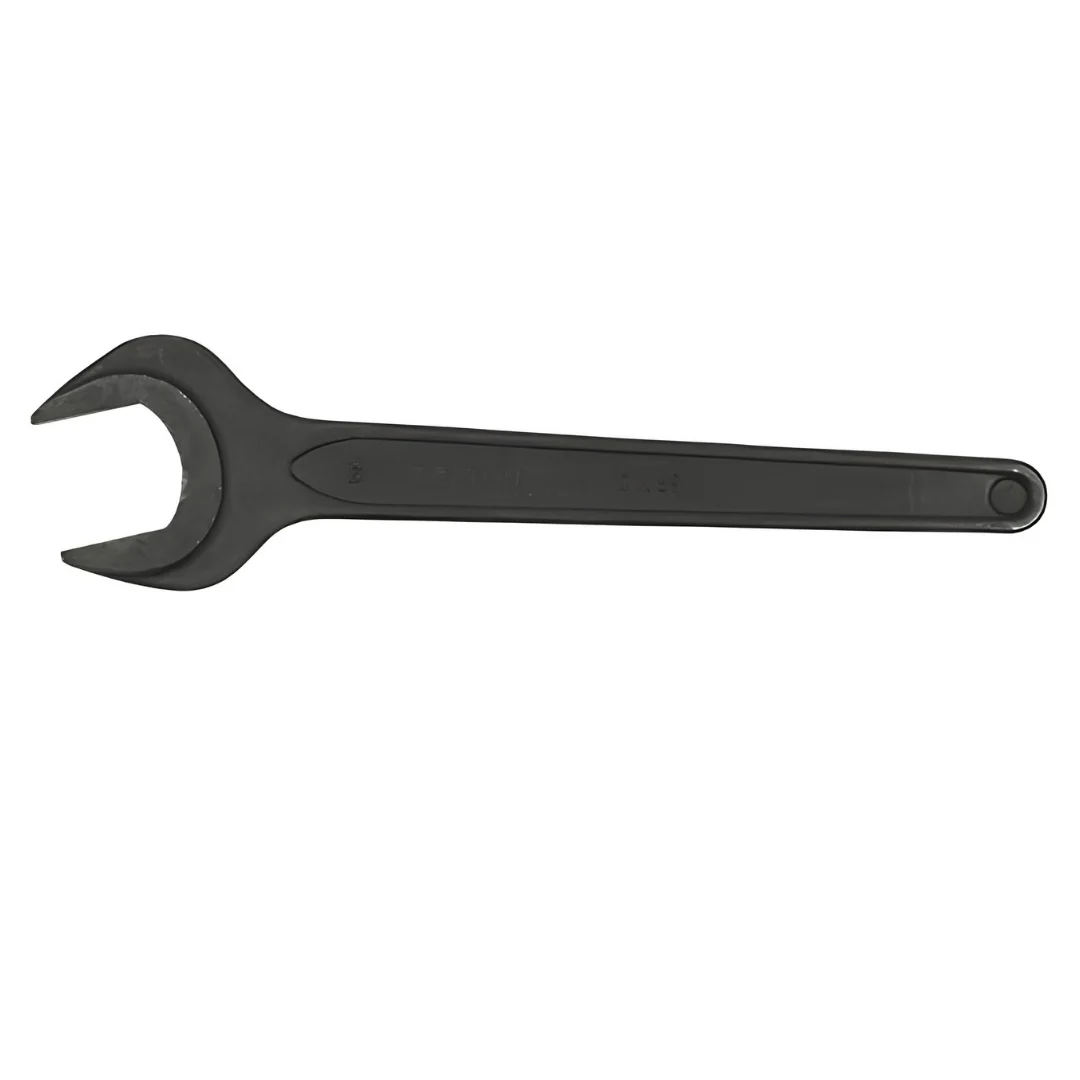
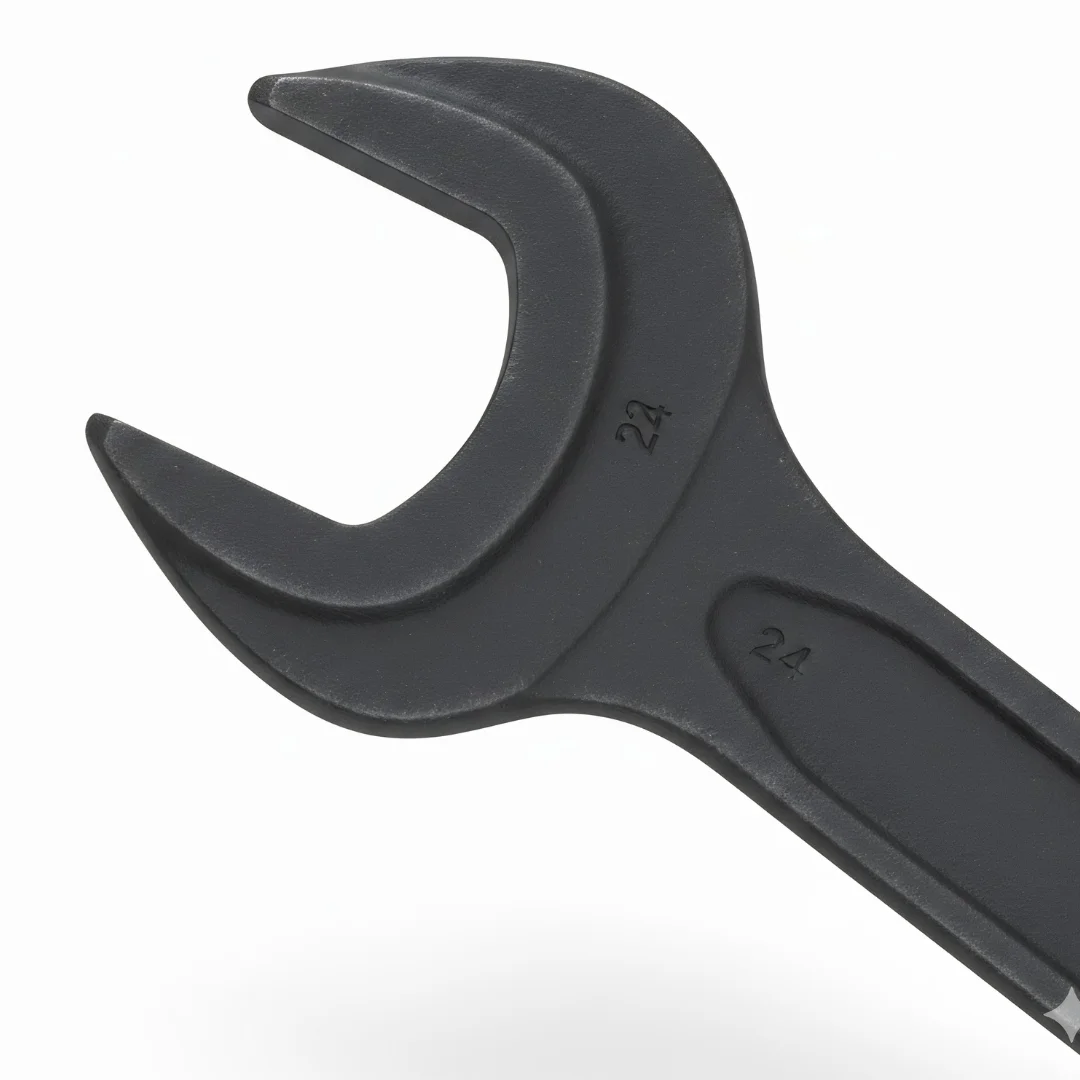
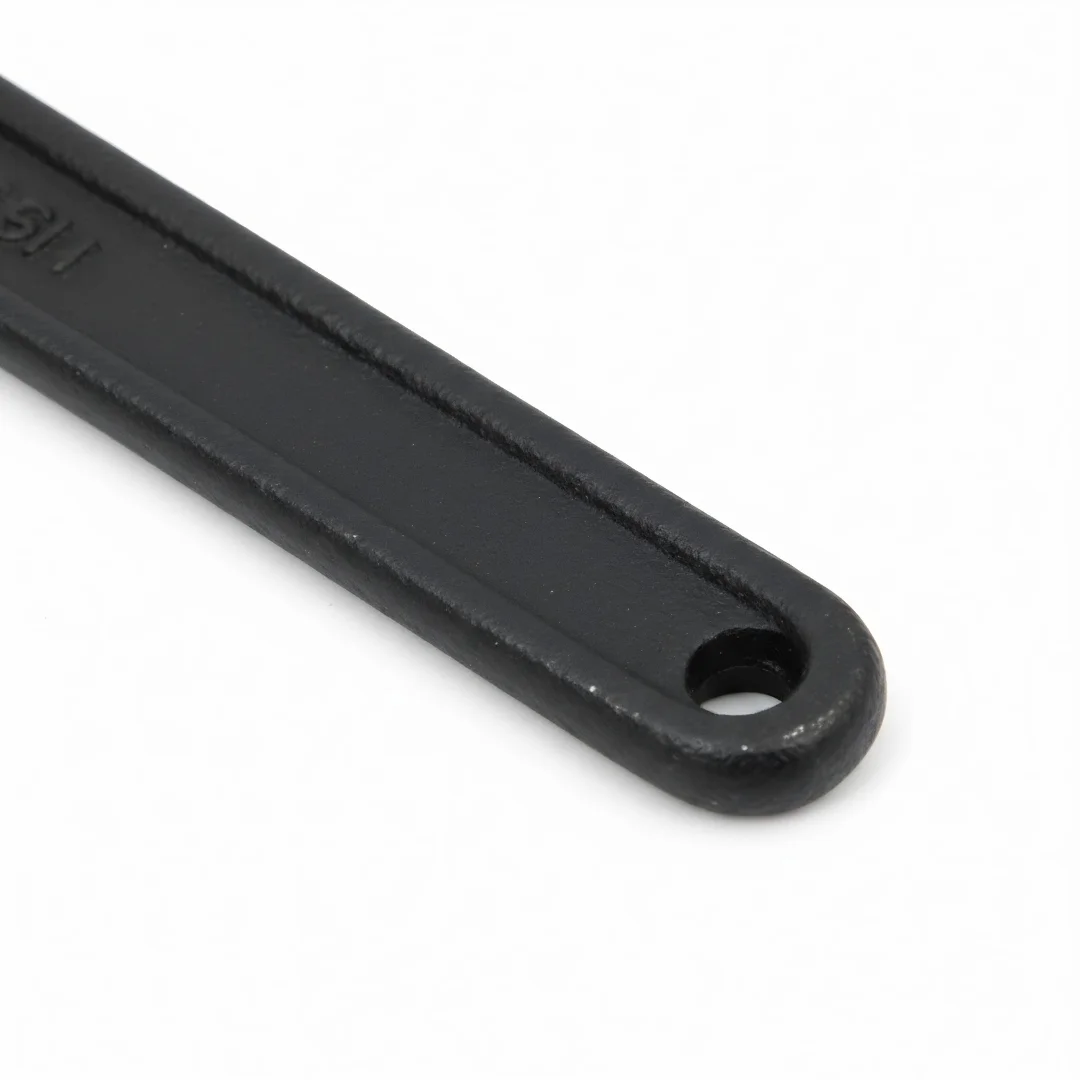


This spanner is typically used in heavy mechanical maintenance, fabrication workshops, construction equipment servicing, and plant maintenance operations.
Application Context & Use Cases
Industrial buyers typically procure this spanner for environments where large fasteners must be accessed quickly without socket clearance.
Heavy Equipment Maintenance
Large fasteners used in:
Earthmoving machinery
Structural steel assemblies
Industrial compressors
Hydraulic assemblies
Require tools capable of high torque manual application.
Fabrication Workshops
Steel fabrication and machine assembly frequently use large bolts where a 36 mm jaw opening is required.
Typical applications include:
Structural frame assembly
Machinery mounting plates
Industrial pipe flanges
Equipment support brackets
Construction Equipment Servicing
Field technicians servicing cranes, loaders, and batching plants often require open-jaw tools that allow side access to bolts.
Plant Maintenance Operations
Maintenance teams in:
Cement plants
Steel mills
Manufacturing facilities
Keep large spanners as part of standard mechanical toolkits for shutdown or breakdown repairs.
Selection Guidance
Selecting the correct spanner size is critical to prevent fastener damage and tool slippage.
Step 1 — Confirm Fastener Size
The spanner must match the across-flats dimension of the bolt head or nut.
For this tool:
Required fastener size = 36 mm
Using undersized or oversized tools increases the risk of:
Rounding fastener corners
Tool slipping under torque
Operator injury
Step 2 — Evaluate Access Conditions
Choose an open-jaw spanner when:
Vertical access is blocked
Socket tools cannot be inserted
Ring spanners cannot rotate fully
The open jaw allows side-entry engagement.
Step 3 — Consider Torque Requirement
Open-jaw spanners are suitable for:
Moderate to high manual torque
Initial loosening of fasteners
Quick mechanical adjustments
For extremely high torque, technicians often shift to ring spanners or torque wrenches after initial loosening.
Capacity / Calculation Example
Understanding torque requirements helps determine whether the spanner size is appropriate.
Example Scenario
Industrial bolt size: M24
Typical hex head across flats: 36 mm
Required tightening torque may range around:
Approximate torque range:
400 – 600 Nm (depending on bolt grade)
When applying torque using a manual spanner:
Torque = Force × Lever Length
Example:
Force applied: 300 N
Handle length: 0.45 m
Torque = 135 Nm
This demonstrates why technicians sometimes use additional leverage tools or longer spanners for large bolts.
The 36 mm spanner is typically used for:
Positioning
Initial loosening
Maintenance adjustments
Failure Conditions & Misuse Risks
Incorrect tool usage can lead to tool or fastener damage.
Oversized Fasteners
Using a 36 mm spanner on larger bolts may result in:
Incomplete jaw engagement
Sudden tool slip
Impact Loading
Open spanners are not designed for hammer striking.
Impact loading can cause:
Jaw deformation
Metal fatigue
Cheater bar Usage
Extending handle length using pipes to increase torque can lead to:
Tool bending
Jaw spreading
Worn Fasteners
If fastener corners are rounded, open spanners lose grip quickly.
In such cases:
Ring spanners
Impact sockets
May be required.
Precision Torque Applications
Applications requiring calibrated torque control should use:
Torque wrenches
Socket-based tools
Confined Rotation Environments
Where bolt rotation clearance is extremely limited, technicians may prefer:
Ratcheting spanners
Crowfoot sockets
Material / Compatibility Table
Fastener Compatibility
|
Fastener Type |
Compatibility |
|
Hex bolts |
Compatible |
|
Hex nuts |
Compatible |
|
Square fasteners |
Not recommended |
|
Flange bolts |
Depends on clearance |
Application Compatibility
|
Industry |
Typical Use |
|
Construction equipment |
Maintenance |
|
Industrial fabrication |
Assembly |
|
Plant maintenance |
Repair |
|
Infrastructure projects |
Structural fasteners |
Operational Handling & Installation Considerations
Proper handling improves safety and tool life.
Jaw Engagement
Always ensure the spanner jaw fully seats on the fastener flats before applying force.
Partial engagement increases:
Slippage risk
Fastener damage
Pull Instead of Push
Technicians are advised to pull the spanner toward the body rather than pushing away.
This reduces:
Loss of balance
Injury if the tool slips
Correct Orientation
The open jaw should face the direction where force closes the jaw against the fastener, improving grip.
Commercial Clarity
This page represents industrial supply capability for the product.
Lead Time
Typical lead time depends on stock availability and order quantity.
Most procurement orders are processed within standard dispatch cycles.
Dispatch Capability
Supply is supported for Pan-India delivery through industrial logistics networks.
Dispatch arrangements typically include:
Courier transport
Surface logistics
Bulk shipment for distributor orders
Minimum Order Quantity (MOQ)
Small quantities may be supplied for maintenance procurement.
Bulk orders are typically placed by:
Distributors
Workshops
Project contractors
Customization Availability
This product is supplied as a standard manufactured tool.
Customization is generally not applicable for branded hand tools.
Compliance / Certification Clarity
The tool is manufactured according to standard industrial hand tool specifications used in mechanical maintenance environments.
Tender Compatibility
Industrial tool procurement may occur under:
Contractor toolkits
Plant maintenance tenders
Equipment servicing contracts
Procurement documentation can be aligned with standard purchase procedures.
Procurement Process (How to Enquire)
Industrial buyers typically provide the following information when requesting supply.
Required Procurement Details
Product model or description
Required quantity
Delivery location
Company name
Contact person
Providing accurate product identification such as model STMT96983 helps avoid supply errors.
Comparison Table (Common Alternatives)
|
Tool Type |
Access Type |
Torque Capability |
Typical Use |
|
Open-Jaw Spanner |
Side access |
Moderate |
Maintenance adjustments |
|
Ring Spanner |
Full contact |
High |
Final tightening |
|
Socket Wrench |
Vertical access |
High |
Assembly operations |
|
Adjustable Spanner |
Variable |
Low–moderate |
General maintenance |
Open-jaw spanners remain essential for situations where other tools cannot physically access the fastener.
Selection Checklist
Use the following checklist before procurement.
Fastener across flats is 36 mm
Access does not allow socket tools
Fastener requires open-jaw engagement
Manual torque application is acceptable
Tool is required for maintenance or assembly work
If these conditions apply, the tool is typically suitable.
High-Intent FAQs
Is the STMT96983 spanner compatible with M24 bolts?
Yes. M24 hex bolts typically have a 36 mm across-flats dimension, making this spanner suitable for those fasteners.
Can this spanner be used for high-torque applications?
Open-jaw spanners can handle moderate torque. Extremely high torque operations may require ring spanners or torque wrenches.
Is this tool suitable for industrial maintenance toolkits?
Yes. Large spanners such as the 36 mm size are commonly included in plant maintenance and heavy equipment service kits.
Can this spanner be used with pipe extensions for extra leverage?
Using extensions is generally discouraged because it may damage the tool or cause jaw deformation.
What industries typically require 36 mm spanners?
Industries including:
Construction equipment maintenance
Fabrication workshops
Heavy machinery servicing
Infrastructure projects
Frequently require tools of this size.
How do buyers confirm the correct spanner size?
The correct size is determined by measuring the across-flats dimension of the fastener head or nut.
Technical Specifications
Product Identification
Product Details
|
Specification |
Data |
|
Brand |
STANLEY |
|
Model |
STMT96983 |
|
Tool Type |
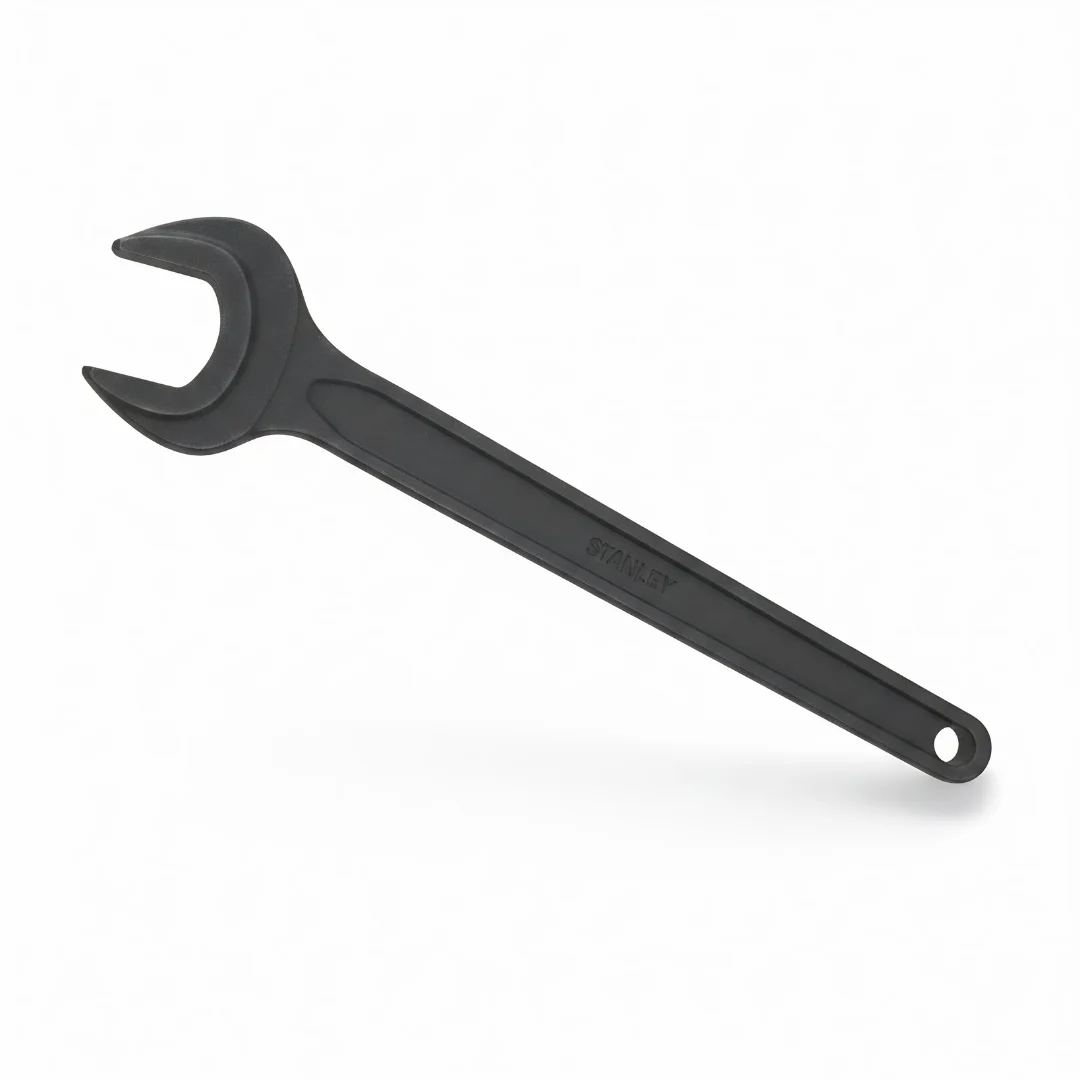
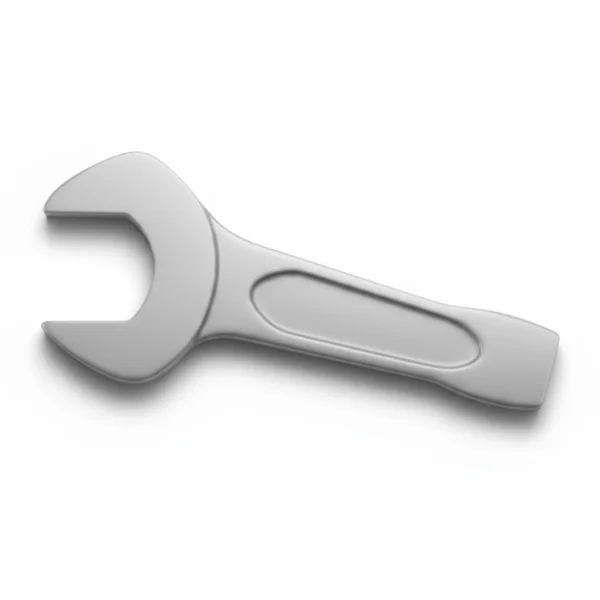
Single-End Open-Jaw Spanner |
|
Jaw Size |
36 mm |
|
Standard |
Industrial Hand Tool |
Dimensional Characteristics
Spanner Geometry
|
Parameter |
Value |
|
Jaw Opening |
36 mm |
|
Jaw Type |
Open End |
|
Access Angle |
Standard spanner offset |
|
Grip Type |
Straight handle |
|
Application |
Hexagonal fasteners |
Material Composition
Tool Construction
|
Component |
Material |
|
Tool Body |
Hardened alloy steel |
|
Surface Finish |
Corrosion-resistant coating |
|
Jaw Edges |
Precision machined |
Industrial spanners are typically manufactured with forged steel construction to ensure adequate resistance to deformation under torque loads.







Customer reviews