



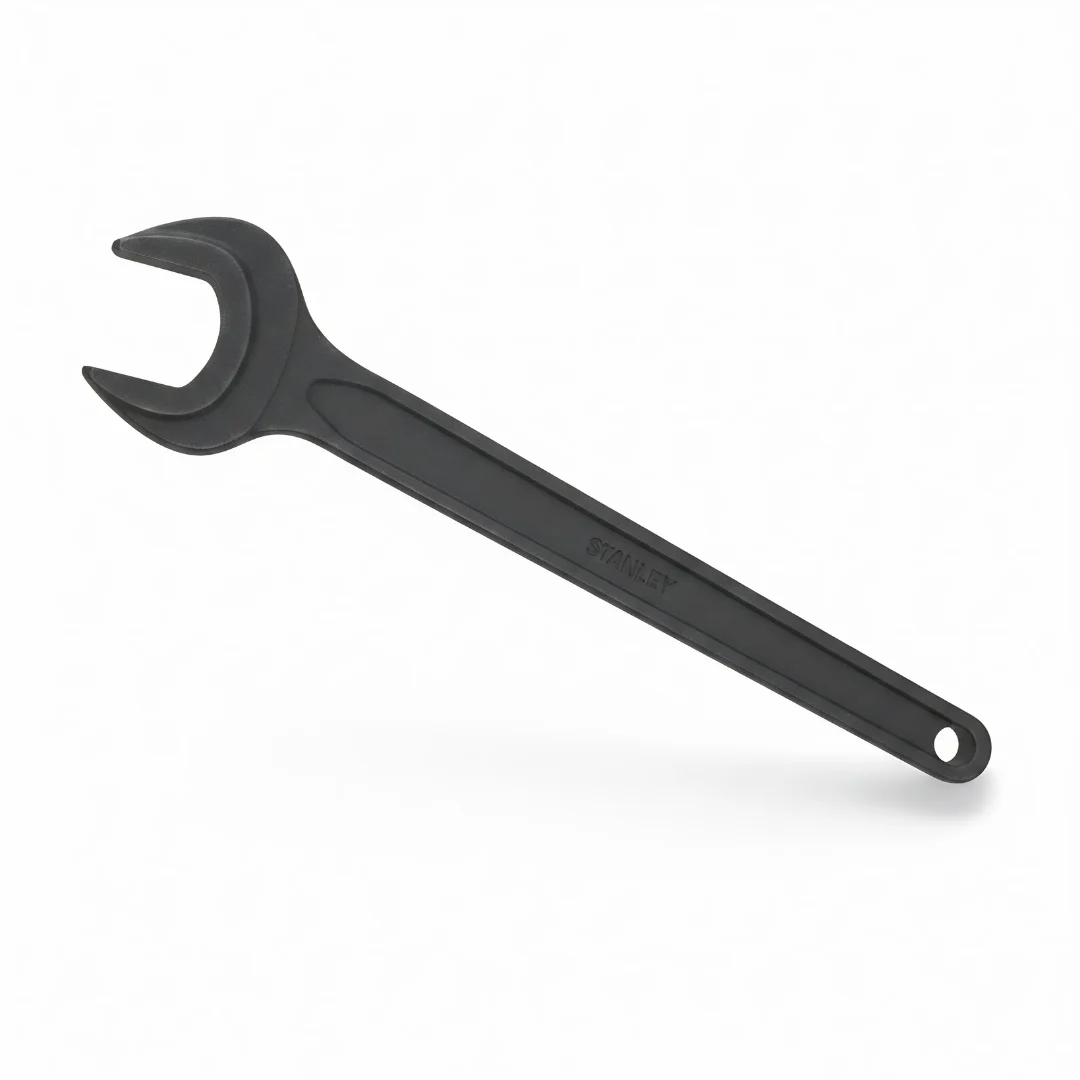
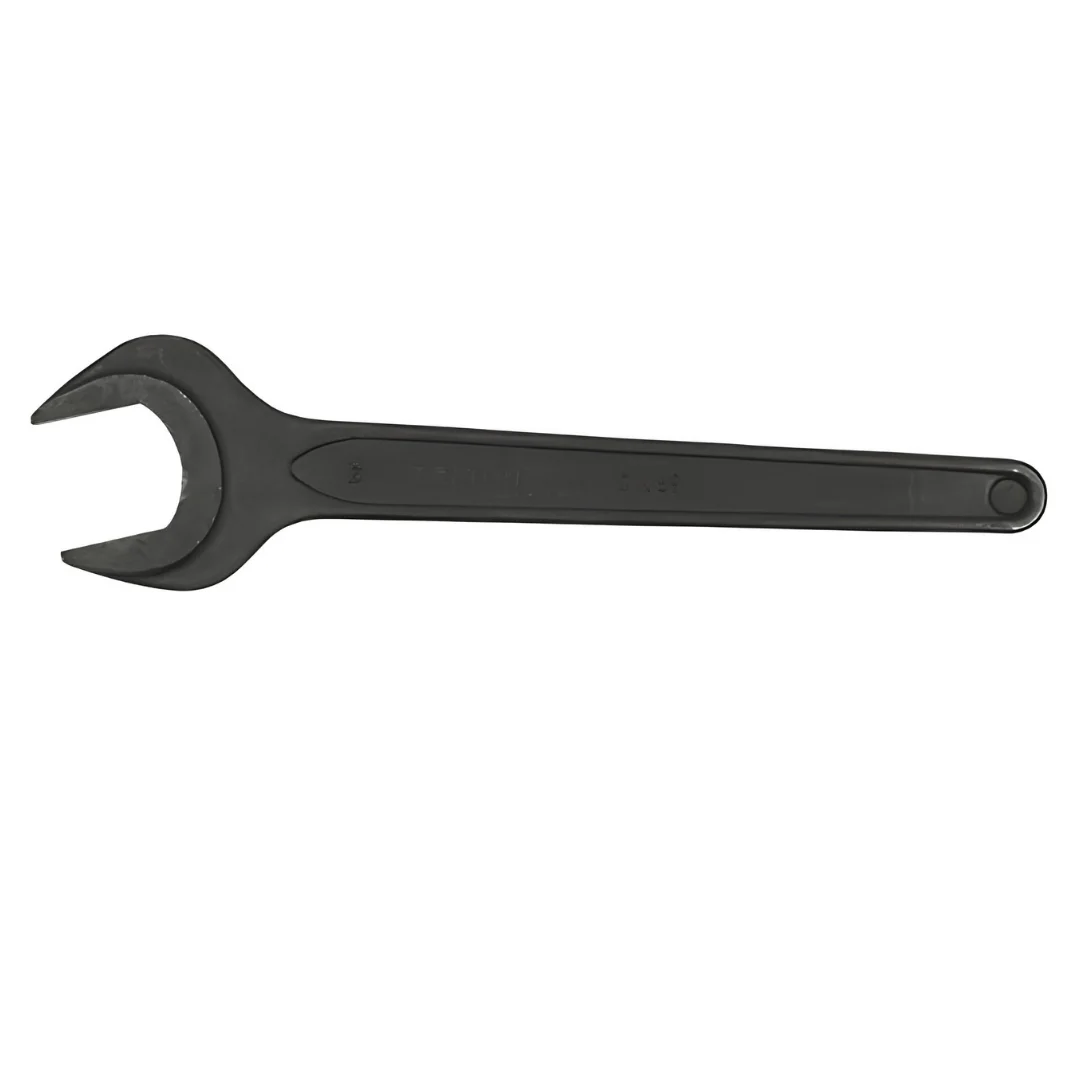
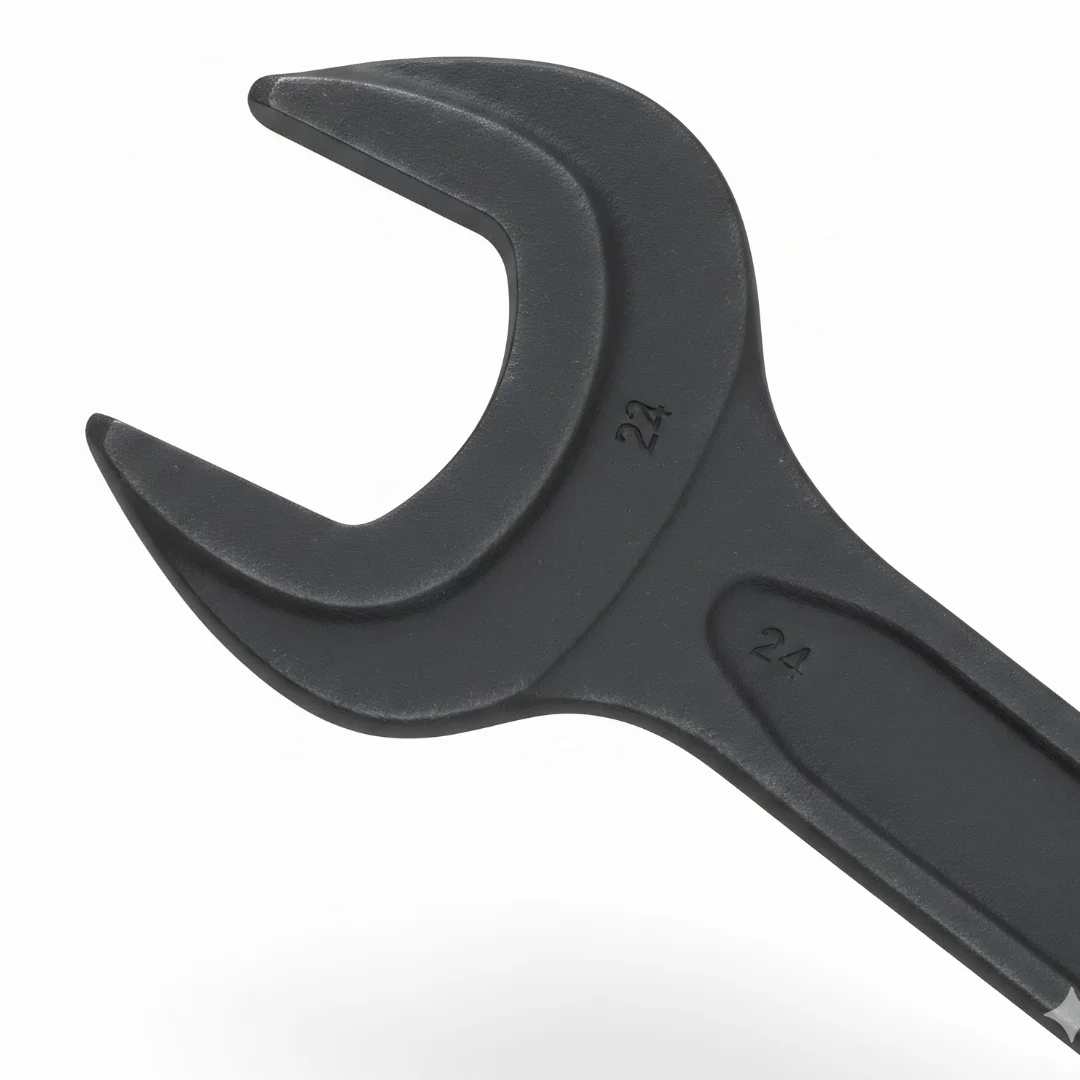
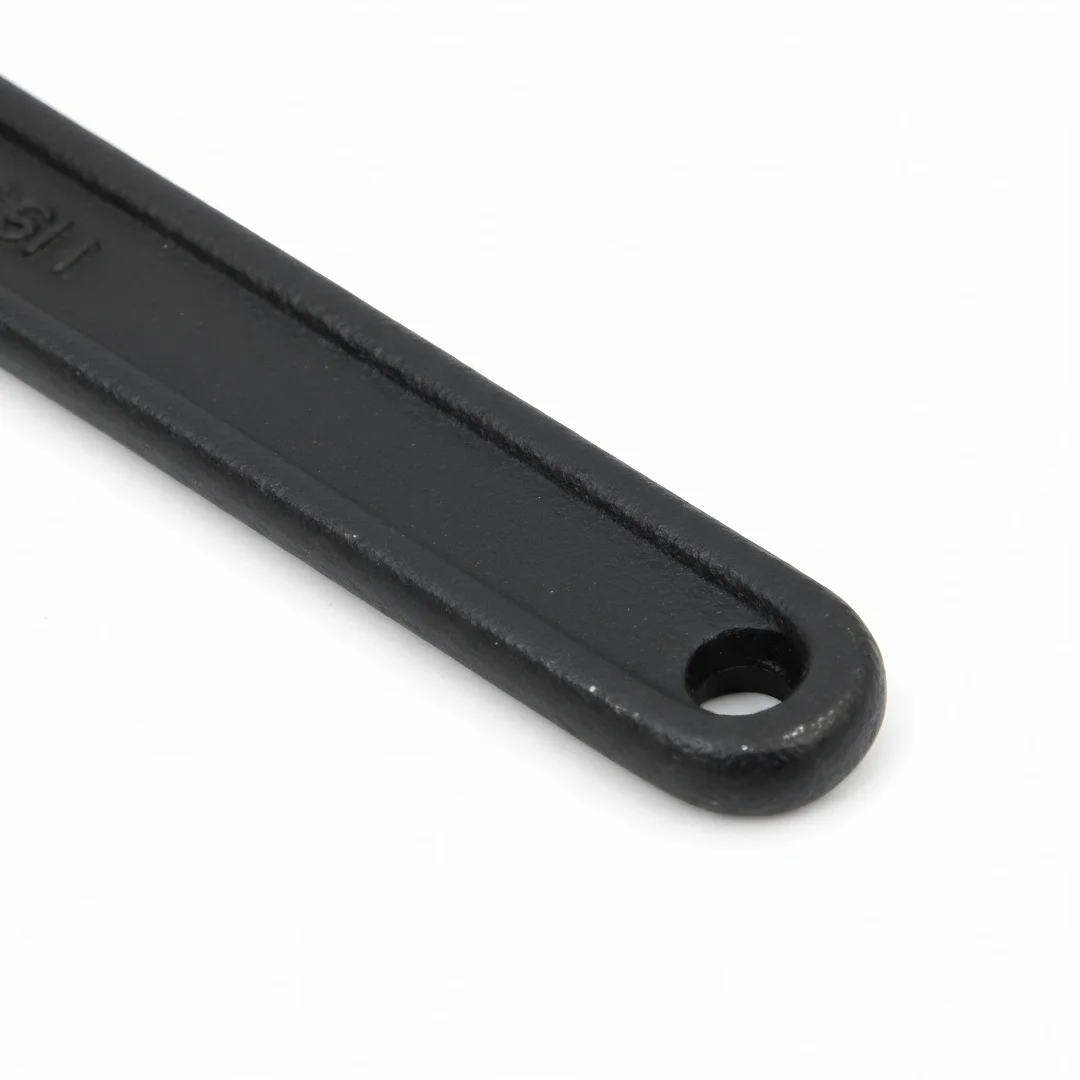


The tool is typically used where restricted clearance prevents ring spanner use and requires reliable torque transmission during plant servicing, equipment installation, and field repair work.
Application Context & Use Cases
Industrial maintenance teams typically require a large-size open-end spanner when servicing heavy equipment where access is limited and rapid adjustment is necessary.
Typical Operational Environments
• Manufacturing plants
• Steel and fabrication workshops
• Heavy machinery maintenance departments
• Infrastructure construction projects
• Utility and energy installations
Typical Tasks
Maintenance Fastener Adjustment
Used for loosening or tightening 38 mm hex nuts and bolts during scheduled plant servicing.
Equipment Installation
Common in assembly of large mechanical components where torque access from a single side is required.
Field Repairs
Maintenance contractors use this size spanner during:
Pump servicing
Structural steel assembly
Conveyor installations
Restricted Clearance Applications
Open-jaw spanners are used where ring spanners or sockets cannot be inserted due to obstruction.
Selection Guidance — Choosing the Correct Spanner
Selecting a spanner should be based on fastener size, torque requirements, and workspace clearance.
Key Selection Factors
Fastener Size
The jaw opening must match the exact hex nut size.
Example:
Fastener Size |
Required Spanner |
|
M24 bolt |
~36 mm spanner |
|
M27 bolt |
~41 mm spanner |
|
38 mm nut |
38 mm spanner |
Using a mismatched tool can cause nut rounding or tool damage.
Workspace Accessibility
Open-end spanners are preferred when:
• Vertical access is limited
• socket tools cannot fit
• fastener rotation must occur incrementally
Torque Requirement
For high-torque operations:
Ring spanners
Socket tools
May be preferred.
Open-jaw spanners are typically used for initial loosening or quick adjustments.
Capacity & Real-World Torque Example
Understanding torque limitations helps avoid tool misuse.
Practical Example
Assume:
Fastener: M24 bolt
Required tightening torque: 450–500 Nm
Open-end spanners are generally used for:
• positioning
• preliminary tightening
• loosening operations
Full torque application may require:
Torque wrench
Ring spanner
Impact tool
Using an open-end spanner for maximum torque loads increases slip risk.
Failure Conditions & Misuse Risks
Improper use of large spanners can lead to tool failure or fastener damage.
Common Failure Conditions
Jaw Spread
Applying excessive torque may cause permanent jaw opening.
Fastener Rounding
Occurs when:
Tool size mismatch
Worn spanner edges
Angled torque application
Tool Slippage
Common when:
Surfaces are oily
User applies force at incorrect angle
Fastener corners are damaged
Impact Misuse
Open-jaw spanners are not designed for hammer impact unless specifically rated.
Material & Compatibility Table
Fastener Compatibility
Suitable Fastener Types
|
Fastener Type |
Compatibility |
|
Hex bolts |
Compatible |
|
Hex nuts |
Compatible |
|
Structural bolts |
Compatible |
|
Flanged bolts |
Limited depending on clearance |
Material Compatibility
Typical Industrial Fasteners
|
Fastener Material |
Compatibility |
|
Carbon steel |
Suitable |
|
Alloy steel |
Suitable |
|
Stainless steel |
Suitable |
|
Galvanized fasteners |
Suitable |
Always ensure correct jaw engagement before torque application.
Operational Handling Considerations
Proper tool handling increases safety and tool life.
Handling Practices
Correct Jaw Positioning
The spanner must sit fully flush against the nut faces.
Partial contact increases rounding risk.
Force Direction
Torque should be applied in line with the handle axis.
Avoid lateral twisting.
Surface Cleanliness
Oil or debris on the fastener can cause tool slip.
Clean surfaces before operation.
Storage Practices
Large spanners should be stored in:
Tool racks
Organized toolboxes
To prevent jaw deformation or corrosion exposure.
Commercial Clarity
This product is supplied for industrial maintenance and workshop procurement across India.
Lead Time
Stock availability varies depending on brand supply and order quantity.
Typical dispatch planning is confirmed during enquiry.
Dispatch Capability
Supply can be arranged across major industrial regions in India, including plant locations requiring logistics coordination.
Minimum Order Quantity
MOQ depends on:
Single unit requirements
Workshop procurement
Distributor orders
Exact quantity terms are confirmed during quotation.
Customization
This is a standard manufacturer product.
Customization is generally not applicable.
Compliance & Certification
Products supplied are standard industrial hand tools manufactured according to brand specifications.
Documentation availability depends on manufacturer batch information.
Tender Compatibility
Industrial buyers participating in maintenance or infrastructure tenders may request:
• Product code confirmation
• brand verification
• specification alignment
Supporting documentation can be clarified during procurement discussions.
Procurement Process
Industrial buyers typically follow a simple RFQ-based procurement flow.
Information to Provide in Enquiry
To avoid delays, include:
• Product code (STMT96984)
• required quantity
• delivery location
• required dispatch timeline
• GST billing information
Procurement Steps
Submit enquiry with product details
Specification verification
Quotation confirmation
Dispatch scheduling
Delivery coordination
This process ensures correct product identification before shipment.
Comparison Table — Tool Selection
Open-End vs Other Spanner Types
Tool Type |
Access |
Torque Capacity |
Typical Use |
|
Open-End Spanner |
One-side access |
Medium |
Maintenance adjustment |
|
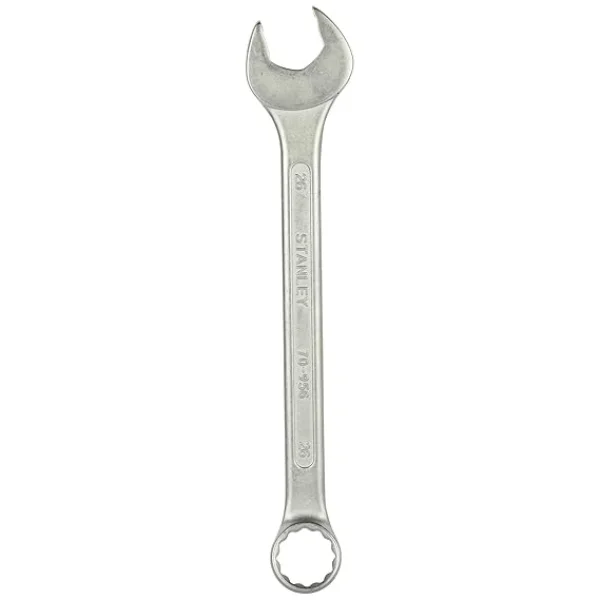
Ring Spanner |
Full enclosure |
High |
Heavy torque tightening |
|
Socket Wrench |
Vertical access |
High |
Assembly work |
|
Adjustable Spanner |
Variable |
Low-medium |
General workshop tasks |
Open-end spanners remain essential where tool access is restricted.
Selection Checklist
Use this checklist before ordering.
Decision Validation
Fastener size is exactly 38 mm
Open-jaw access is required
Full torque application is not primary requirement
Industrial maintenance use confirmed
Correct model number verified
Quantity requirement determined
Delivery location specified
Completing this checklist helps avoid incorrect procurement orders.
High-Intent Procurement FAQs
Is the STMT96984 spanner suitable for industrial maintenance?
Yes. It is commonly used for maintenance and assembly of large fasteners where access constraints prevent ring spanner usage.
Can this tool apply full torque for large bolts?
Open-jaw spanners are generally used for initial loosening or adjustment. Final torque is often applied using ring spanners or torque tools.
What fastener size does a 38 mm spanner fit?
It fits 38 mm hex nuts or bolts and may correspond to large structural fasteners depending on engineering standards.
Is this tool used in heavy machinery servicing?
Yes. Maintenance teams frequently use large spanners during equipment repair, installation, and infrastructure assembly.
How do buyers confirm the correct model during procurement?
Providing the product code STMT96984 and jaw size (38 mm) ensures the correct tool is identified before quotation and dispatch.
Can multiple units be supplied for workshop toolkits?
Yes. Workshops and maintenance teams often procure multiple units for tool sets or contractor kits.
Is this tool compatible with stainless steel fasteners?
Yes. The spanner can be used with stainless steel and alloy fasteners, provided correct torque practices are followed.
Technical Specifications
Tool Identification
Product Details
|
Parameter |
Specification |
|
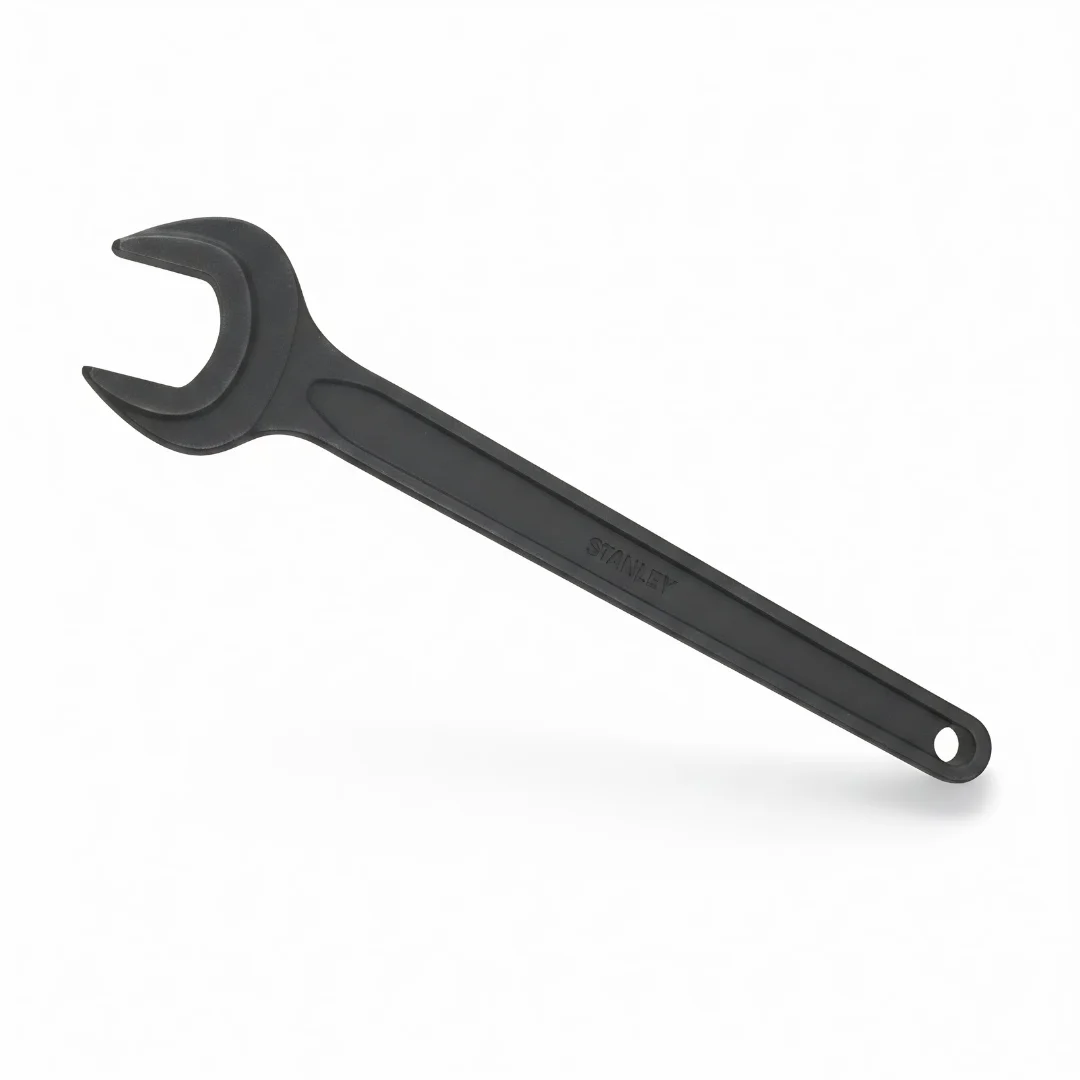
Product Name |
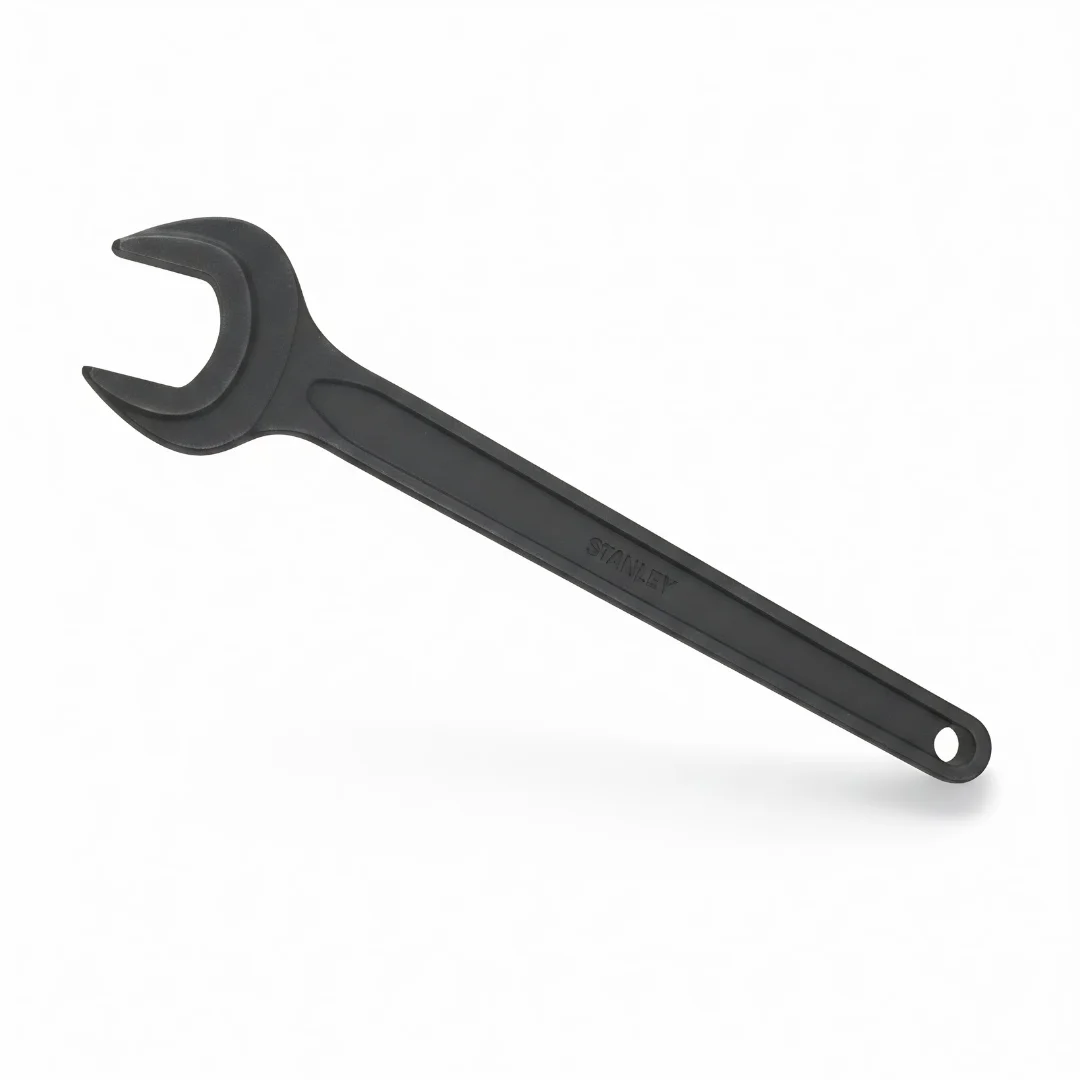
Single-End Open-Jaw Spanner |
|
Model |
STMT96984 |
|
Brand |
STANLEY |
|
Jaw Size |
38 mm |
|
Tool Type |
Open-End Spanner |
|
Configuration |
Single-Ended |
|
Typical Material |
Forged alloy steel |
|
Surface Finish |
Corrosion-resistant coating |
|
Intended Use |
Industrial fastening |
Dimensional Characteristics
Physical Attributes
|
Attribute |
Typical Range |
|
Jaw Opening |
38 mm |
|
Length |
Heavy-duty format |
|
Profile |
Open-jaw |
|
Torque Access |
Single-side entry |
|
Handling Type |
Manual torque application |
Dimensions may vary slightly depending on manufacturing tolerance.







Customer reviews