



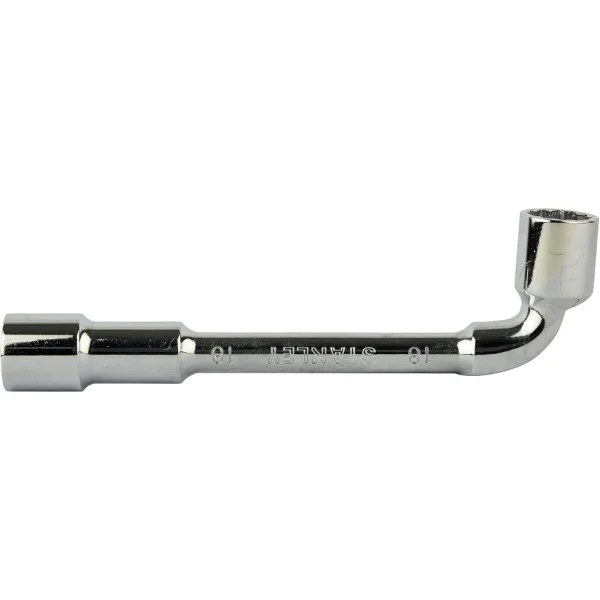
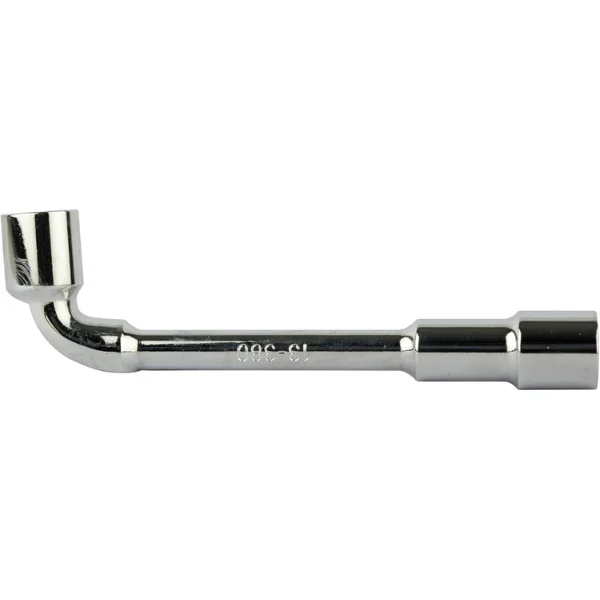
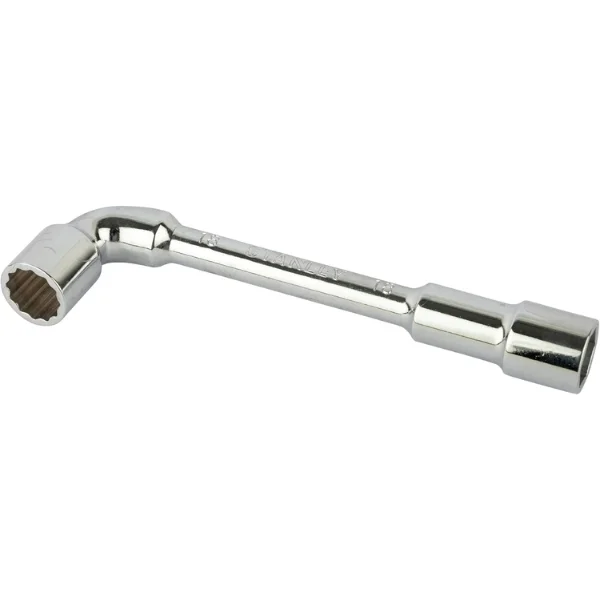
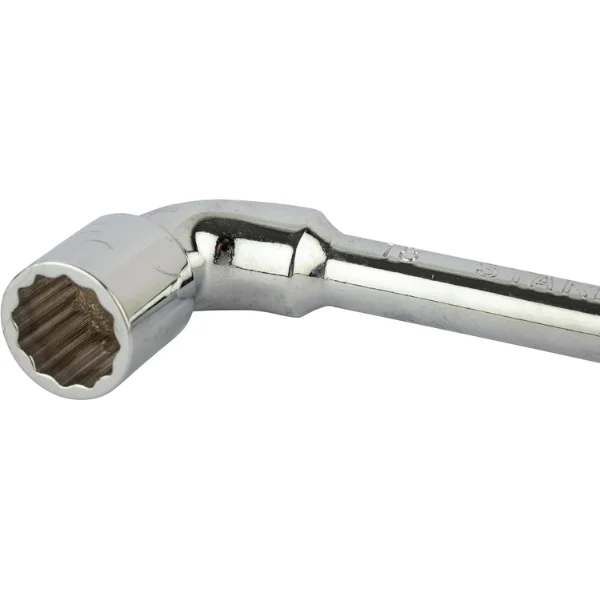
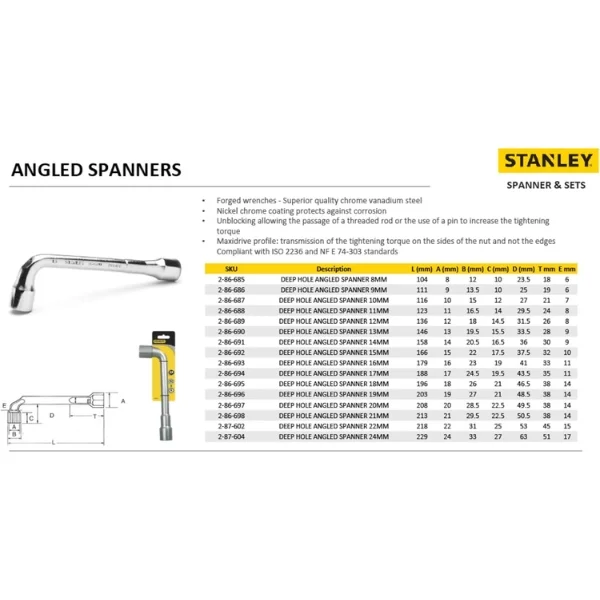
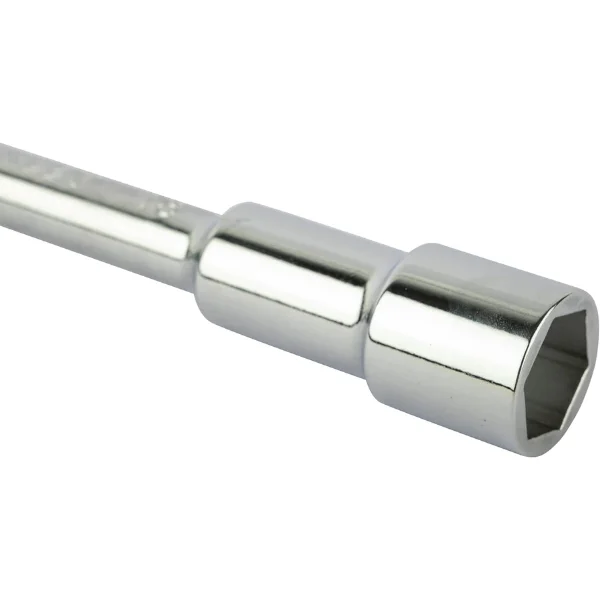
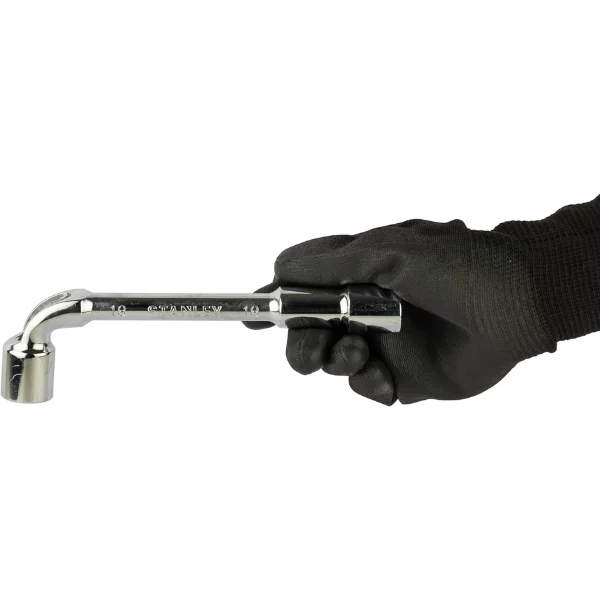
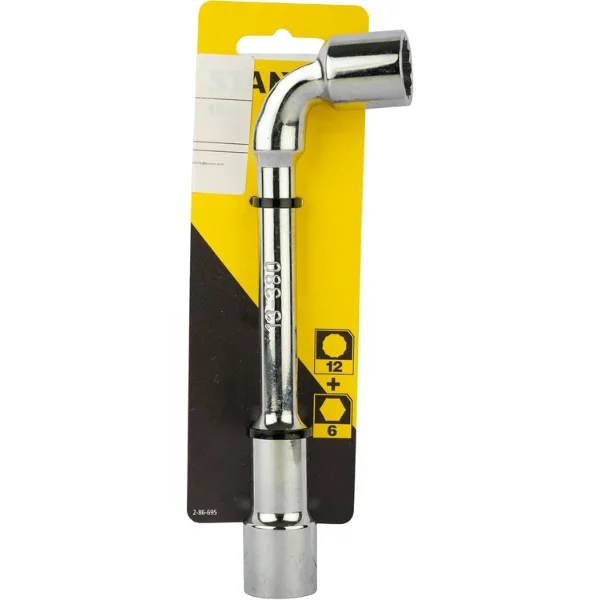
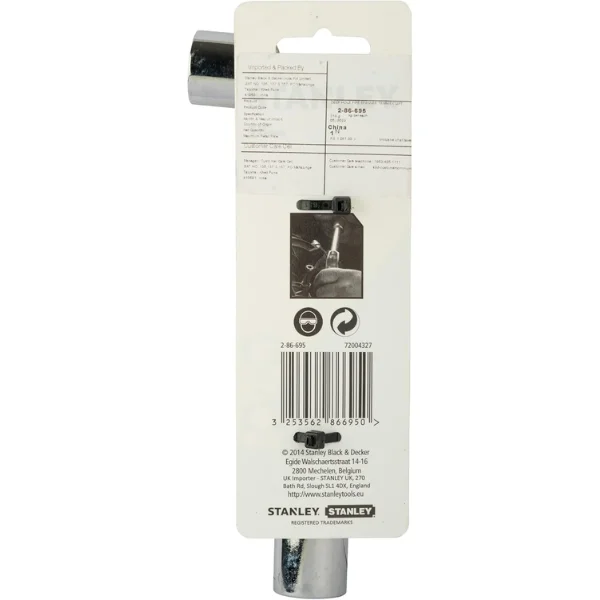


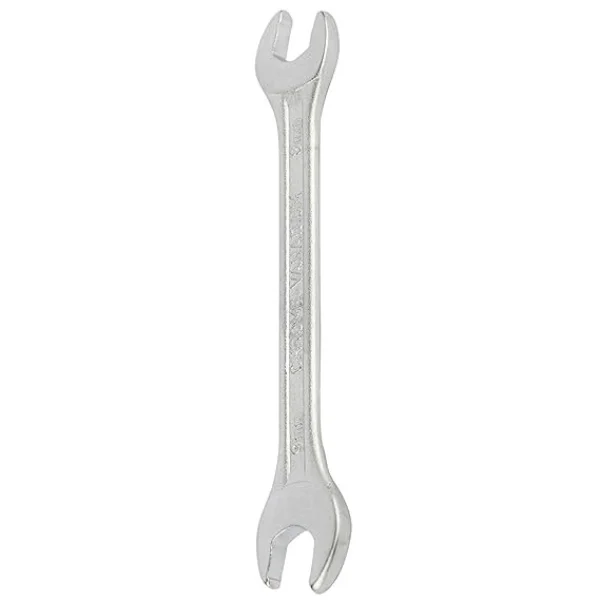
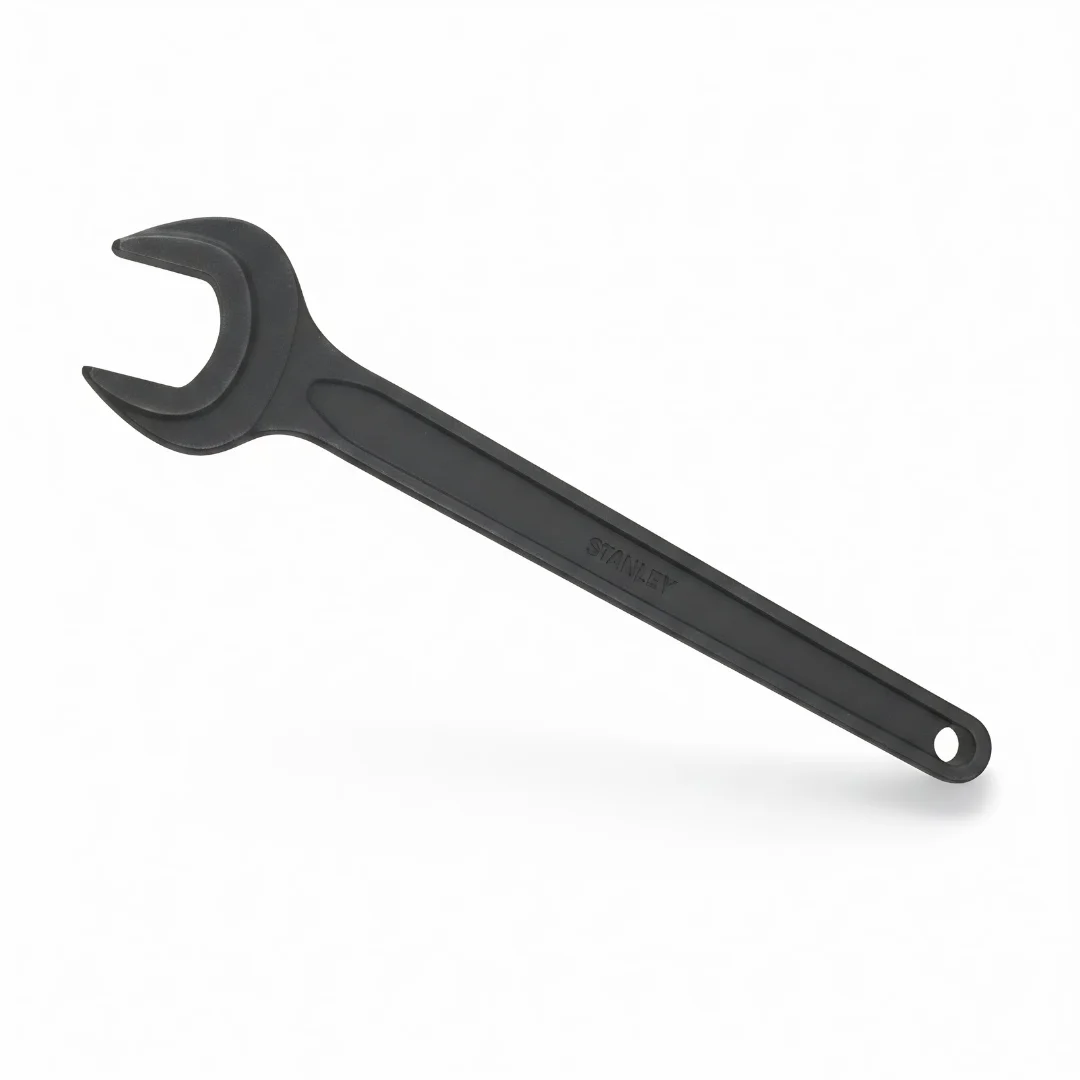
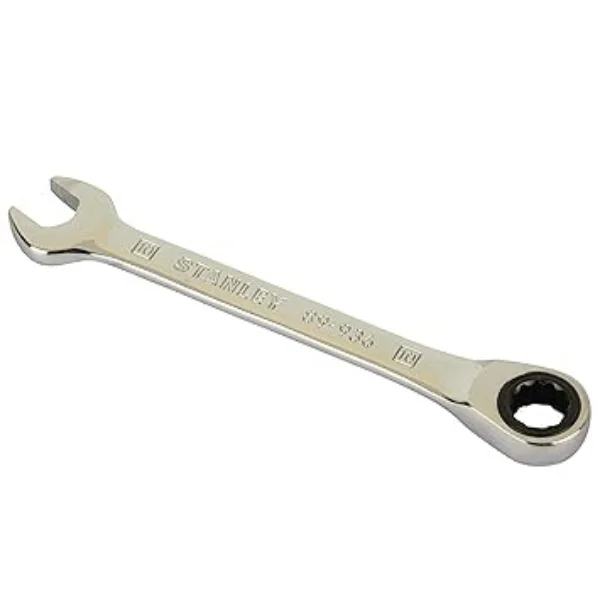
A deep hole angled spanner 15mm is a precision hand tool designed to access hexagonal fasteners located inside recessed or deep cavities where standard spanners cannot reach.
STANLEY 2-86-692 Application Context & Use Cases
Deep hole angled spanners are typically selected when bolt accessibility is restricted by component geometry. Standard open-end or ring spanners cannot reach recessed fasteners in many mechanical assemblies.
Typical application environments include:
Industrial Machinery Maintenance
Maintenance teams frequently encounter:
recessed structural bolts
motor mount fasteners
deep-set gearbox bolts
A deep hole angled spanner allows torque application without disassembling surrounding structures.
Automotive and Heavy Vehicle Repair
Technicians use this tool when servicing:
engine block assemblies
suspension mount bolts
alternator mounting points
transmission housing bolts
The angled design enables clearance around engine components.
Manufacturing Equipment Service
Production lines and industrial machines often have fasteners inside:
machine frames
hydraulic assemblies
equipment guards
Deep access tools prevent unnecessary equipment dismantling.
Tool Room Standardization
Industrial tool rooms often standardize specific sizes such as 15mm, which are common in:
metric mechanical assemblies
European and Japanese machinery
automotive platforms
STANLEY 2-86-692 Deep Hole Selection
Selecting the correct deep hole angled spanner requires evaluating fastener geometry and workspace constraints.
Step 1 — Confirm Fastener Size
Verify the bolt head dimension:
15 mm metric hex
Using the incorrect size can lead to:
fastener rounding
slippage during torque application
Step 2 — Evaluate Access Depth
Measure the depth of the recessed bolt cavity.
Deep hole spanners are required when:
bolt heads sit inside deep housings
structural members block direct access
Step 3 — Check Required Tool Clearance
Confirm whether an angled offset profile is needed.
Angled spanners are useful when:
adjacent components obstruct straight tools
bolt heads sit near frame walls
Step 4 — Confirm Torque Requirement
Ensure the tool can apply required torque without deformation.
High-load bolts may require:
controlled torque application
gradual loosening
Capacity / Calculation Example
Example: Accessing Recessed Motor Mount Bolt
Scenario:
An industrial motor assembly contains M10 bolts with 15 mm hex heads located inside a frame cavity.
Parameters:
Parameter |
Value |
|
Bolt size |
M10 |
|
Hex head |
15 mm |
|
Bolt recess depth |
40–60 mm |
|
Surrounding clearance |
Limited |
Standard spanners cannot enter the cavity.
Solution:
A deep hole angled spanner allows:
insertion inside the cavity
engagement with the hex head
torque application through angled leverage
Result:
Fastener removal without dismantling surrounding structural components.
Failure Conditions & Misuse Risks
Improper tool selection or use can lead to tool or fastener damage.
Incorrect Size Selection
Using a slightly larger spanner can cause:
fastener rounding
loss of torque grip
Excessive Torque
Deep hole spanners are designed for manual torque levels.
Using extensions or cheater bars may cause:
tool deformation
loss of jaw alignment
Misaligned Tool Engagement
If the tool is not fully seated on the bolt head:
torque is applied unevenly
fastener edges can deform
Damaged Fasteners
Severely corroded bolts may require:
penetrating oil
heat treatment
impact removal tools
High-Torque Industrial Fasteners
Large structural bolts requiring high torque may require:
socket wrench systems
torque tools
Surface-Level Bolts
If fasteners are easily accessible:
a standard ring spanner is sufficient
Material / Compatibility Table
Application Environment |
Compatibility |
|
Automotive maintenance |
Suitable |
|
Industrial machinery |
Suitable |
|
Equipment assembly |
Suitable |
|
General workshop repair |
Suitable |
|
Structural steel fastening |
Limited |
|
Heavy construction bolts |
Not recommended |
Operational Handling & Installation Considerations
Proper tool handling ensures safe and effective torque transfer.
Fastener Engagement
Ensure the spanner head:
fully seats on the bolt head
aligns with the fastener axis
Tool Alignment
Avoid angled torque application beyond tool design.
Improper alignment may cause:
jaw deformation
reduced grip
Workspace Clearance
Before applying torque, confirm that:
surrounding components allow tool movement
adequate rotation angle is available
Tool Inspection
Before use, check for:
jaw wear
deformation
cracks
Damaged tools should be replaced.
Commercial Clarity
Lead Time
Availability depends on stock position.
Typical scenarios:
Order Type |
Lead Time |
|
In-stock dispatch |
Immediate to 48 hours |
|
Standard procurement |
3–5 working days |
Dispatch Capability
Supply coverage includes Pan-India shipping through industrial logistics networks.
Minimum Order Quantity
Typical procurement options include:
single unit purchase
bulk workshop procurement
MOQ may vary based on order type.
Customization Availability
This is a standard manufacturer model.
Customization generally does not apply.
Compliance / Certification Clarity
Product specifications align with industrial hand tool manufacturing standards used for mechanical maintenance applications.
Tender Compatibility
For institutional or industrial procurement:
GST invoicing available
documentation can be provided for procurement evaluation
Procurement Process
To submit an enquiry, buyers should provide the following details:
Required Information
product model: STANLEY 2-86-692
spanner size: 15 mm
required quantity
delivery location
company details (for GST billing)
Typical Procurement Flow
Submit RFQ with product details
Supplier confirms stock availability
Commercial quotation issued
Order confirmation and dispatch scheduling
Comparison Table (Common Alternatives)
Tool Type |
Best Use Case |
Limitations |
|
Deep Hole Angled Spanner |
Recessed fasteners with limited access |
Not ideal for high torque |
|
Standard Ring Spanner |
Surface bolts |
Cannot access deep cavities |
|
Socket Wrench |
High torque bolts |
Requires vertical clearance |
|
Offset Spanner |
Restricted side access |
Limited deep reach |
Selection Checklist
Before purchasing, confirm the following:
Fastener size is 15 mm metric
Bolt head is located in a recessed cavity
Standard spanners cannot reach the fastener
Workspace clearance requires an angled tool
Manual torque application is sufficient
Tool required for maintenance or repair operations
If all conditions apply, a deep hole angled spanner is the appropriate tool.
High-Intent FAQs
What is the difference between a deep hole spanner and a standard spanner?
A deep hole spanner has an extended access profile that allows the tool head to reach bolts inside recessed cavities, whereas standard spanners are designed for surface-level fasteners.
When should a 15mm deep hole angled spanner be used?
It should be used when working with 15 mm hex bolts located inside deep housings or restricted mechanical assemblies where standard tools cannot reach.
Can this spanner be used for high-torque fasteners?
Deep hole spanners are primarily intended for manual torque levels. High-torque applications typically require socket or torque wrench systems.
How do I confirm that 15mm is the correct size?
Measure the bolt head across flats. If the dimension is 15 mm, a 15mm metric spanner is required.
Is the STANLEY 2-86-692 suitable for automotive repair?
Yes. The tool is commonly used in automotive service environments, particularly for engine and chassis fasteners located in restricted spaces.
What information should be provided when requesting a quotation?
Provide:
product model number
spanner size
required quantity
delivery location
company billing details
Technical Configuration Overview
STANLEY Deep Hole Angled Spanner 15mm Technical Specifications
Product Identification
Parameter |
Specification |
|
Brand |
STANLEY |
|
Model Number |
2-86-692 |
|
Tool Type |
Deep Hole Angled Spanner |
|
Size |
15 mm |
|
Measurement Standard |
Metric |
|
Design Type |
Angled offset deep access |
|
Fastener Type |
Hexagonal |
Dimensional Characteristics
Parameter |
Description |
|
Spanner Size |
15 mm |
|
Access Type |
Deep recessed fastener access |
|
Angle Configuration |
Offset angled design |
|
Torque Application |
Manual mechanical torque |
|
Fastener Engagement |
Hexagonal bolt heads |
Construction Characteristics
Feature |
Technical Purpose |
|
Deep profile head |
Allows access inside recessed bolt cavities |
|
Offset angle geometry |
Improves clearance in restricted spaces |
|
Precision jaw sizing |
Reduces fastener rounding risk |
|
Industrial hand tool design |
Suitable for maintenance environments |







Customer reviews