



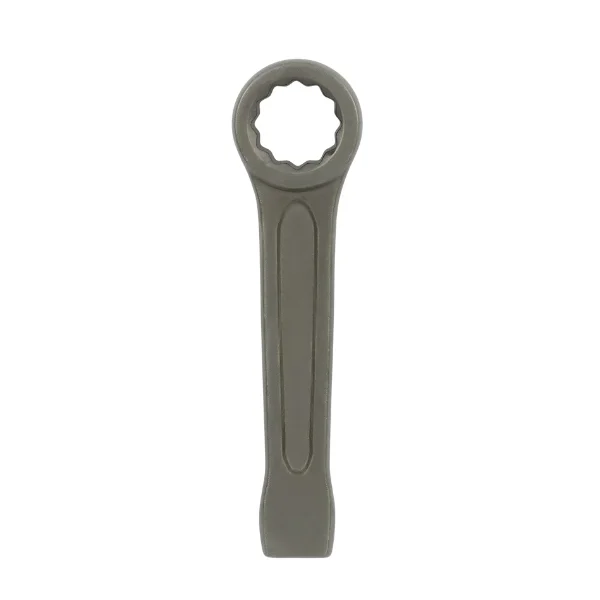
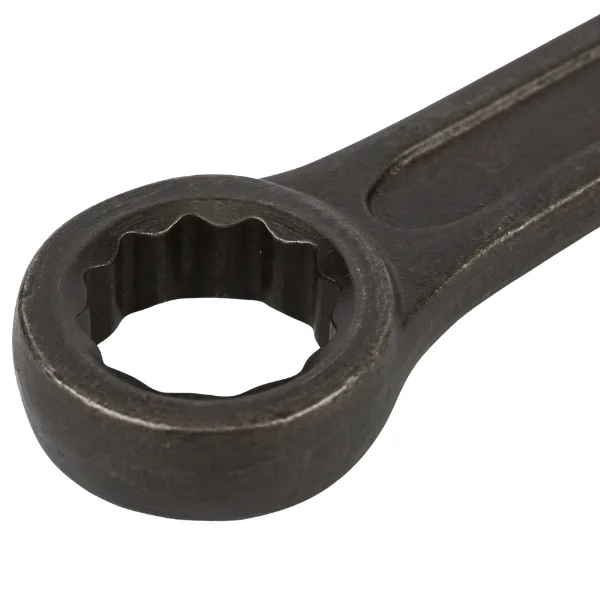
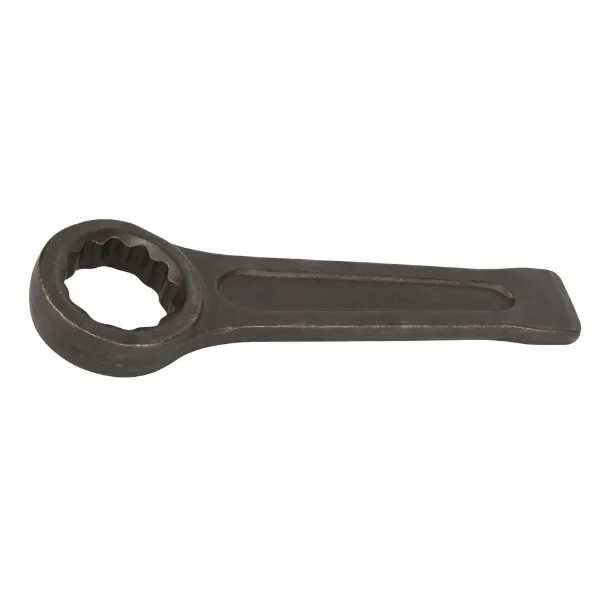
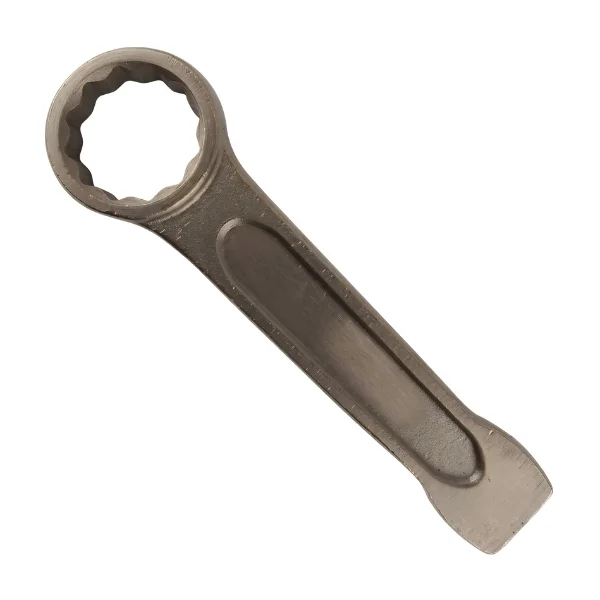


This model is part of the industrial tool range from Stanley Tools and is intended for controlled hammer-driven torque application on large fasteners.
Application Context & Use Cases
Large ring-end slogging spanners are used in environments where:
bolt sizes exceed conventional wrench capacity
controlled hammer strikes are required to generate torque
heavy structural fasteners must be loosened after long service cycles.
Typical Industrial Environments
Power Generation Plants
Maintenance of:
turbine casing bolts
generator mounting assemblies
heavy flange connections.
Mining Equipment Maintenance
Used for servicing:
excavator track assemblies
bucket wheel components
crusher housings.
Steel Plants
Applied during servicing of:
rolling mill housings
furnace assemblies
structural support frames.
Oil & Gas Facilities
Common during:
pipeline flange maintenance
large valve installations
offshore structural fastening.
Situations Where a 120 mm Slogging Spanner Is Required
This size typically corresponds with very large hex nuts used in:
structural steel assemblies
heavy rotating equipment
industrial pressure vessels.
When bolts cannot be accessed using torque wrenches due to space or equipment limitations, slogging spanners provide controlled impact torque.
Selection Guidance – Choosing the Correct Slogging Spanner
Confirm Nut Size
The ring size must match the exact across-flat dimension of the hex nut.
A 120 mm ring-end slogging spanner should only be used with nuts measuring 120 mm across flats.
Using oversized tools can cause:
slippage
rounding of nut edges.
Evaluate Impact Space
Slogging spanners require adequate clearance for hammer movement.
Before selecting a tool size:
verify striking arc clearance
ensure sufficient operator access.
Consider Fastener Accessibility
Ring-end slogging spanners are best suited for:
exposed hex nuts
flange assemblies
large structural bolts.
Where bolt heads are obstructed, other fastening methods may be required.
Verify Torque Requirement
Extremely high torque situations may require:
hydraulic torque tools
hydraulic bolt tensioners.
Slogging spanners are intended for manual impact torque, not precision torque control.
Capacity / Torque Application Example
Example Scenario
A maintenance engineer needs to loosen a 120 mm hex nut securing a turbine housing flange.
The fastener has been in operation for several years and cannot be loosened using standard wrenches.
Typical Operational Method
The ring end of the slogging spanner is positioned over the nut.
The operator stabilizes the spanner against the fastener.
A sledge hammer strikes the reinforced striking end.
Each strike generates rotational torque.
Torque Logic
Torque delivered depends on:
hammer weight
strike velocity
spanner length
friction conditions of the fastener.
Because torque is applied via impact, the method is not used where calibrated torque values are required.
Failure Conditions & Misuse Risks
Improper use of slogging spanners can lead to equipment damage or safety hazards.
Common Misuse Situations
Using Incorrect Size
Oversized tools may:
slip off the nut
round the hex edges.
Striking With Improper Tools
Using hardened steel hammers can increase the risk of:
metal chipping
flying fragments.
Applying Excessive Impact
Repeated heavy strikes on seized fasteners may:
deform the nut
crack lower-quality tools.
Using Damaged Spanners
A tool with visible cracks or deformation should not be used for impact operations.
Material / Compatibility Table
|
Component |
Compatibility |
|
Hex Nuts |
Industrial heavy hex nuts |
|
Structural Bolts |
Large-diameter structural fasteners |
|
Flange Bolting |
Pipeline and pressure vessel flanges |
|
Industrial Equipment |
Mining, power, steel, heavy machinery |
Fastener Material Compatibility
Fastener Type |
Suitable |
|
Carbon Steel Fasteners |
Yes |
|
High Tensile Structural Bolts |
Yes |
|
Alloy Steel Bolts |
Yes |
|
Precision Torque Bolts |
Not recommended |
Operational Handling & Installation Considerations
Handling
Large slogging spanners are heavy tools and should be handled using:
gloves
controlled grip
stable stance.
Strike Control
Operators should ensure:
hammer strikes are directed centrally
the spanner remains seated on the nut.
Safety Practices
Maintenance personnel should use:
protective gloves
eye protection
controlled hammer strikes.
Inspection Before Use
Check the tool for:
ring deformation
cracks near striking end
metal fatigue.
Any damaged tool must be removed from service.
Commercial Clarity
Supply Position
Industrial supply of the STANLEY STMT96979 120 mm slogging spanner is available across India.
Lead Time
Lead time depends on stock availability and order quantity.
Typical dispatch timelines for stocked items are within standard industrial supply cycles.
Dispatch Capability
Pan-India dispatch available for industrial clients including:
manufacturing plants
EPC contractors
maintenance teams.
Minimum Order Quantity
MOQ may vary depending on procurement type:
single tool orders
bulk distributor supply.
Customization Availability
Customization of this branded product is not applicable, as it is a manufacturer-specified model.
Compliance / Certification
This tool is manufactured as part of the industrial hand tool range from Stanley and follows established brand manufacturing standards.
Tender Compatibility
The product can be supplied against procurement requirements specifying:
Stanley tools
model-based purchase specifications.
Procurement Process
To process industrial supply enquiries efficiently, procurement teams should provide the following information:
Required Details
Product model: STMT96979
Required quantity
Delivery location
Organization name
Contact details.
Typical Procurement Flow
Buyer sends enquiry or RFQ.
Supplier confirms stock availability.
Dispatch timeline is communicated.
Order processing and shipment.
Comparison Table – Slogging Spanner Types
|
Feature |
Ring-End Slogging Spanner |
Open-End Slogging Spanner |
Hydraulic Torque Tool |
|
Nut Engagement |
Full ring contact |
Two-point contact |
Full controlled torque |
|
Torque Method |
Hammer impact |
Hammer impact |
Hydraulic torque |
|
Application |
Heavy industrial bolts |
Structural bolts |
Precision torque operations |
|
Accuracy |
Low |
Low |
High |
|
Typical Use |
Maintenance work |
Structural assembly |
Critical bolting |
Selection Checklist
Before purchasing a 120 mm slogging spanner, verify the following:
Nut size matches 120 mm across flats
Sufficient hammer strike clearance available
Impact torque method is acceptable for the fastener
Equipment maintenance team requires manual striking tools
Fastener is not torque-calibrated.
High-Intent FAQs
Is the Stanley STMT96979 slogging spanner suitable for heavy industrial maintenance?
Yes. The tool is designed for hammer-driven torque applications used in heavy industries such as power plants, mining equipment servicing, and steel plant maintenance.
What size nut fits a 120 mm ring slogging spanner?
It fits hex nuts measuring 120 mm across flats. The spanner should match the exact nut dimension to prevent slippage.
Can this tool replace a hydraulic torque wrench?
No. Slogging spanners provide impact torque and are typically used for maintenance work where precision torque control is not required.
What hammer should be used with a slogging spanner?
Industrial maintenance teams typically use heavy sledge hammers suited to the size of the spanner and the torque required.
Is the tool suitable for tightening high-tensile structural bolts?
Yes, provided the application does not require calibrated torque values.
Can this spanner be used in confined spaces?
No. Adequate hammer swing clearance is required to operate a slogging spanner safely.
Technical Configuration Overview
Technical Specifications
Product Identification
Parameter |
Specification |
|
Brand |
Stanley |
|
Model |
STMT96979 |
|
Tool Type |
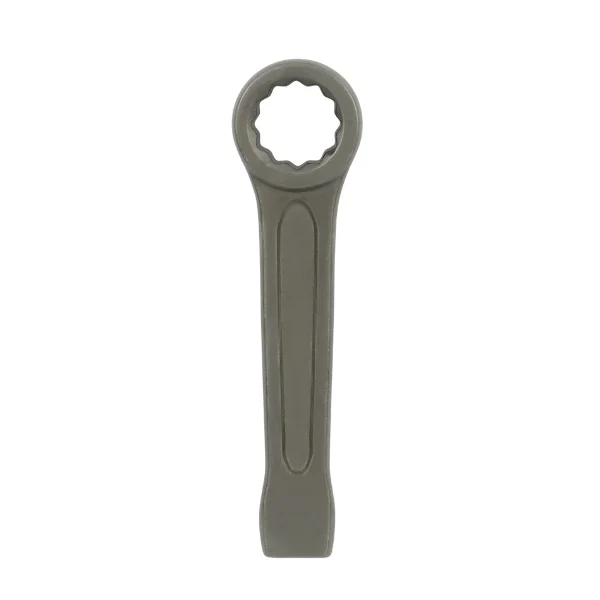
Ring-End Slogging Spanner |
|
Ring Size |
120 mm |
|
Application |
Heavy industrial fastening |
Dimensional Data
Parameter |
Typical Value |
|
Nominal Ring Size |
120 mm |
|
Tool Type |
Ring-End Impact Spanner |
|
Design |
Offset striking spanner |
|
Application Method |
Hammer-driven torque |
(Exact dimensions may vary slightly based on manufacturing batch.)
Functional Characteristics
Feature |
Description |
|
Closed Ring Head |
Ensures uniform contact with hex nut |
|
Heavy Striking End |
Designed for repeated hammer impact |
|
Forged Construction |
Built for high impact resistance |
|
Industrial Usage |
Maintenance and assembly operations |






Customer reviews