



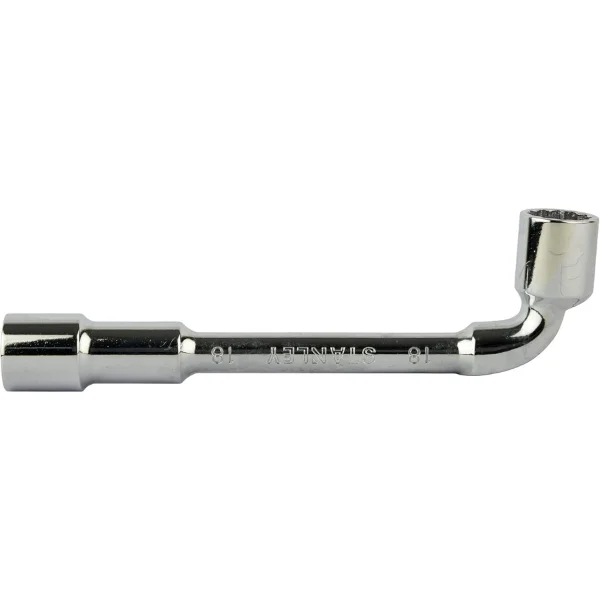
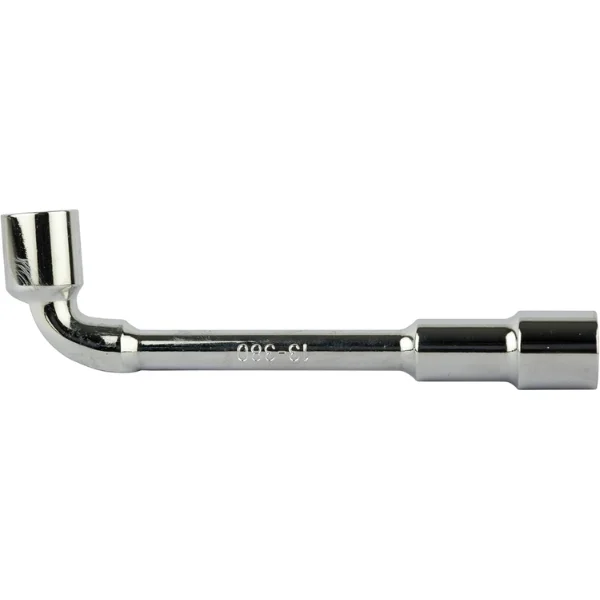
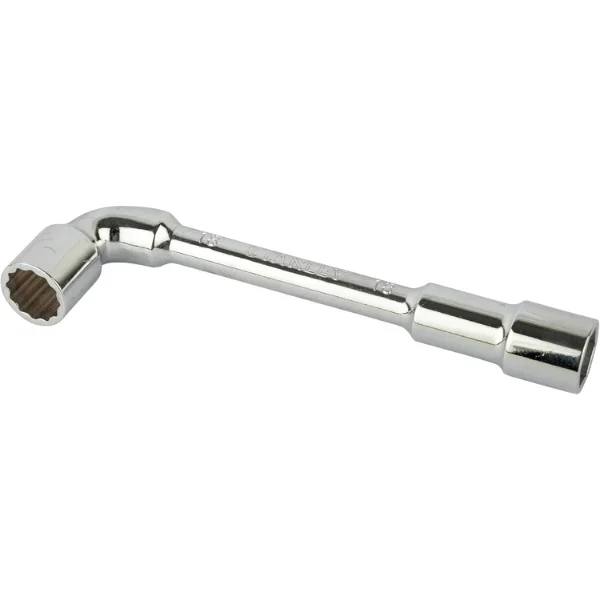
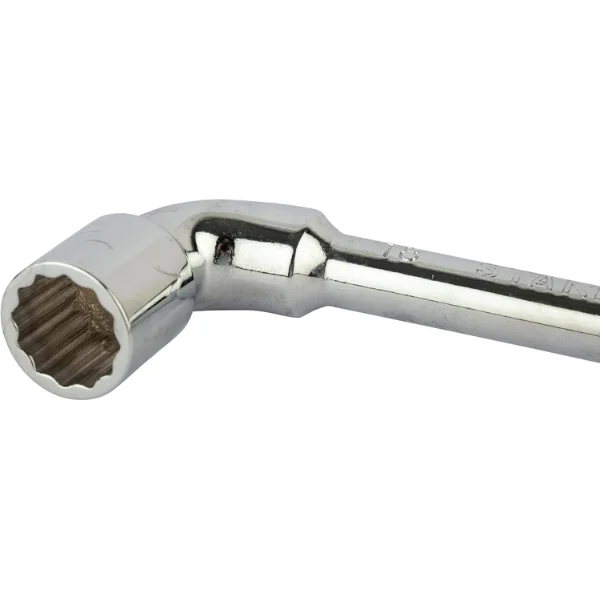
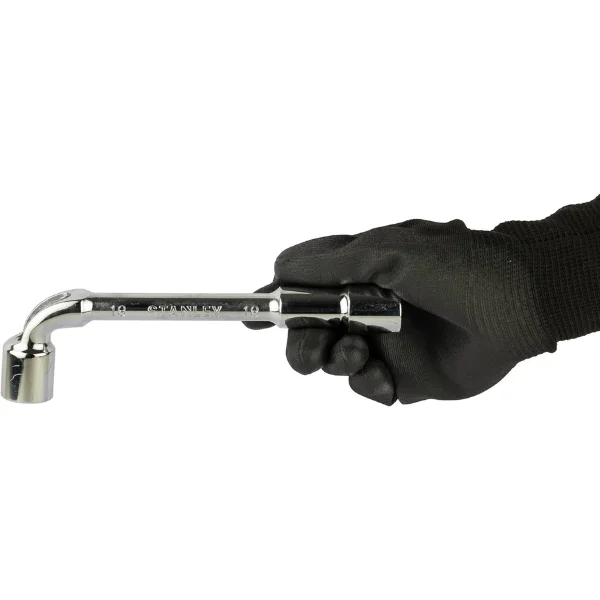
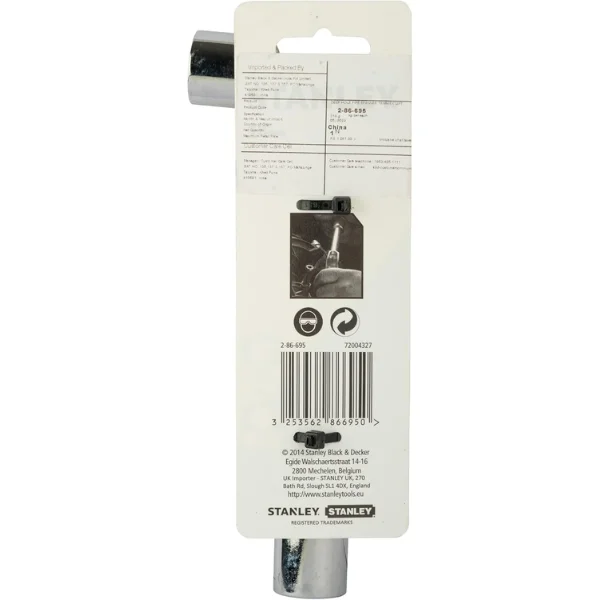


Industrial maintenance teams typically use this tool where fasteners are positioned below surface level or obstructed by surrounding components.
STANLEY 2-86-690 Application Context & Use Cases
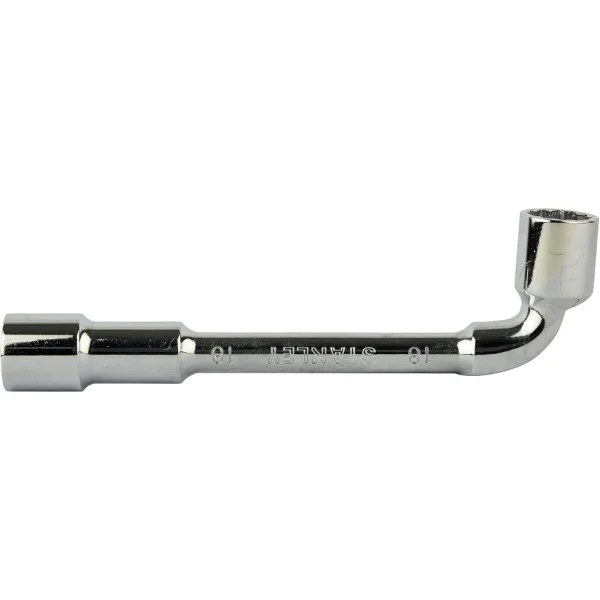
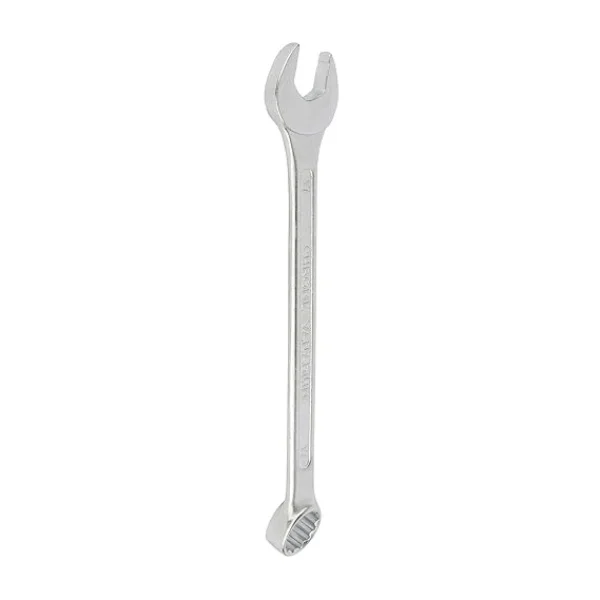
Deep hole angled spanners are selected when standard spanners fail to reach recessed fasteners. Their geometry allows engagement with bolts located inside cavities, deep housings, or offset machine assemblies.
Common Industrial Applications
Equipment Maintenance
Maintenance technicians frequently encounter deep-set mounting bolts in machines such as:
Industrial pumps
Gearbox housings
Hydraulic assemblies
Electric motor mounts
In such situations, standard spanners cannot align with the bolt head.
Automotive Service and Assembly
In automotive workshops and service centers, deep reach spanners are required for:
Alternator mounting bolts
Engine bracket fasteners
Suspension assembly bolts
Intake manifold fasteners
The angled design helps clear surrounding components.
Manufacturing Assembly Lines
Manufacturing fixtures often include deep recessed nuts inside jig plates or equipment frames. Technicians require spanners capable of reaching into these pockets without removing surrounding parts.
Field Service and Repair Operations
Service engineers working at customer locations use deep hole spanners to access:
Industrial control panel bolts
Equipment mounting hardware
Structural frame fasteners
Access limitations in field conditions make these tools necessary.
Selection Guidance
Selecting a deep hole spanner requires verifying several operational factors.
Fastener Size Verification
Always confirm the fastener size before selecting a spanner.
A 13 mm spanner is appropriate only when the hex bolt head measures 13 mm across flats.
Incorrect size selection can cause:
bolt rounding
tool slippage
reduced torque transfer
Access Depth Consideration
Deep hole spanners are required when:
bolt heads sit below the surrounding surface
a socket cannot be inserted
surrounding structures block direct tool access
The extended ring geometry enables engagement inside these recesses.
Clearance and Angle
The angled design allows the spanner to clear nearby obstacles such as:
machine frames
adjacent pipes
electrical housings
structural supports
Confirm that the offset angle aligns with the available clearance.
Torque Requirements
Hand spanners are typically used for moderate torque tightening or loosening.
For high-torque applications such as structural bolts, technicians often use:
torque wrenches
socket systems
Capacity / Calculation Example
Understanding torque capability helps technicians use the tool correctly.
Example Scenario
A technician must loosen a 13 mm bolt securing a motor bracket.
Typical torque requirement for such bolts may range between:
20 Nm to 40 Nm
Using a deep hole angled spanner with a typical handle length allows sufficient leverage to achieve this torque.
Practical Torque Estimation
Torque is calculated using:
Torque = Force × Lever Arm Length
Example:
Force applied: 80 N
Spanner length: 0.25 m
Estimated torque:
80 × 0.25 = 20 Nm
This demonstrates why proper tool length is necessary for effective loosening.
Failure Conditions & Misuse Risks
Deep hole spanners are designed for specific use conditions. Misuse can damage both the tool and fastener.
Incorrect Fastener Size
Using a 13 mm spanner on slightly smaller bolts may cause:
rounding of bolt corners
loss of grip
tool slippage
Excessive Torque Application
Applying excessive force using extension pipes can lead to:
deformation of the ring
tool fracture
operator injury
Misalignment with Bolt Head
Improper alignment reduces contact area, leading to:
bolt head damage
reduced torque transmission
Corrosion Exposure Without Maintenance
If tools are stored in humid conditions without cleaning, corrosion may reduce durability.
Material & Compatibility Table
Component |
Compatibility |
|
Hex Bolts |
Fully compatible |
|
Hex Nuts |
Fully compatible |
|
Stainless Steel Fasteners |
Compatible |
|
Mild Steel Fasteners |
Compatible |
|
Corroded Bolts |
May require penetrating lubricant |
|
Rounded Bolt Heads |
Not recommended |
Operational Handling & Installation Considerations
Proper handling improves tool life and safety.
Engagement Procedure
Align the ring with the bolt head.
Ensure full contact with hex edges.
Apply steady rotational force.
Avoid jerking movements.
Safe Operation Practices
Technicians should:
wear protective gloves
ensure proper grip
avoid sudden force application
Tool Maintenance
Routine maintenance includes:
wiping after use
storing in dry tool cabinets
inspecting for deformation
These steps extend service life.
Commercial Clarity
Lead Time
Typical dispatch timelines depend on stock availability.
Industrial tool suppliers generally dispatch within standard processing timelines for stocked items.
Pan-India Dispatch Capability
Supply can be arranged across major industrial regions including:
Delhi NCR
Maharashtra
Gujarat
Tamil Nadu
Karnataka
Telangana
Shipping is typically handled through industrial logistics networks and courier partners.
Minimum Order Quantity
For most hand tools:
MOQ: Single unit or bulk quantity depending on procurement requirement
Bulk procurement may be used by:
maintenance departments
tool distributors
OEM assembly operations
Customization Availability
This product is a standard manufacturer SKU.
Customization options such as size modification are not applicable.
Compliance and Certification
Stanley branded tools are manufactured in accordance with global industrial tool quality standards.
Compliance documentation may vary depending on manufacturer production batches.
Tender Compatibility
For institutional buyers and government procurement:
product specifications can be referenced using model number and brand
technical documentation may be required during evaluation
Procurement Process
Industrial procurement teams can streamline enquiries by providing clear details.
Information Required for RFQ
Provide the following information when submitting an enquiry:
product model number
required quantity
delivery location
required dispatch timeline
company details
Typical Procurement Flow
Submit product enquiry
Supplier confirms availability
Quotation issued
Purchase order confirmation
Dispatch arrangement
This process ensures clear documentation and order traceability.
Comparison Table
Feature |
Deep Hole Angled Spanner |
Standard Combination Spanner |
Socket Wrench |
|
Access to recessed bolts |
Excellent |
Limited |
Good |
|
Access in narrow clearances |
Good |
Moderate |
Limited |
|
Torque capability |
Moderate |
Moderate |
High |
|
Ease of alignment |
High |
High |
Moderate |
|
Ideal applications |
Deep bolts |
General fastening |
High torque work |
Selection Checklist
Use this checklist before purchasing.
Fastener size confirmed as 13 mm
Bolt positioned inside deep or recessed location
Standard spanners cannot reach fastener
Required torque within manual hand tool limits
Adequate clearance for angled tool engagement
If all conditions are satisfied, a deep hole angled spanner is an appropriate tool choice.
Frequently Asked Questions
What is the purpose of a deep hole angled spanner?
It is used to access bolts positioned inside recessed cavities or deep assemblies where standard spanners cannot reach.
Is this tool suitable for automotive maintenance?
Yes. Automotive technicians frequently use deep reach spanners for engine brackets, alternators, and suspension fasteners.
Can this spanner replace a socket wrench?
Not always. Socket wrenches are better for high torque tightening, while deep hole spanners are useful where socket access is restricted.
What material is used in Stanley deep hole spanners?
They are typically manufactured from chrome vanadium steel, which provides strength and corrosion resistance.
Is the STANLEY 2-86-690 suitable for heavy industrial use?
Yes. The tool is designed for repeated mechanical maintenance operations, provided it is used within recommended torque limits.
How do I confirm the correct spanner size?
Measure the distance across flats of the bolt head. If it measures 13 mm, a 13 mm spanner is appropriate.
Is bulk procurement available?
Industrial suppliers typically support bulk procurement for maintenance departments, distributors, and OEM operations.
Technical Configuration Overview
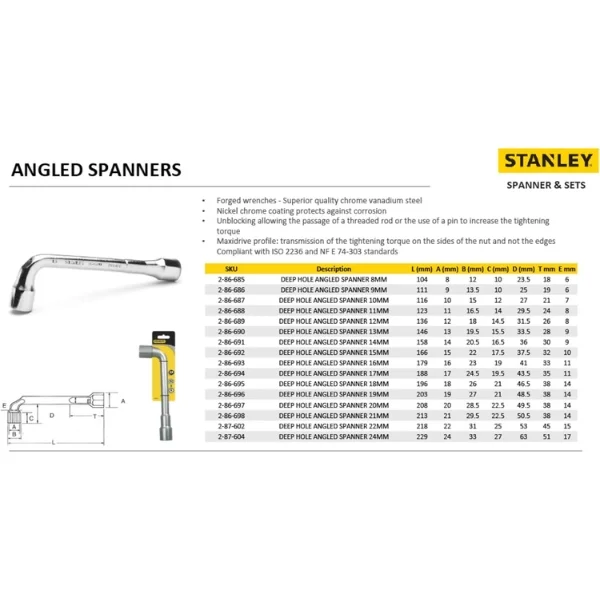
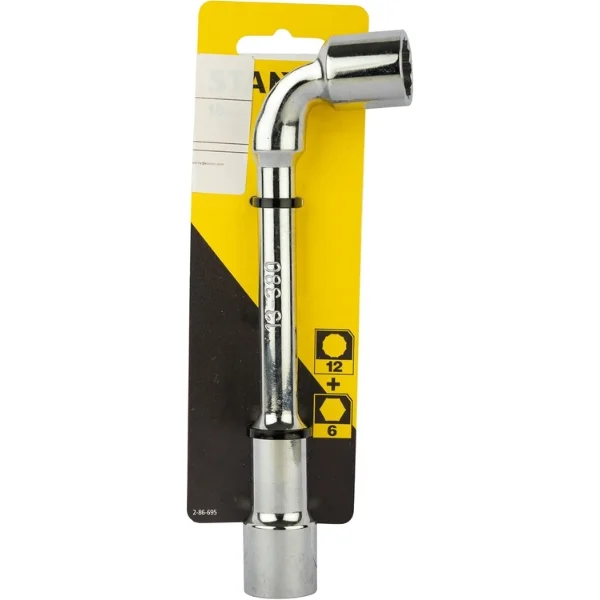
STANLEY Deep Hole Angled Spanner 13mm Technical Specifications
|
Specification |
Details |
|
Brand |
STANLEY |
|
Model Number |
2-86-690 |
|
Tool Type |
Deep Hole Angled Spanner |
|
Nominal Size |
13 mm |
|
Application |
Recessed hex fasteners |
|
Tool Category |
Hand Tools – Spanners |
Construction and Material
Parameter |
Specification |
|
Material |
Chrome Vanadium Steel |
|
Surface Finish |
Chrome plated corrosion-resistant finish |
|
Hardening Process |
Heat-treated for torque resistance |
|
Geometry |
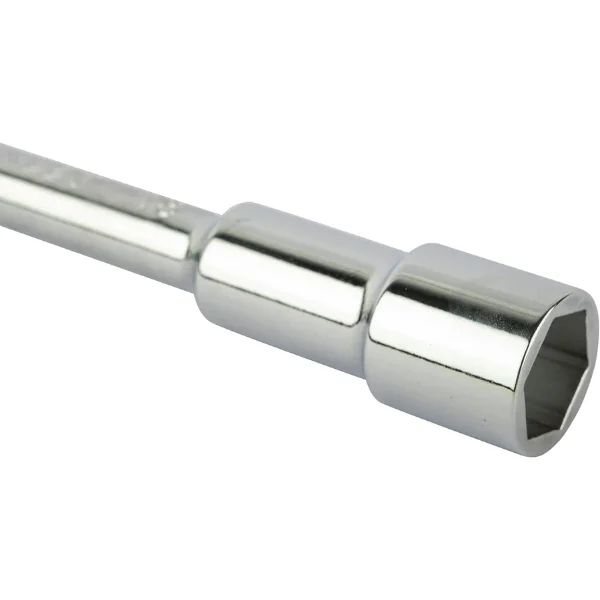
Deep ring offset design |
|
Engagement Type |
Hex ring contact |
Functional Characteristics
Feature |
Description |
|
Deep Reach |
Designed for fasteners positioned below surface level |
|
Angled Access |
Offset angle improves accessibility in tight assemblies |
|
Torque Transfer |
Ring contact distributes load evenly |
|
Durability |
Designed for repeated industrial use |







Customer reviews