



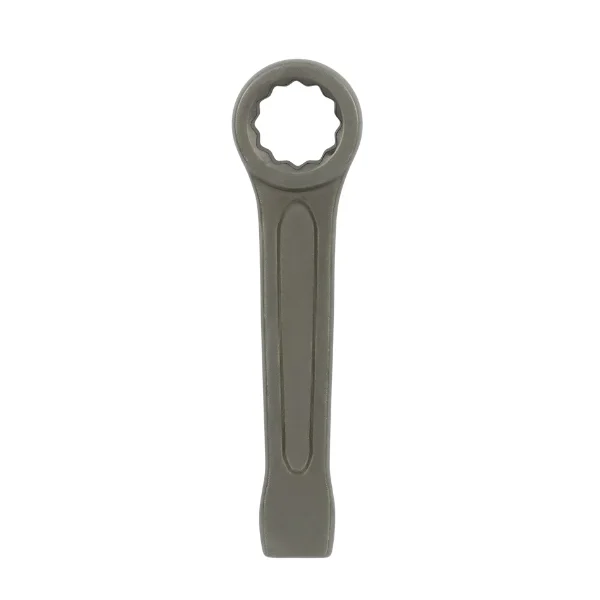
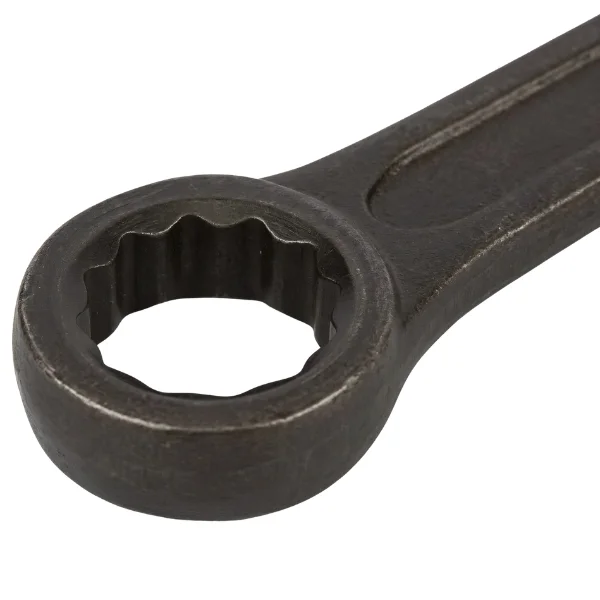
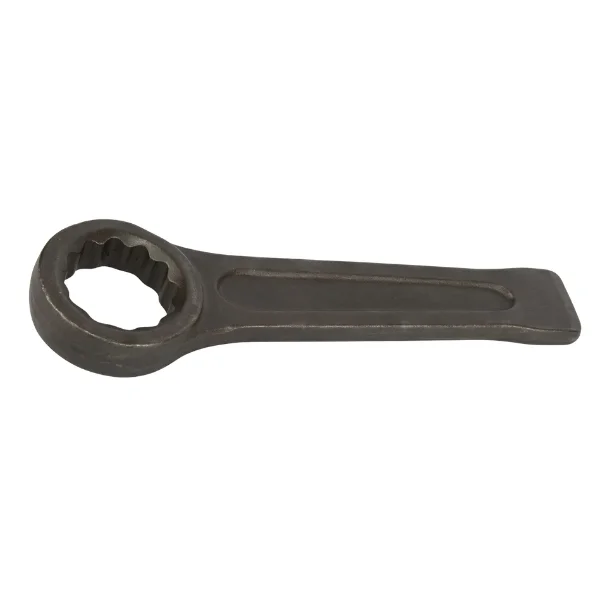
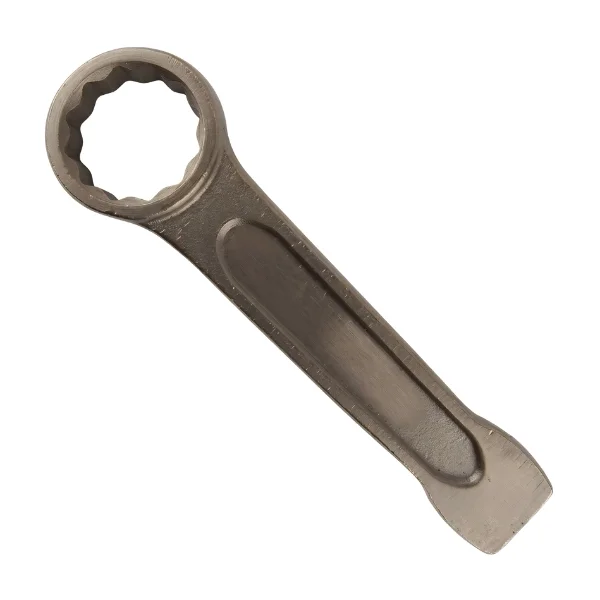


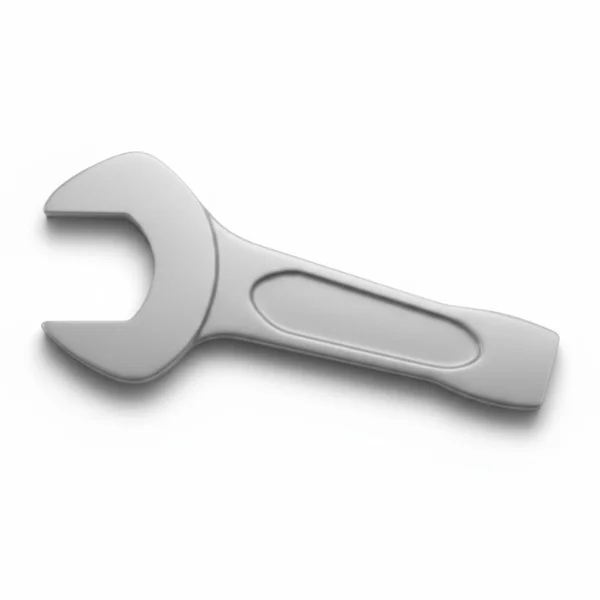
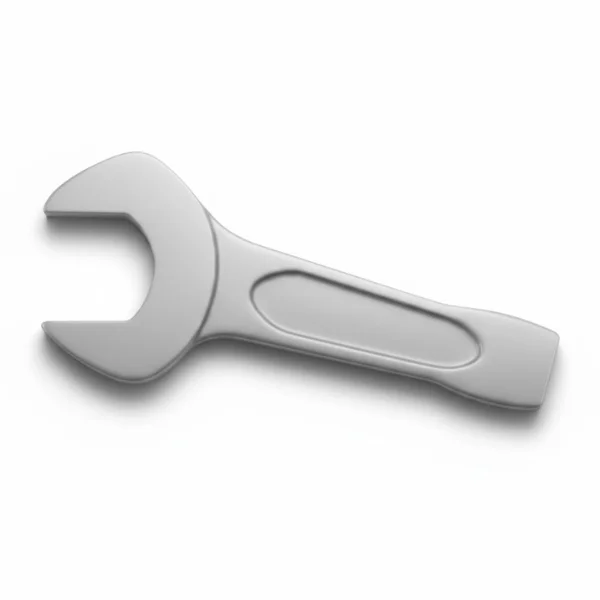
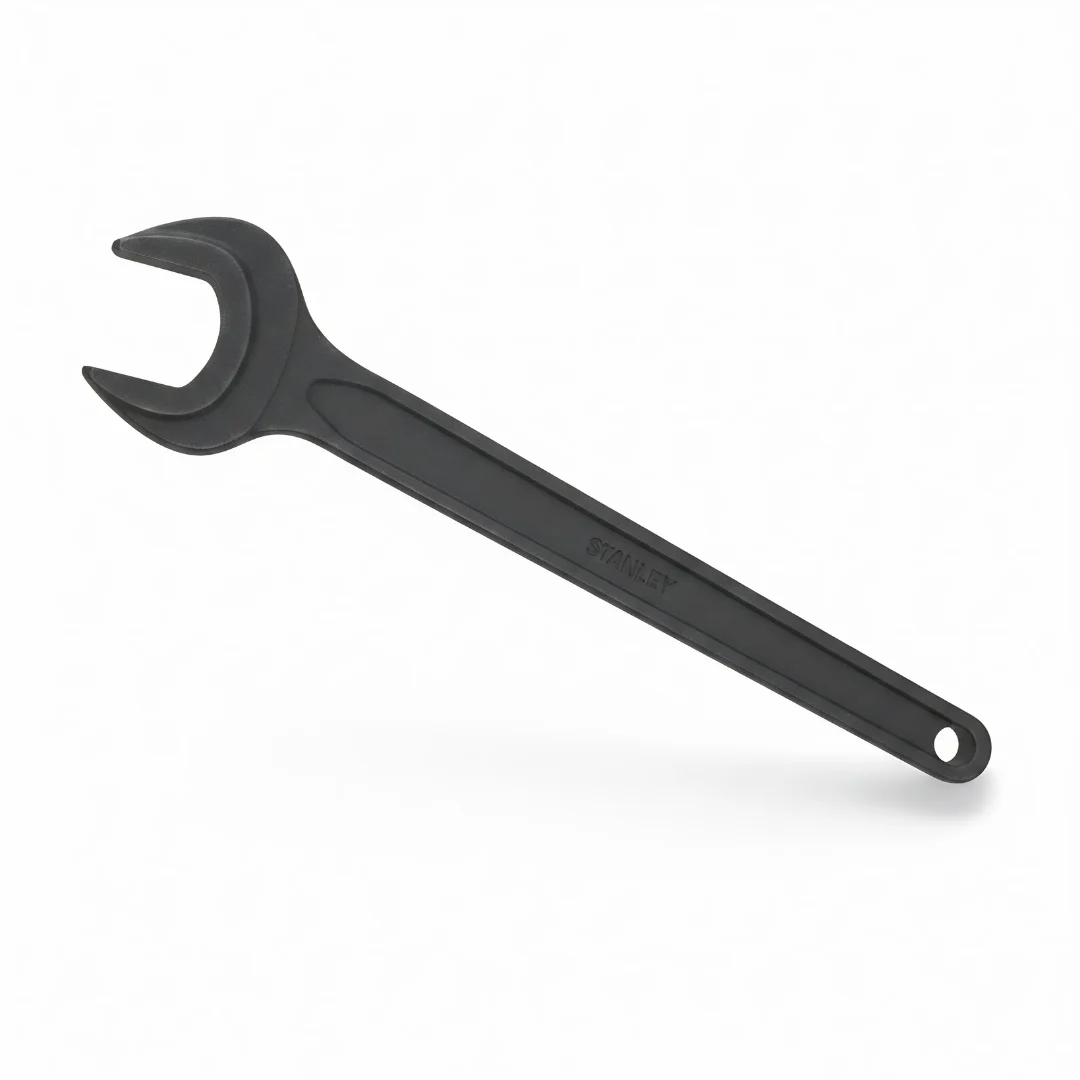
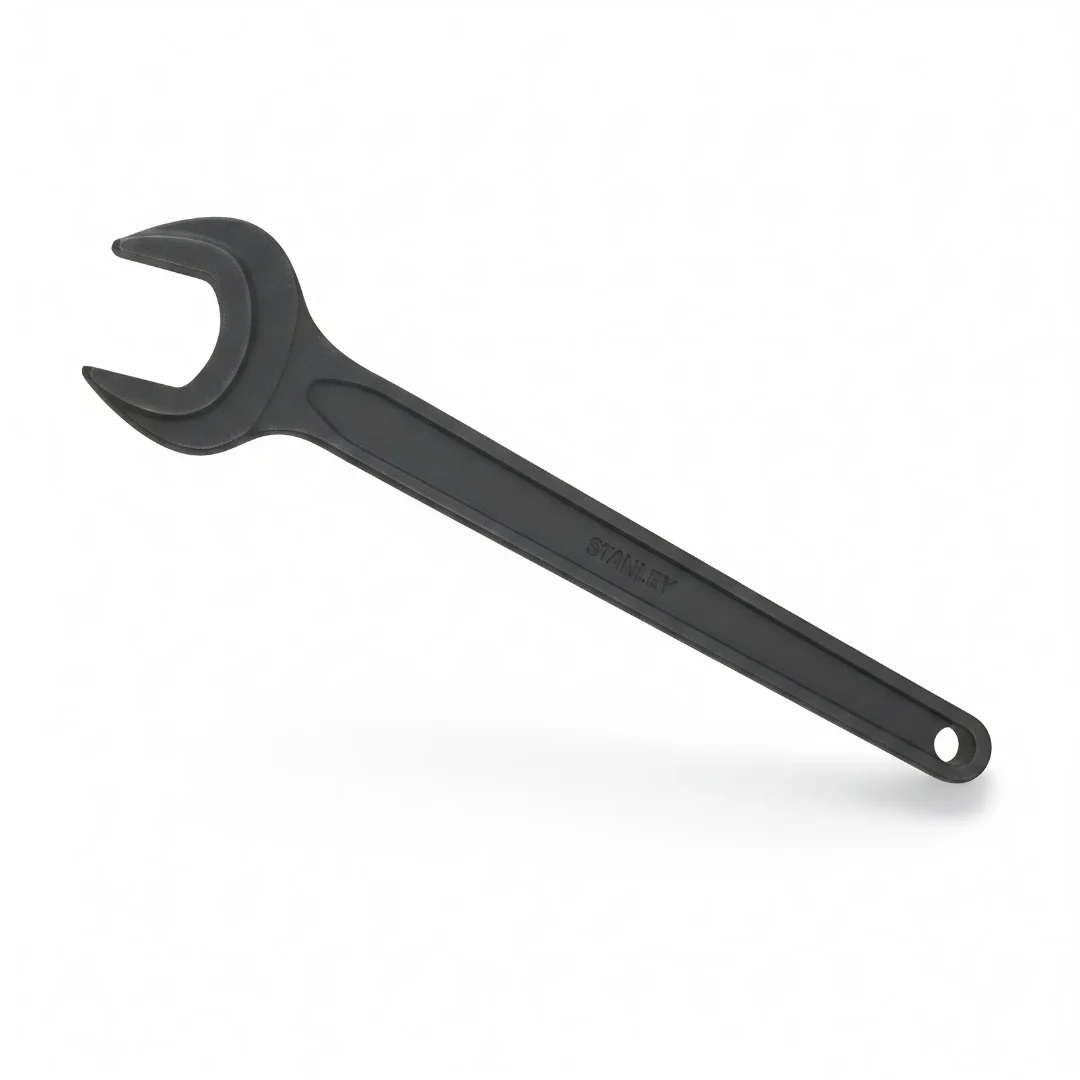
This model features a closed ring head for full nut engagement and a reinforced striking end for controlled hammer blows during high-torque operations.
Application Context & Use Cases
Large slogging spanners are not general maintenance tools. The 105 mm size category is used only in heavy equipment assemblies where bolt diameters and torque requirements exceed standard hand tool capability.
Typical Industrial Applications
Heavy Machinery Assembly
Large equipment installations require tightening of oversized hex bolts during erection of:
Industrial gearboxes
Compressors
Turbines
Crushers
Large pumps
The ring-end design allows controlled torque application without damaging bolt flats.
Plant Shutdown Maintenance
During scheduled maintenance shutdowns, technicians frequently encounter seized fasteners on:
Turbine housings
Pressure vessels
Structural flanges
Heavy piping supports
A hammer-driven slogging spanner allows technicians to break static friction safely.
Structural Bolting Operations
Industries such as shipbuilding, heavy fabrication, and infrastructure use large hex fasteners where torque multipliers are not practical.
In these situations, a striking wrench provides:
Controlled impact force
Full nut engagement
Resistance to deformation
Mining Equipment Maintenance
Large excavators, haul trucks, and crushers use oversized fasteners exposed to vibration and dust. Maintenance crews rely on slogging spanners to remove or secure fasteners during repair operations.
Selection Guidance – How to Choose the Correct Slogging Spanner
Choosing the correct slogging spanner size is critical because oversized tools cannot be adapted easily during maintenance operations.
Bolt Size Compatibility
The spanner size must match the across-flat dimension of the nut or bolt head.
A 105 mm spanner is typically used for:
Extremely large structural fasteners
Heavy machinery anchor bolts
Flange bolts in large pressure systems
When to Choose a Ring-End Slogging Spanner
Ring-end slogging spanners are used when:
Full nut engagement is required
Bolt damage must be avoided
High torque loads are applied
Compared to open-end striking wrenches, ring designs distribute force evenly across the bolt.
When Alternative Tools May Be Required
Other tools may be more appropriate if:
Torque measurement is required
Hydraulic torque tools are available
Clearance around the bolt is limited
Capacity / Calculation Example
Industrial technicians often estimate torque capability based on hammer force and spanner length.
Example Scenario
Bolt size: M72 structural bolt
Typical torque requirement: 2,500–3,000 Nm
Using a slogging spanner:
Hammer strike force delivers high momentary torque
Ring engagement distributes load across bolt flats
Estimated torque generation depends on:
Hammer mass
Striking velocity
Spanner lever arm length
Heavy striking wrenches are used when mechanical torque multipliers are unavailable.
Failure Conditions & Misuse Risks
Slogging spanners operate under impact conditions and must be used correctly to prevent equipment damage or injury.
Incorrect Hammer Selection
Using an undersized hammer may cause:
Insufficient torque
Repeated striking
Operator fatigue
Off-Axis Striking
Improper hammer alignment can result in:
Ring deformation
Tool slippage
Bolt head damage
Incorrect Size Matching
If the ring size is larger than the bolt:
Nut corners may round off
Torque transfer becomes unsafe
Excessive Corrosion Environments
If tools are not maintained properly in corrosive environments, metal fatigue can develop over time.
Material & Compatibility Table
|
Fastener Type |
Compatibility |
Notes |
|
Heavy Hex Bolts |
Compatible |
Common industrial application |
|
Structural Bolts |
Compatible |
Used in heavy structures |
|
Flange Bolts |
Compatible |
Used in pressure systems |
|
Automotive Bolts |
Not suitable |
Oversized tool |
|
Precision Bolting |
Not recommended |
Torque measurement required |
Operational Handling & Installation Considerations
Large striking wrenches require proper handling due to their size and impact operation.
Safety Practices
Technicians should ensure:
Firm footing during striking
Controlled hammer swing
Correct spanner alignment
Working Clearance
Ring-end slogging spanners require:
Adequate radial clearance around bolt head
Space for hammer swing
If clearance is limited, alternative torque tools may be necessary.
Tool Maintenance
To maintain performance:
Clean tool after use
Inspect for deformation
Store in dry environment
Regular inspection ensures safe impact operation.
Commercial Clarity
Industrial procurement teams typically require clarity on supply capability before placing enquiries.
Lead Time
Availability depends on stock position. Large-size industrial tools may require coordination for dispatch.
Dispatch Capability
Supply available Pan-India with organized shipment to industrial locations including:
Plant sites
Fabrication yards
Contractor facilities
Minimum Order Quantity
For standard industrial procurement, single unit supply is possible. Bulk orders may be coordinated for project requirements.
Customization
Customization is generally not applicable for branded industrial hand tools.
However, bulk procurement for industrial tool kits may be supported.
Compliance & Documentation
Procurement documentation typically includes:
GST invoicing
Product identification
Supply documentation
Tender Supply Compatibility
For industrial tenders requiring specific brand and model numbers, supply coordination may be possible subject to availability.
Procurement Process – How to Enquire
Industrial buyers typically provide the following details to confirm supply:
Required Information
Product model number
Quantity required
Delivery location
Company name
GST requirements
Providing these details allows confirmation of:
Availability
Dispatch timeline
Commercial quotation
Comparison Table – vs Common Alternatives
|
Tool Type |
Torque Capability |
Bolt Protection |
Typical Application |
|
Ring-End Slogging Spanner |
High |
Excellent |
Heavy industrial bolting |
|
Open-End Slogging Spanner |
Moderate |
Lower |
Limited access bolts |
|
Hydraulic Torque Wrench |
Very High |
Excellent |
Precision bolting |
|
Standard Ring Spanner |
Low |
Good |
General maintenance |
Ring-end slogging spanners are preferred where impact torque is required without hydraulic tools.
Selection Checklist
Before selecting a 105 mm slogging spanner, verify the following:
Bolt across-flat dimension matches 105 mm
Adequate space exists for hammer striking
Application requires high torque removal or tightening
Closed ring engagement is preferred for bolt protection
Technicians are trained for striking tool operation
If these conditions are met, a large striking wrench may be appropriate.
High-Intent FAQs
What bolt size is compatible with a 105 mm slogging spanner?
A 105 mm spanner corresponds to fasteners with approximately 105 mm across-flat nut dimensions, typically used in heavy industrial assemblies.
Why use a ring-end slogging spanner instead of an open-end version?
Ring-end designs provide full nut engagement, which distributes impact forces evenly and reduces the risk of rounding bolt corners.
Is this tool used with a standard hammer?
Yes. Slogging spanners are designed to be struck with heavy industrial hammers to generate impact torque.
Can this spanner replace hydraulic torque tools?
No. Hydraulic torque tools provide controlled torque measurement, while slogging spanners are used for manual impact tightening or loosening.
Are these tools used in plant shutdown maintenance?
Yes. Large slogging spanners are commonly used during maintenance shutdowns when large bolts must be removed quickly.
Is the STMT96976 model suitable for continuous heavy use?
Industrial striking wrenches are designed for repeated impact applications, provided proper usage and inspection practices are followed.
Technical Specification Overview
Technical Specifications
Model Identification
Specification |
Details |
|
Brand |
STANLEY |
|
Model |
STMT96976 |
|
Tool Type |
Ring-End Slogging Spanner |
|
Size |
105 mm |
|
Application |
Heavy industrial bolting |
|
Operation Method |
Hammer striking |
Dimensional Data
Parameter |
Value |
|
Ring Size |
105 mm |
|
Head Type |
Closed ring |
|
Striking End |
Reinforced striking pad |
|
Drive Method |
Hammer impact |
Material Construction
Property |
Description |
|
Steel Type |
High-strength alloy steel |
|
Heat Treatment |
Industrial heat-treated |
|
Surface Finish |
Corrosion-resistant coating |
|
Impact Resistance |
Designed for hammer striking |







Customer reviews