



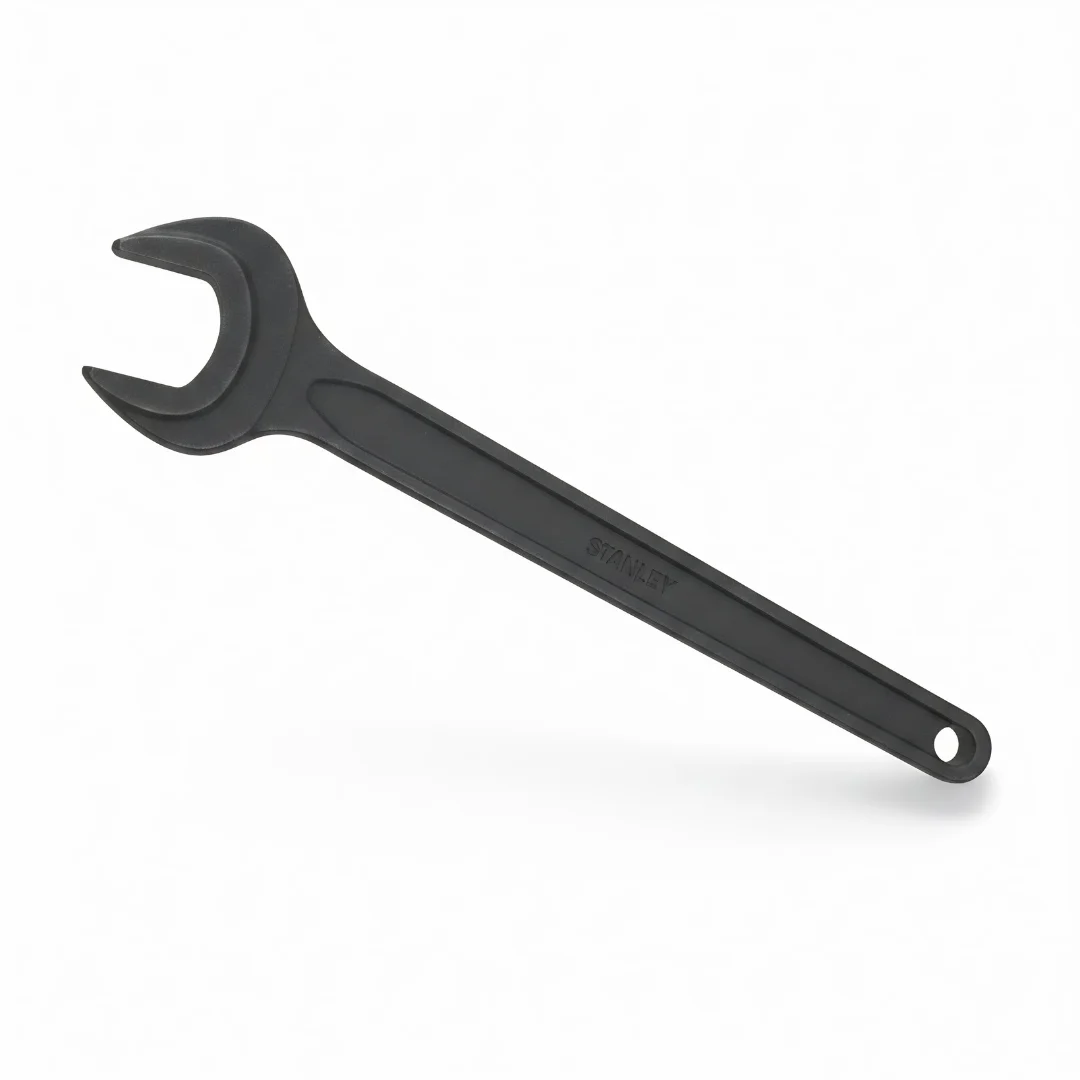
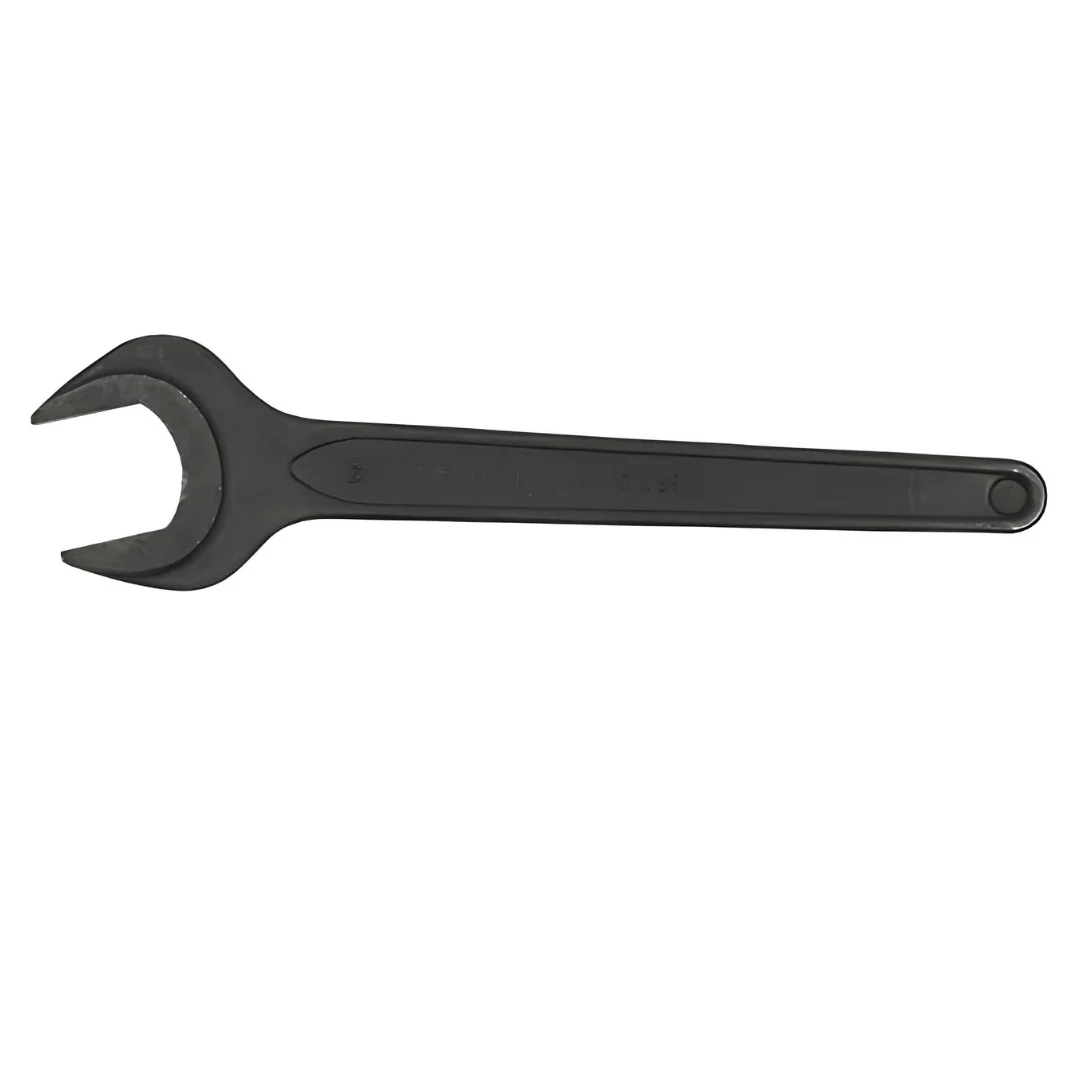
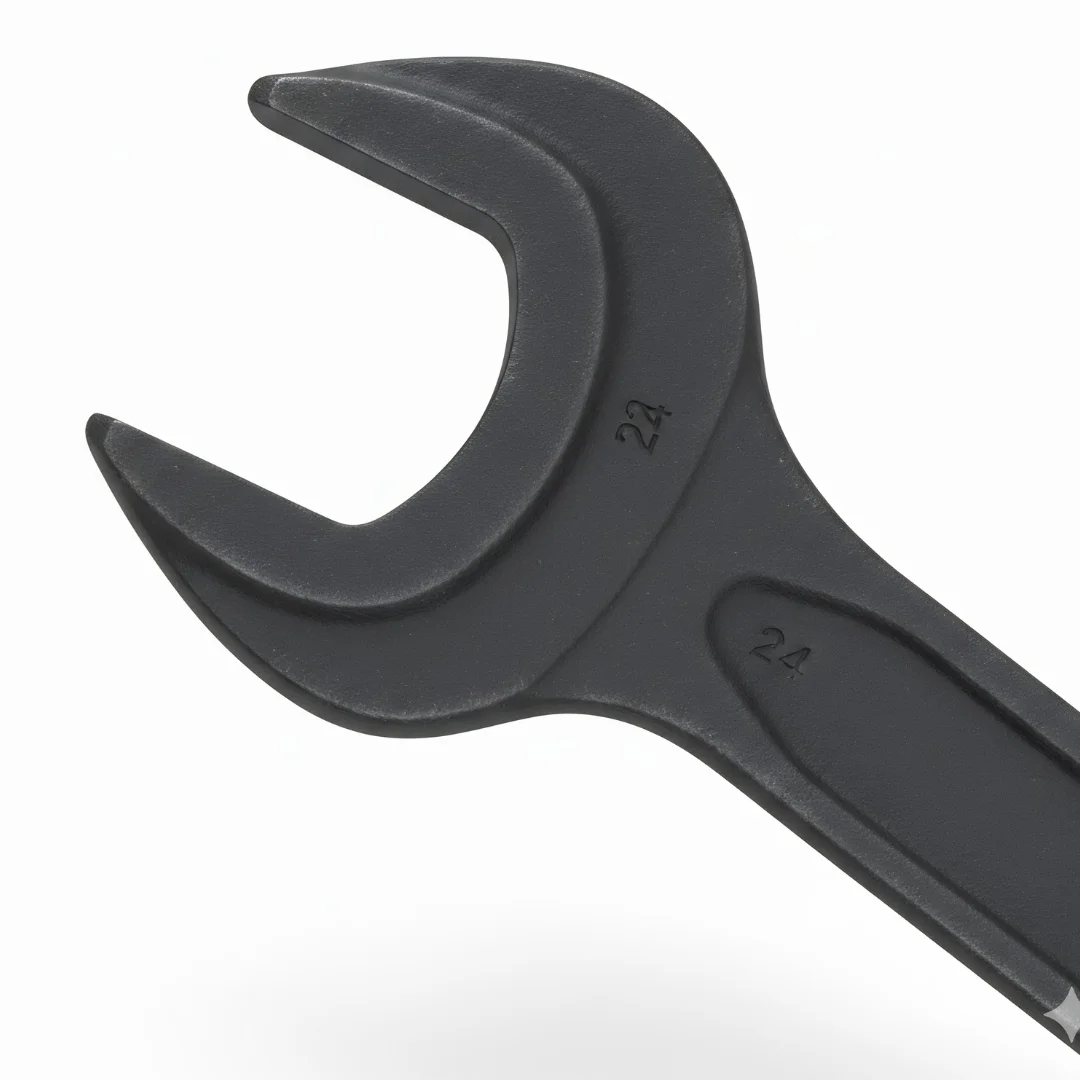


This tool is typically procured by workshops, plant maintenance teams, fabrication units, and tool distributors requiring reliable large-format fastening tools.
Application Context & Use Cases
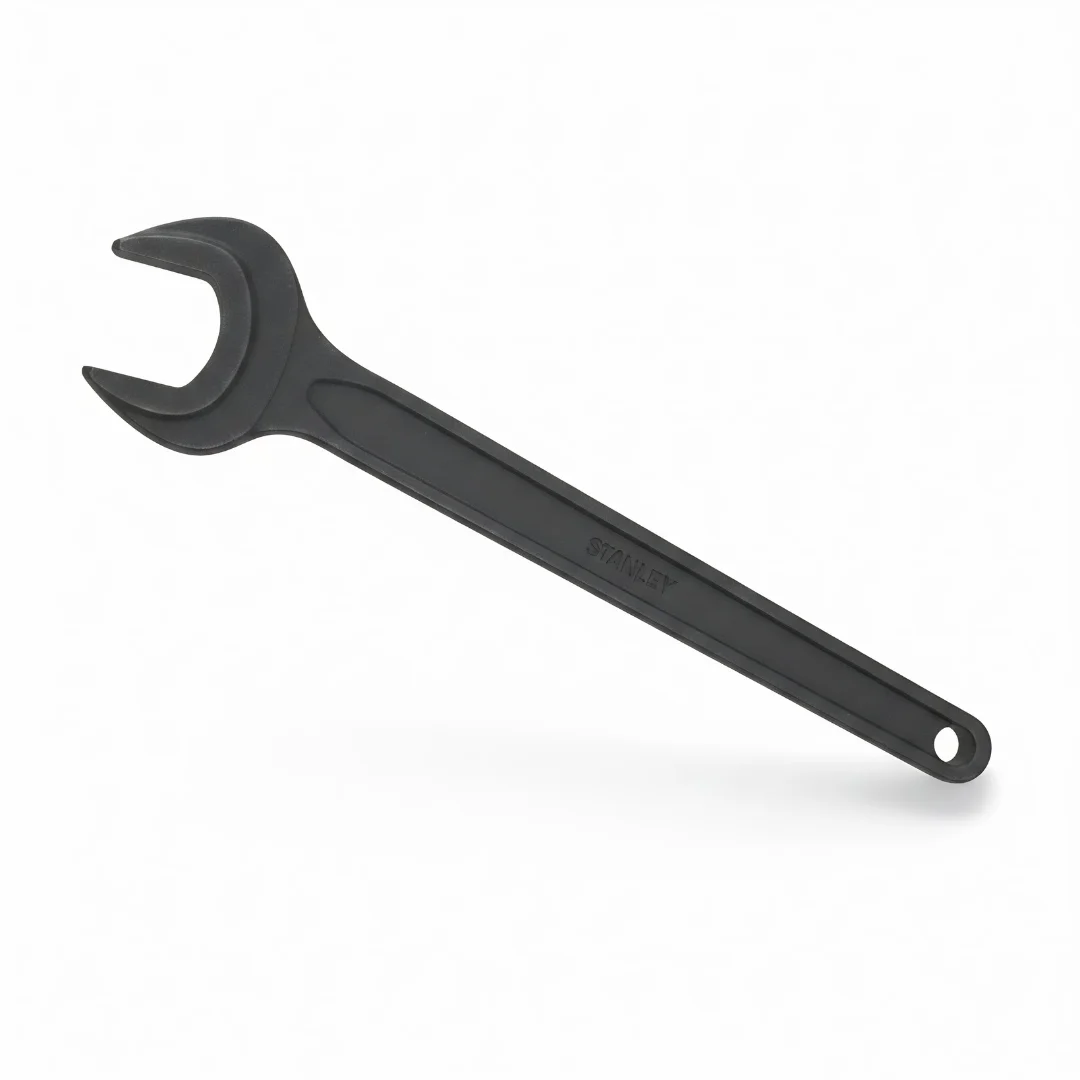
Large open-jaw spanners such as the STMT96997 are used where conventional smaller tools cannot generate sufficient leverage or reach.
Industrial Maintenance
Plant maintenance teams frequently require large spanners to loosen or tighten heavy mechanical connections. Open-jaw spanners allow side engagement where pipe fittings or machine housings block ring spanners.
Structural Fabrication
Fabrication workshops working with steel structures and industrial frames use large spanners to handle high-capacity fasteners on beams, brackets, and assembly fixtures.
Equipment Assembly
OEM assembly lines handling large mechanical components often use open-jaw spanners during alignment and temporary fastening stages.
Field Service Operations
Mobile service teams repairing heavy equipment often prefer open-jaw spanners because they can engage bolts without disassembling surrounding components.
Selection Guidance — Choosing the Correct Spanner
Selecting the correct spanner size is essential to prevent fastener damage and tool wear.
Identify the Fastener Size
Before choosing a spanner, confirm the across-flat dimension of the bolt or nut.
The across-flat measurement determines the required jaw size.
Evaluate Clearance Around the Fastener
Open-jaw spanners are appropriate where:
A ring spanner cannot be placed over the fastener
A socket cannot be aligned with the bolt axis
Access from the side is required
Evaluate Torque Requirement
Larger spanners generate higher torque through longer handle length. However, the tool must match the fastener size exactly.
Using an undersized or oversized spanner increases slippage risk.
Capacity / Calculation Example
Example Scenario
A fabrication unit must loosen a structural bolt during beam alignment.
Bolt specification:
Hex bolt across-flat size: 100 mm
Required Tool
The technician must use a 100 mm open-jaw spanner.
Torque Consideration
Torque applied is determined by:
Torque = Force × Lever Arm Length
Example:
Applied force = 200 N
Lever length = 0.6 m
Torque produced:
200 × 0.6 = 120 Nm
The extended handle of large spanners allows sufficient torque for heavy fastening operations.
Failure Conditions & Misuse Risks
Open-jaw spanners are durable but misuse leads to premature wear.
Common Failure Causes
• Using the wrong jaw size
• Applying impact force (hammering the tool)
• Extending handle with pipe extensions
• Using spanner on rounded fasteners
• Applying torque beyond tool capacity
Consequences of Incorrect Use
Improper handling may cause:
• Jaw spreading
• Bolt head rounding
• Tool surface cracking
• Loss of grip during torque application
Industrial maintenance teams typically avoid these risks by using correct size tools and controlled torque.
Material & Compatibility Table
|
Fastener Type |
Compatibility |
Notes |
|
Hexagonal bolts |
Compatible |
Primary application |
|
Square bolts |
Compatible |
Used in structural hardware |
|
Rounded bolts |
Not recommended |
Risk of slipping |
|
Damaged fasteners |
Not recommended |
Reduced contact grip |
|
Precision mechanical fasteners |
Limited use |
Ring spanners preferred |
Operational Handling & Usage Considerations
Correct Engagement
The spanner must sit fully against the fastener flats before applying torque.
Partial engagement increases slip risk.
Torque Application Direction
Whenever possible:
Pull the spanner toward the body rather than pushing
Maintain tool alignment with the bolt axis
Avoid Impact Use
Open-jaw spanners are not designed for hammer impact unless specifically rated for striking.
Storage and Maintenance
Industrial tool storage practices typically include:
• Dry storage racks
• Periodic cleaning
• Visual inspection for jaw deformation
Proper handling extends service life.
Commercial Clarity
Lead Time
Most orders are processed based on current stock availability or distributor supply cycle.
Typical dispatch scheduling is confirmed during enquiry.
Dispatch Capability
Pan-India dispatch support is available through standard logistics partners.
Orders are packaged appropriately to prevent transit damage.
Minimum Order Quantity
MOQ may vary depending on procurement requirements.
Typical procurement scenarios include:
• Single unit workshop replacement
• Bulk distributor orders
• Maintenance department restocking
Customization
As a branded STANLEY product, the tool is supplied according to manufacturer specifications.
Customization is generally not applicable.
Compliance & Certification
The product conforms to STANLEY manufacturing standards for industrial hand tools.
Certification documents may be available where required for procurement verification.
Tender Compatibility
Bulk tool procurement tenders often include branded tool specifications.
Supply against such requirements may be supported depending on order quantity and documentation.
Procurement Process
Industrial buyers typically provide the following information when placing enquiries:
Required Details
• Product model: STMT96997
• Quantity required
• Delivery location
• Company name
• GST details (for invoicing)
Typical Procurement Flow
Submit enquiry with required quantity
Confirm product availability
Receive quotation and dispatch timeline
Approve order and invoice
Dispatch to delivery location
This process ensures accurate supply and procurement documentation.
Comparison Table
|
Feature |
Open-Jaw Spanner |
Ring Spanner |
Socket Wrench |
|
Access Type |
Side entry |
Top entry |
Vertical entry |
|
Fastener Grip |
Moderate |
High |
High |
|
Clearance Requirement |
Low |
Medium |
High |
|
Slip Resistance |
Moderate |
High |
High |
|
Typical Use |
Maintenance access |
Precision fastening |
Controlled torque |
Open-jaw spanners are preferred where fastener accessibility is restricted.
Selection Checklist
Before procuring a large spanner, confirm the following:
Correct fastener size (100 mm across flats)
Access clearance requires open-jaw design
Required torque level fits manual spanner use
Fastener surfaces are not rounded or damaged
Tool size fits available workspace
This checklist helps avoid incorrect tool selection.
High-Intent FAQs
Is the STMT96997 suitable for industrial maintenance work?
Yes. Large open-jaw spanners are commonly used in fabrication workshops, heavy equipment servicing, and plant maintenance operations where large fasteners must be accessed from the side.
Can this spanner replace a ring spanner?
No. Ring spanners provide higher grip and are preferred for precision fastening. Open-jaw spanners are used primarily where ring spanners cannot access the fastener.
Is this tool suitable for impact tightening?
No. Standard open-jaw spanners are not designed for hammering or impact use unless specifically manufactured as striking tools.
How do I confirm the correct spanner size?
Measure the bolt or nut across flats. If the dimension is 100 mm, a 100 mm spanner is required for proper engagement.
Is bulk procurement available?
Industrial procurement teams and distributors may request quotations for larger quantities depending on supply requirements.
Can this spanner be used for pipe fittings?
Only if the fitting uses hexagonal or square fasteners. Pipe wrenches are generally more suitable for cylindrical pipe surfaces.
Does the tool require maintenance?
Routine cleaning and visual inspection for jaw deformation are recommended to ensure safe operation.
Technical SpecificationsCore Product Specifications
|
Parameter |
Specification |
|
Product Model |
STANLEY STMT96997 |
|
Tool Type |
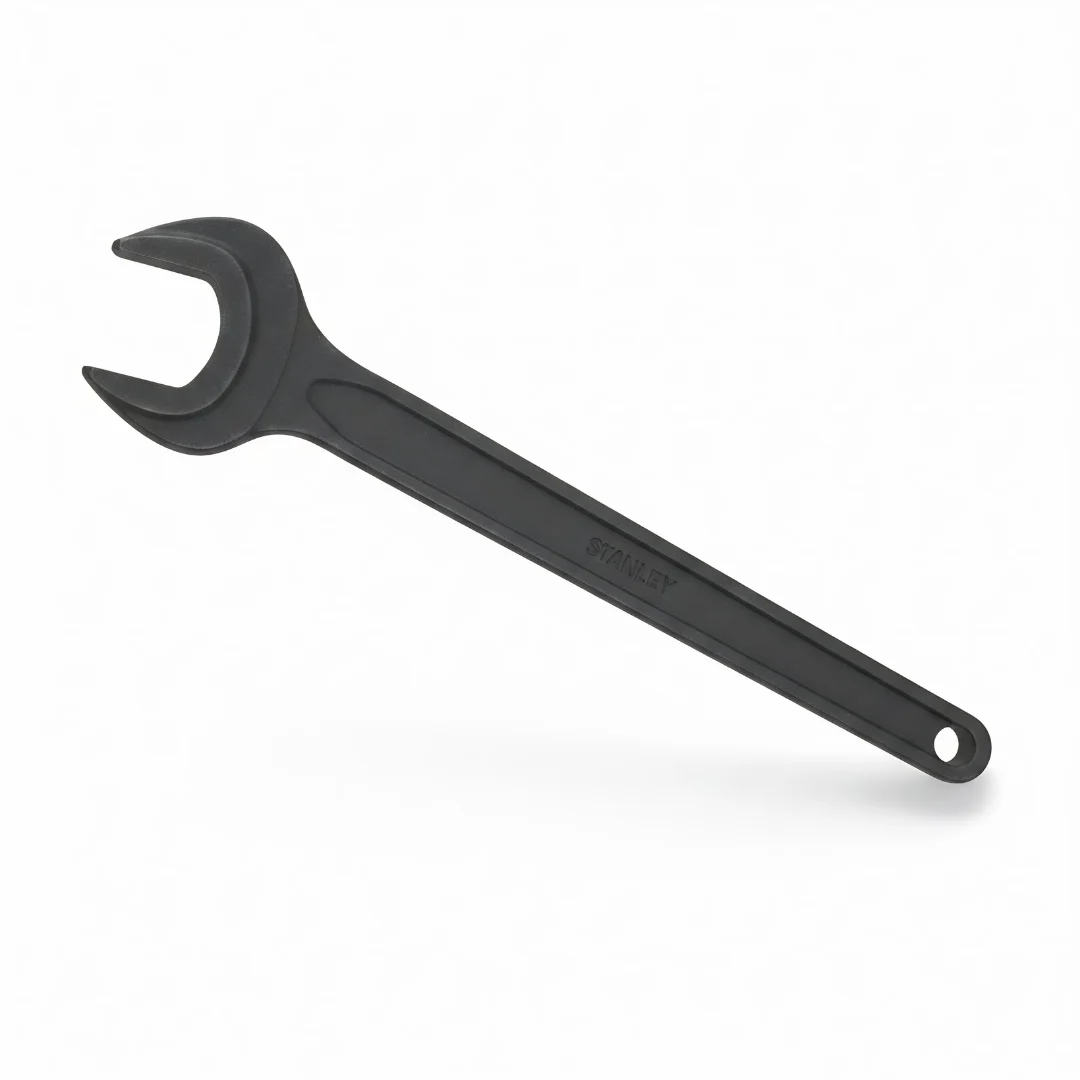
Single-End Open-Jaw Spanner |
|
Nominal Size |
100 mm |
|
Jaw Configuration |
Open Jaw |
|
Typical Application |
Heavy-duty fastening / loosening |
|
Manufacturer Brand |
STANLEY |
|
Tool Category |
Industrial Hand Tools |
|
Supply Coverage |
Pan India |
Dimensional Characteristics
|
Specification Category |
Description |
|
Jaw Type |
Single open jaw |
|
Jaw Opening |
Designed for large hexagonal fasteners |
|
Lever Arm |
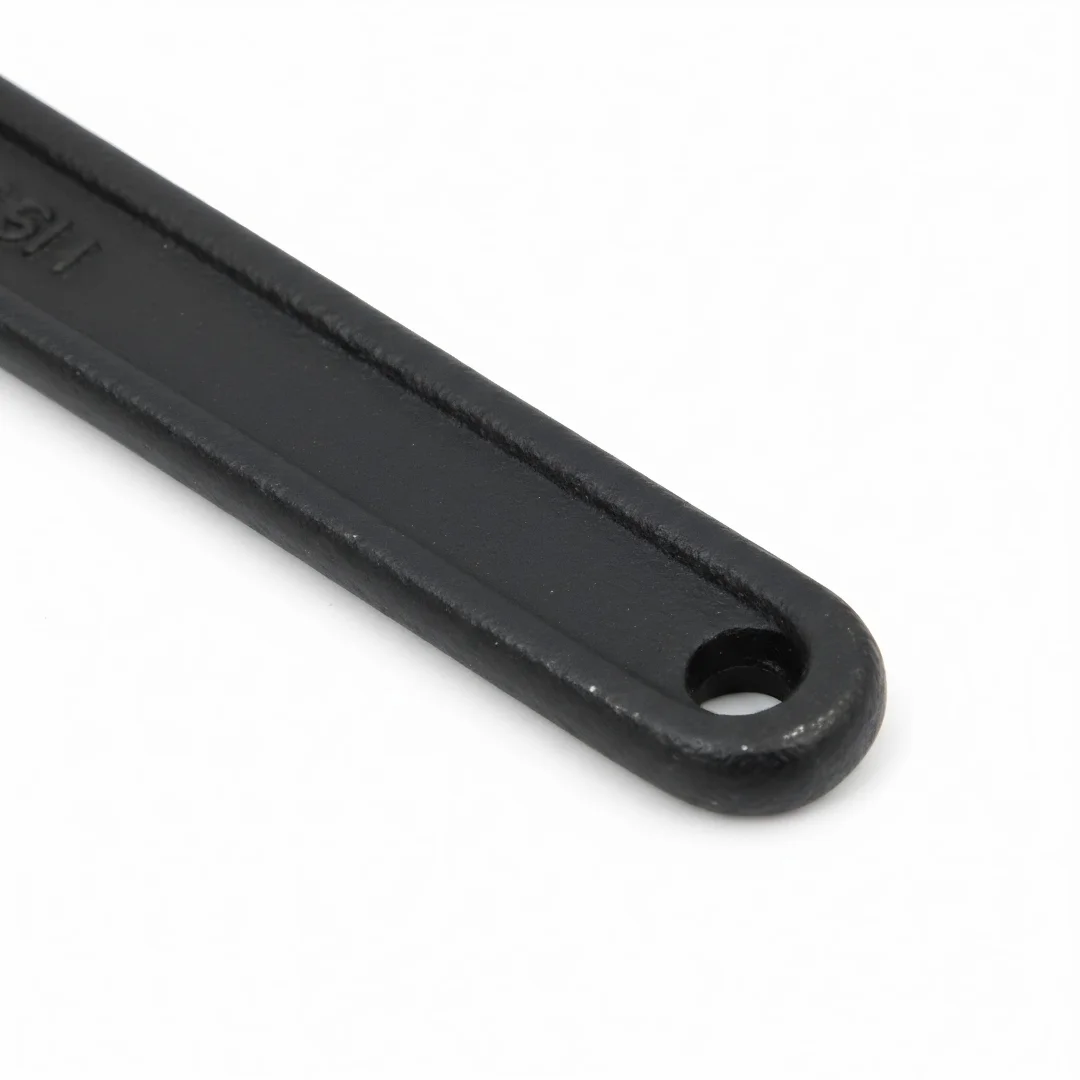
Long handle for torque generation |
|
Contact Points |
Two flat surfaces on bolt head |
|
Engagement Style |
Side entry |
Manufacturing Characteristics
|
Property |
Description |
|
Material |
High strength alloy steel |
|
Surface Finish |
Corrosion resistant coating |
|
Manufacturing Process |
Forged tool body |
|
Durability |
Designed for repeated industrial use |







Customer reviews