



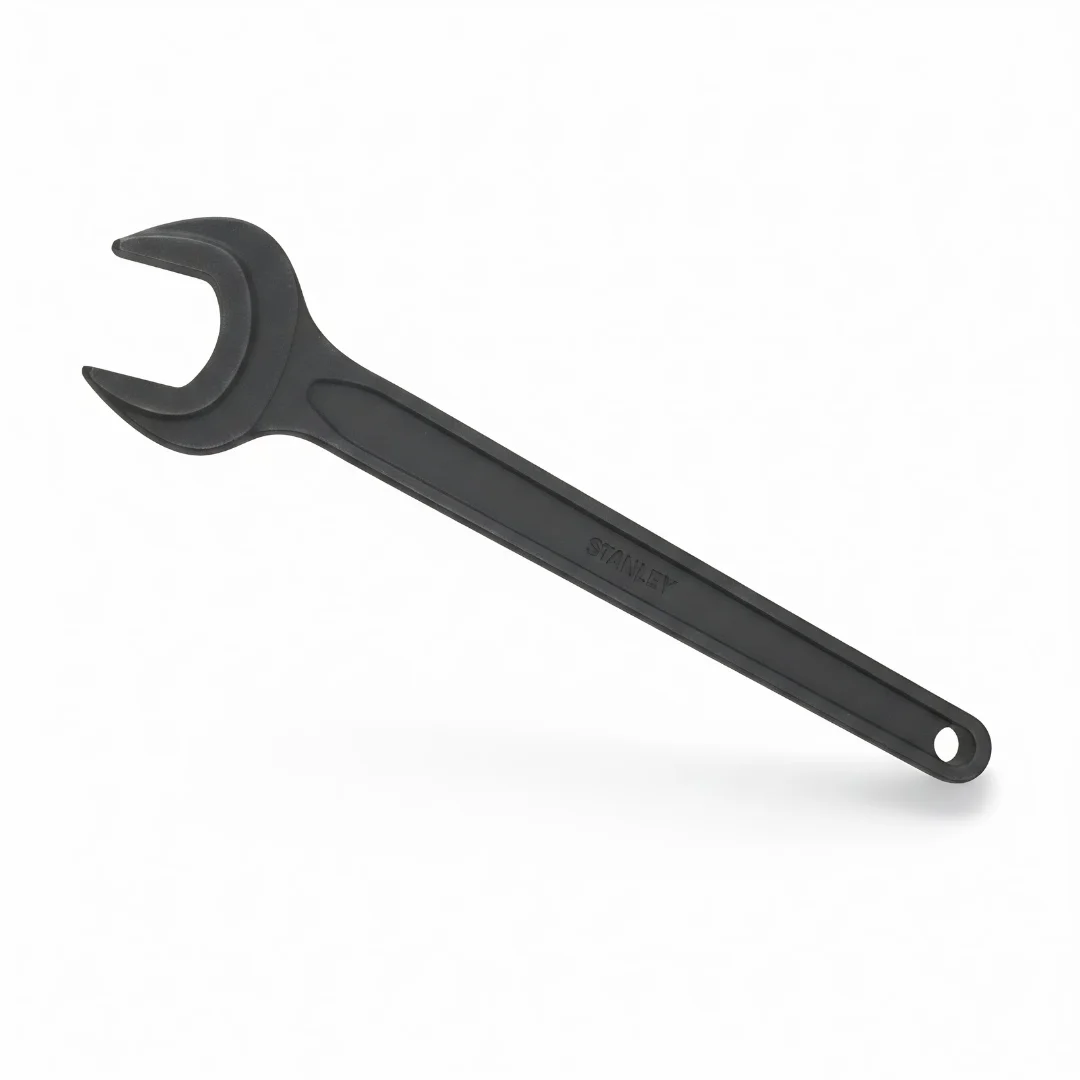
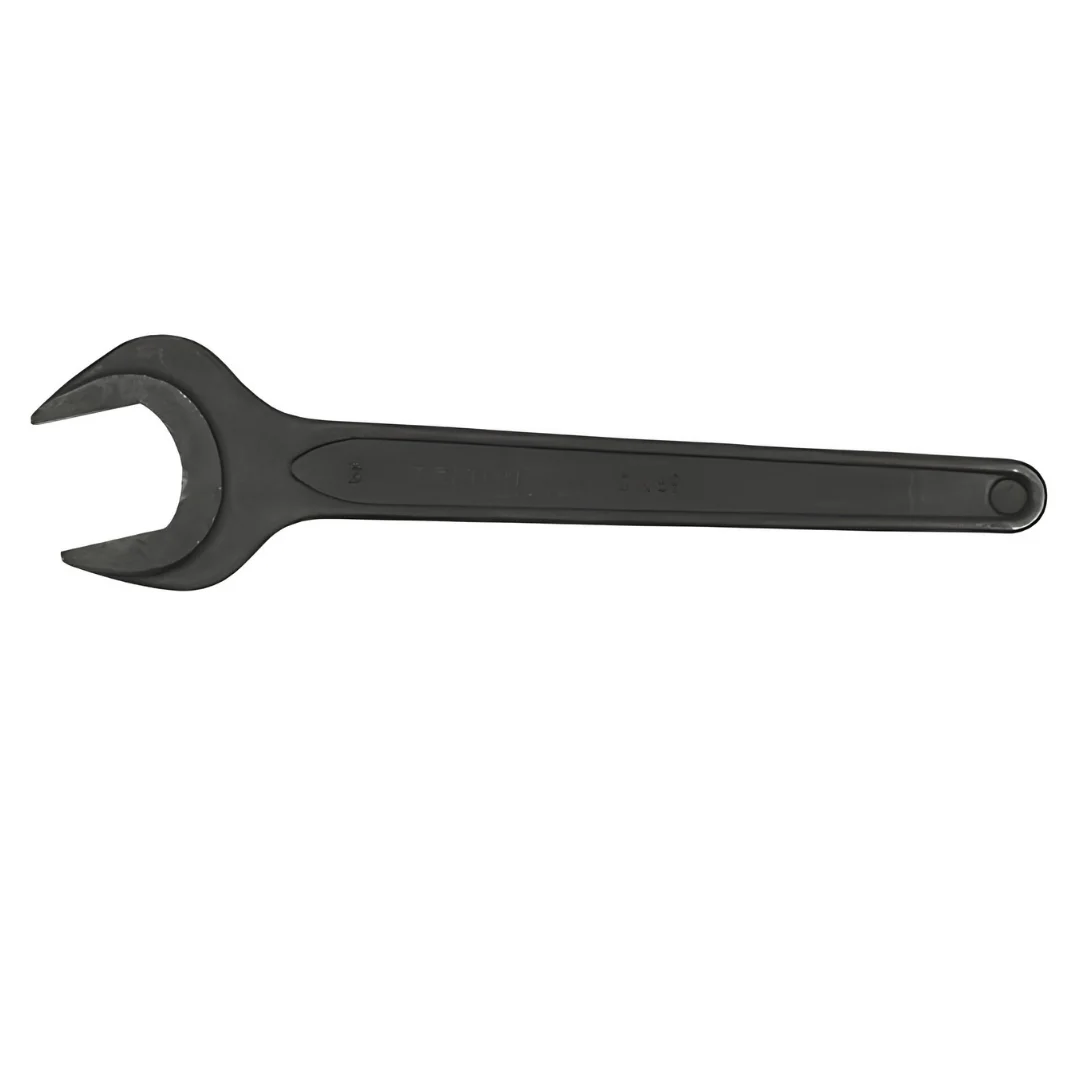
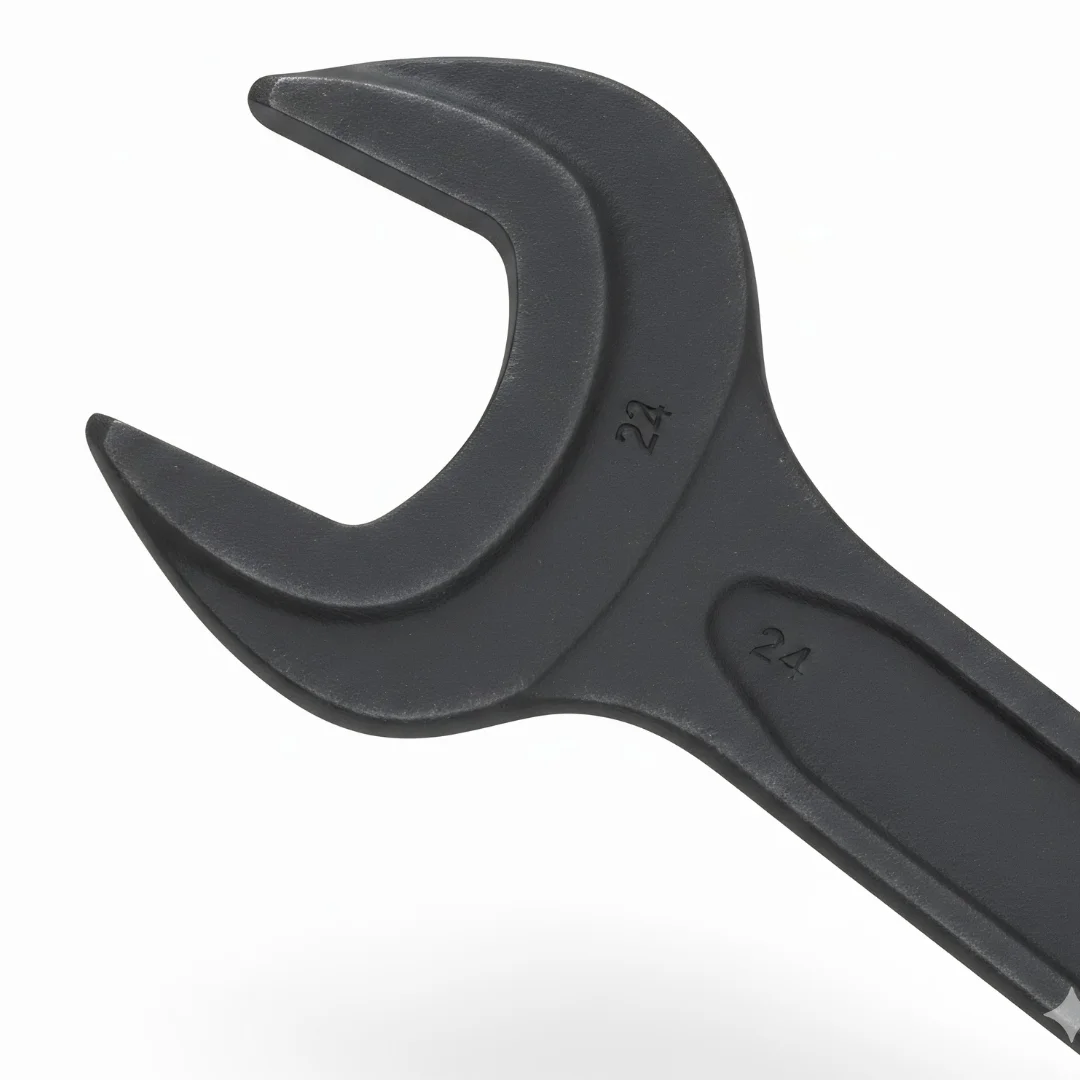
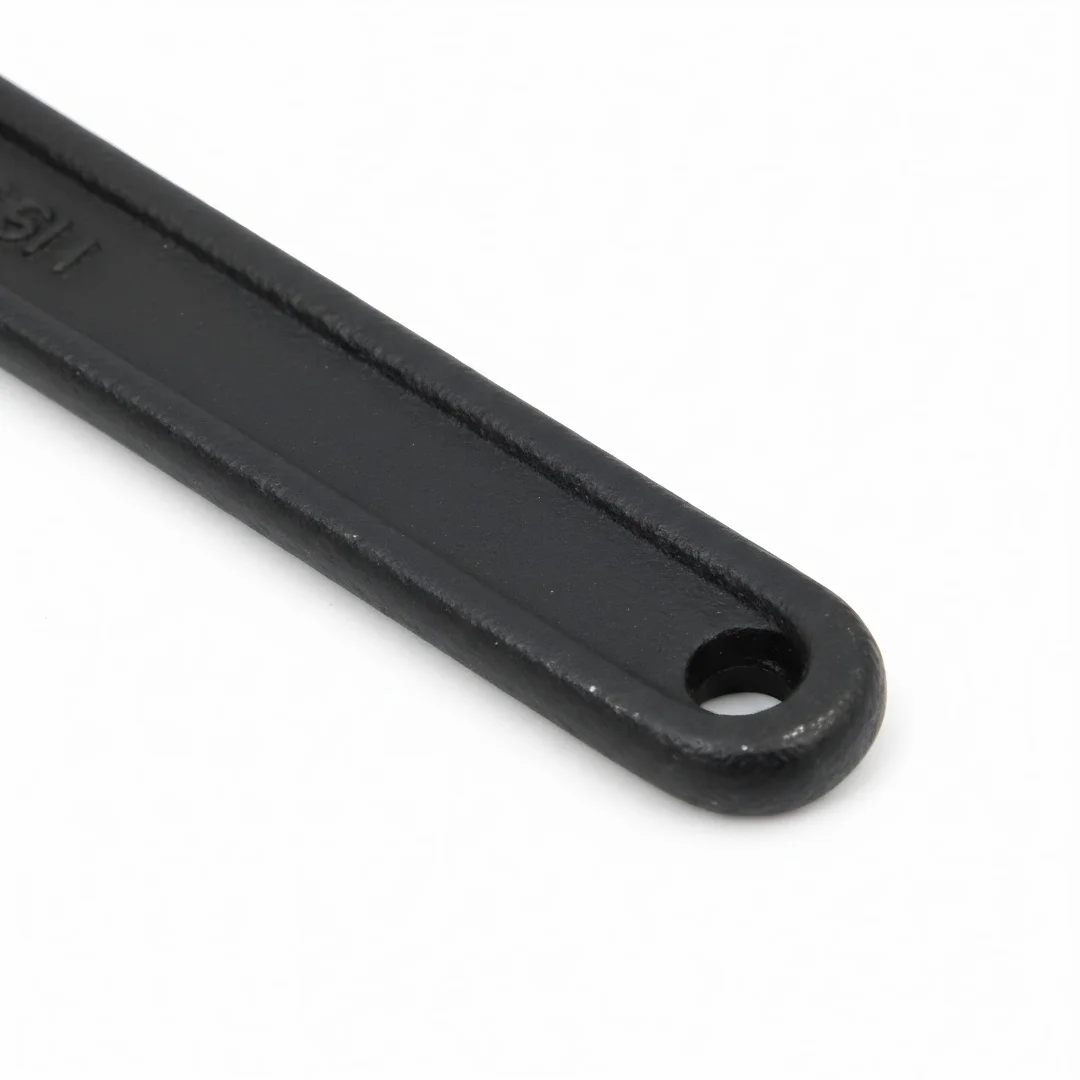


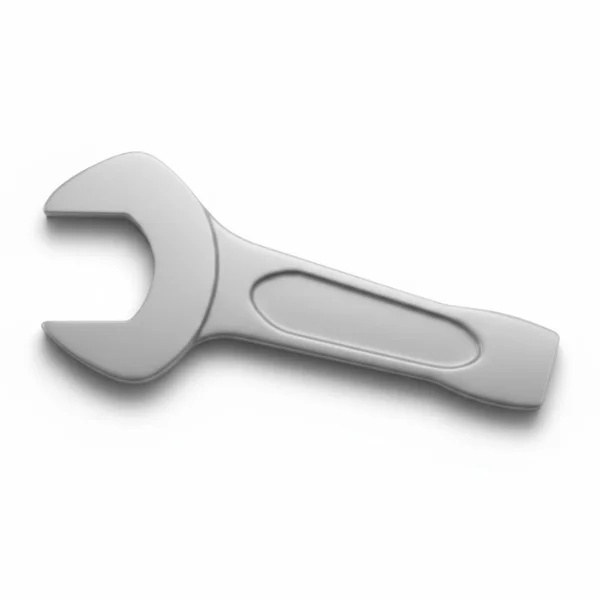
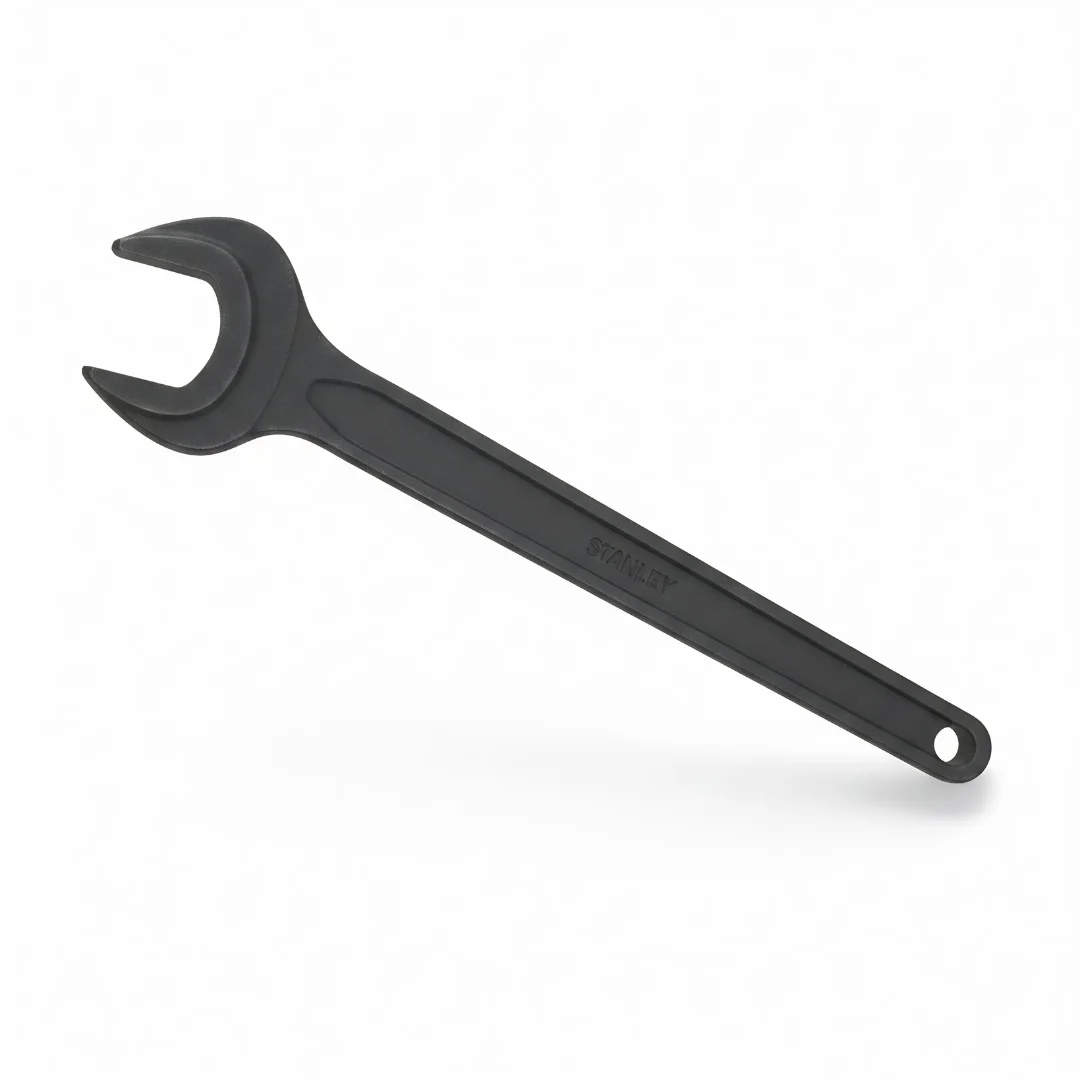
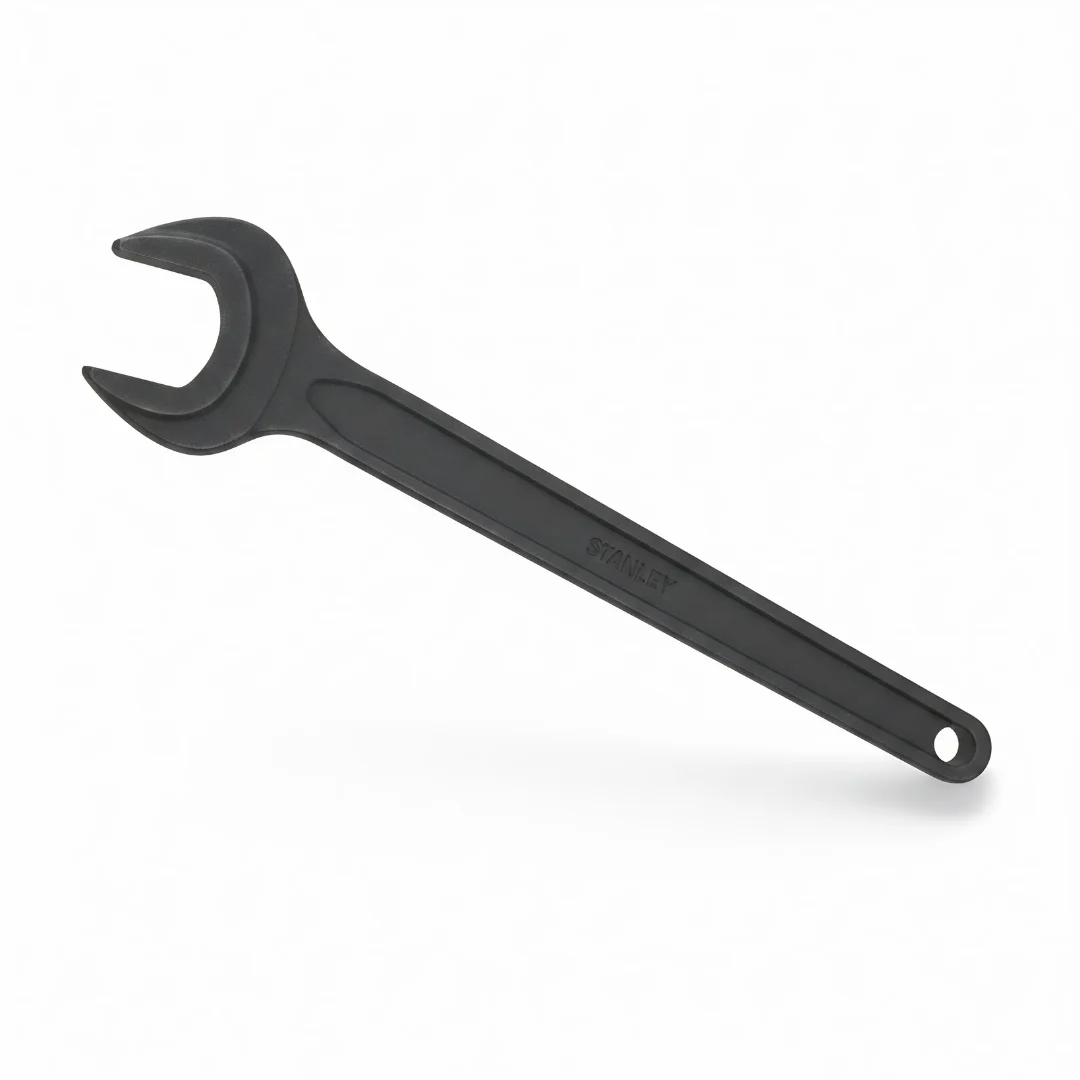
It is typically used in plant maintenance, structural installations, and heavy machinery servicing where large fasteners require high manual torque without damaging the bolt head.
Application Context & Use Cases
Large open-jaw spanners are rarely general workshop tools. They are typically required in industrial maintenance environments where bolt sizes exceed standard mechanical tool ranges.
Heavy Industrial Maintenance
Maintenance engineers frequently use 80 mm spanners for servicing:
Large structural anchor bolts
Industrial equipment mounting bolts
Mechanical couplings and flanges
Industries where this tool commonly appears include:
Steel plants
Cement manufacturing facilities
Shipyards
Mining operations
Power generation plants
Large bolts used in these sectors require tools that maintain jaw accuracy and structural rigidity under high torque.
Infrastructure Construction
Contractors performing structural installations often require large spanners when working on:
Bridge components
Structural steel connections
Heavy crane assemblies
Large flange couplings
Because bolt heads in these applications are large, standard spanner sets cannot accommodate them.
Heavy Equipment Servicing
Maintenance teams servicing equipment such as:
Excavators
Crushers
Industrial pumps
Large compressors
May require large open-jaw spanners for periodic maintenance.
Selection Guidance
Choosing the correct industrial spanner size requires confirming the actual bolt head dimension, not the bolt diameter.
Understanding Spanner Sizing
Spanners are sized according to the distance across flats (AF) of the bolt head.
For example:
An 80 mm spanner fits bolts with 80 mm across-flats dimension.
In heavy mechanical assemblies, this dimension is typically associated with:
large structural fasteners
heavy flange bolts
high-capacity anchor bolts.
When an Open-Jaw Spanner is Preferred
Open-jaw tools are selected when:
bolts cannot be accessed from the top
surrounding equipment blocks ring spanner insertion
quick positioning around a nut is required.
Open-jaw spanners allow side access, which is useful in confined mechanical assemblies.
Confirming Correct Tool Size
Before procurement, maintenance teams should confirm:
bolt head across-flats dimension
accessibility of the fastener
torque required for loosening or tightening.
Incorrect sizing can lead to bolt rounding or jaw damage.
Capacity / Calculation Example
Large industrial bolts generate significant torque resistance due to:
bolt diameter
thread friction
preload forces.
Example Scenario
A structural bolt with:
80 mm head size
high preload torque requirement
may require a long lever tool to apply adequate force.
Torque applied through a spanner depends on:
Torque = Force × Lever Length
If a technician applies 400 N of force on a long spanner handle measuring 0.7 m, the resulting torque equals:
400 × 0.7 = 280 Nm
This level of torque is typical for large fastener maintenance.
The long handle design of large spanners helps technicians achieve the required torque without excessive physical strain.
Failure Conditions & Misuse Risks
Industrial spanners must be used correctly to avoid equipment damage or worker injury.
Incorrect Tool Size
Using an oversized spanner may result in:
slipping jaws
rounded bolt corners
sudden tool release.
Over-Extension with Pipes
Maintenance teams sometimes extend spanner handles with pipes to increase leverage.
This can cause:
tool deformation
sudden structural failure.
Misalignment During Operation
If the spanner is not fully seated on the nut:
jaw stress becomes uneven
tool wear increases.
Correct seating is essential before applying force.
Material / Compatibility Table
|
Fastener Material |
Compatibility |
Notes |
|
Carbon Steel Bolts |
Fully compatible |
Standard industrial bolts |
|
Alloy Steel Bolts |
Compatible |
Requires higher torque |
|
Structural Bolts |
Compatible |
Used in steel structures |
|
Stainless Steel Bolts |
Compatible |
Requires careful torque control |
Operational Handling & Installation Considerations
Large spanners should be used following safe mechanical practices.
Proper Jaw Engagement
Technicians should ensure:
full contact between jaw faces and nut flats
correct orientation of force.
Applying force in the wrong direction may cause the tool to slip.
Force Direction
Force should be applied perpendicular to the handle.
Pulling rather than pushing is generally safer because it reduces injury risk if the tool slips.
Work Environment
Large spanners are often used in:
elevated platforms
confined industrial spaces
heavy equipment installations.
Operators should ensure stable footing and clear work areas before applying force.
Commercial Clarity
Industrial procurement teams often require logistical clarity before issuing enquiries.
Lead Time
Typical dispatch timelines depend on stock availability and order volume.
Dispatch Capability
Supply capability covers Pan-India industrial delivery, including:
factory maintenance departments
infrastructure contractors
industrial distributors.
Minimum Order Quantity (MOQ)
Industrial hand tools are generally supplied as:
single unit purchase for maintenance teams
bulk quantities for distributor supply.
Customization Availability
This product is a standardized branded tool and is supplied according to manufacturer specifications.
No structural customization is typically available.
Compliance / Certification
Stanley tools are widely used across industrial environments and align with standard professional tool manufacturing practices.
Tender Compatibility
Government and PSU tenders often specify recognized tool brands. Stanley products are frequently included in approved procurement lists depending on tender specifications.
Procurement Process
Industrial buyers typically provide the following information when requesting supply quotations.
Required Information
Product model: STMT96993
Required quantity
Delivery location
Company name and GST details
urgency of requirement.
Providing this information helps suppliers confirm stock availability and dispatch timelines.
Enquiry Channels
Procurement teams can request:
pricing information
stock confirmation
bulk supply capability.
This ensures alignment with project timelines or maintenance shutdown schedules.
Comparison Table — Common Alternatives
Feature |
STMT96993 80 mm Open Jaw |
Ring Spanner |
Adjustable Spanner |
|
Bolt Size Accuracy |
High |
High |
Moderate |
|
Access from Side |
Yes |
No |
Yes |
|
Torque Stability |
High |
Very High |
Low |
|
Slippage Risk |
Moderate |
Very Low |
High |
|
Suitable for Heavy Bolts |
Yes |
Yes |
No |
Open-jaw spanners are typically selected when side access is required, whereas ring spanners are preferred when maximum torque stability is necessary.
Selection Checklist
Industrial procurement teams can validate suitability using the following checklist:
Bolt head dimension confirmed as 80 mm across flats
Fastener accessible from the side
Required torque within manual tool limits
Maintenance application requires open-jaw access
Tool required for heavy industrial bolt servicing
Procurement specification allows branded industrial tools
If all conditions are satisfied, the 80 mm open-jaw spanner is an appropriate tool choice.
Frequently Asked Questions
What bolt size corresponds to an 80 mm spanner?
An 80 mm spanner fits fasteners with an 80 mm across-flats dimension on the bolt head or nut.
Is an open-jaw spanner suitable for high-torque bolts?
Open-jaw spanners can handle heavy torque but must be fully seated on the bolt head. For extremely high torque applications, ring spanners or hydraulic tools may be preferred.
Can this tool be used for structural steel bolts?
Yes. Large open-jaw spanners are commonly used for structural bolts in infrastructure and heavy fabrication projects.
Is the tool suitable for stainless steel fasteners?
Yes, but stainless fasteners require controlled torque to avoid galling.
Why do industrial plants use large single-end spanners instead of adjustable tools?
Adjustable spanners do not provide the jaw stability required for large industrial bolts, which can lead to slippage or fastener damage.
What industries typically require an 80 mm spanner?
Industries include:
steel manufacturing
power plants
cement plants
mining operations
shipbuilding
heavy construction.
How should the tool be stored?
Large spanners should be stored in dry industrial tool racks to prevent corrosion and to maintain jaw alignment.
Technical SpecificationsProduct Identification
|
Parameter |
Specification |
|
Brand |
STANLEY |
|
Model Number |
STMT96993 |
|
Tool Type |
Single-End Open-Jaw Spanner |
|
Jaw Size |
80 mm |
|
Application |
Heavy hexagonal fasteners |
|
Tool Category |
Industrial Hand Tool |
Construction Characteristics
|
Feature |
Description |
|
Tool Format |
Single-end open jaw |
|
Jaw Geometry |
Parallel precision jaws |
|
Handle Design |
Long lever handle for torque |
|
Manufacturing Type |
Forged industrial spanner |
|
Surface Finish |
Corrosion-resistant finish |
Functional Characteristics
|
Parameter |
Value |
|
Fastener Type |
Hexagonal bolts / nuts |
|
Fastener Range |
Large structural bolts |
|
Torque Application |
Manual torque using long lever |
|
Tool Orientation |
Open-jaw access from side |







Customer reviews