



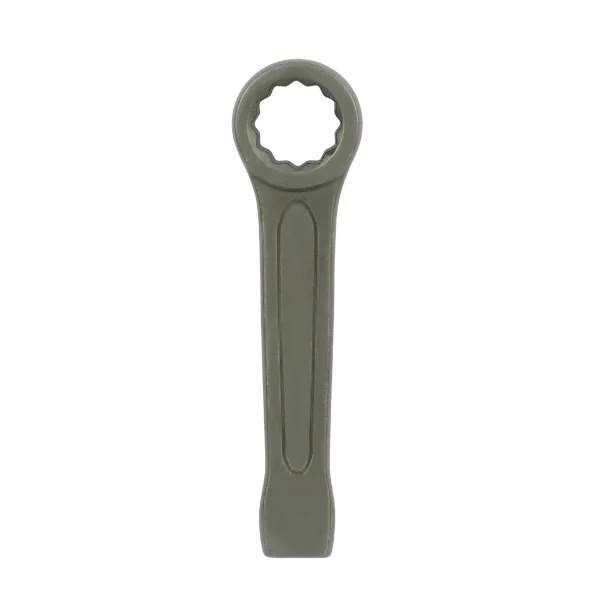
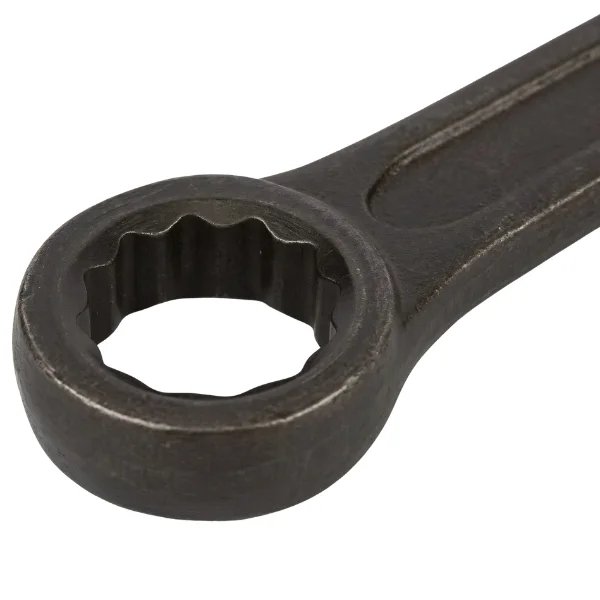
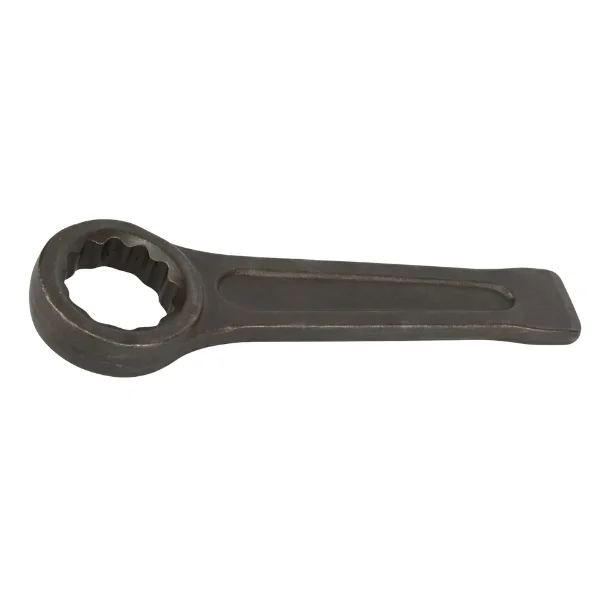
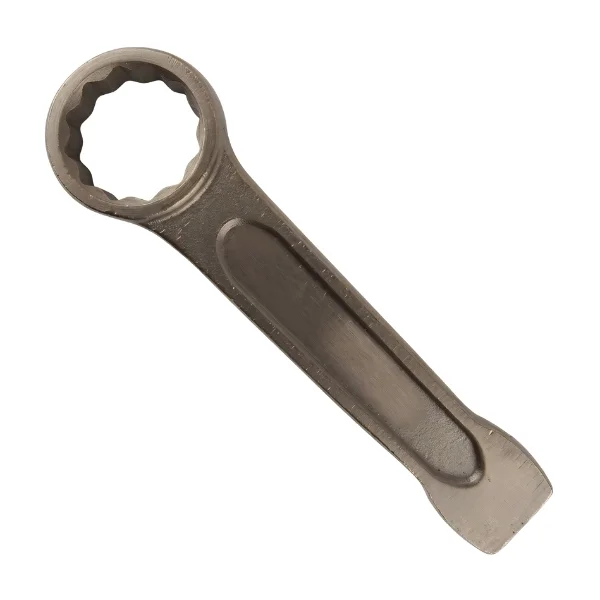


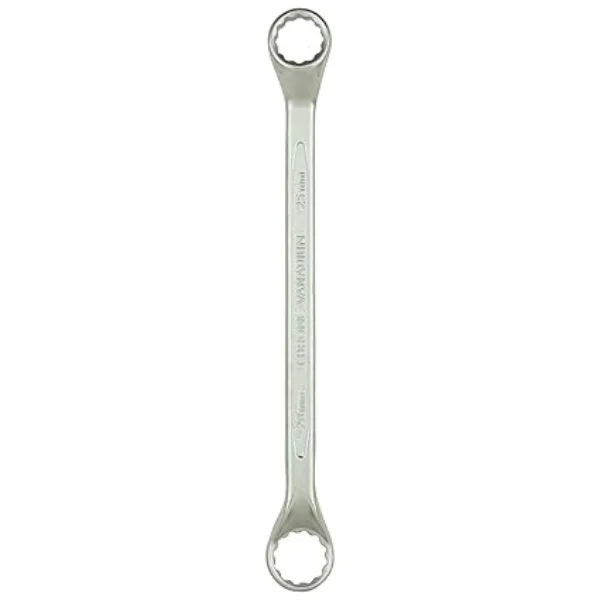
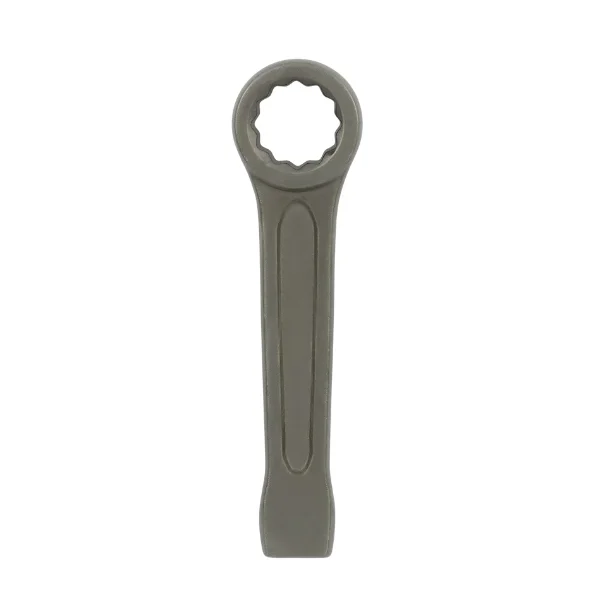
It features a reinforced ring end and extended shank engineered to withstand repeated hammer strikes during maintenance of heavy machinery, structural assemblies, and plant equipment.
Industrial Application Context
Where 115 mm Slogging Spanners Are Typically Used
Large ring-end slogging spanners are used when large hexagonal nuts must be turned using hammer-driven torque. These tools are typically deployed during industrial maintenance operations where fasteners exceed the capacity of conventional spanners or sockets.
Common Industrial Environments
Steel plants and rolling mills
Cement manufacturing plants
Thermal and hydro power stations
Oil and gas processing facilities
Mining equipment maintenance workshops
Shipbuilding and offshore fabrication yards
Maintenance Scenarios
Equipment Assembly and Installation
During installation of turbines, heavy pumps, compressors, or large structural assemblies, fasteners may require torque levels that cannot be achieved manually.
Shutdown Maintenance
During planned plant shutdowns, maintenance teams frequently remove large bolts securing:
Mill housings
Crusher assemblies
Heavy flange joints
Field Maintenance of Heavy Equipment
Mining or earthmoving equipment may require tools capable of handling extreme bolt sizes in remote locations where powered torque equipment is unavailable.
Selection Guidance
Choosing the Correct Slogging Spanner Size
Selection should always begin with accurate measurement of the nut or bolt head across flats.
Step-by-Step Selection Method
Measure the hex nut across flats using a Vernier caliper or steel rule.
Confirm that the dimension corresponds to 115 mm.
Verify that the spanner ring profile matches the fastener geometry.
Confirm that adequate clearance exists for hammer striking.
Incorrect tool sizing can result in:
Ring deformation
Fastener rounding
Unsafe tool slippage
Situations Where a 115 mm Spanner Is Required
Large sizes such as 115 mm are typically used for:
Heavy structural bolts
Mill stand assemblies
Turbine casing bolts
Large pressure vessel fasteners
These fasteners often require very high torque levels.
Capacity Example — Hammer-Driven Torque Logic
Slogging spanners work by converting hammer impact energy into rotational torque.
Example Scenario
A maintenance technician needs to loosen a large nut on a crusher housing.
Operational Setup
Fastener size: 115 mm hex
Tool: STANLEY STMT96978
Striking tool: 8–10 kg sledgehammer
Torque Generation Principle
When the hammer strikes the end of the spanner handle:
Impact force is transferred along the shank
Rotational torque is applied to the nut
Repeated strikes gradually break the static friction
This method is widely used where:
Hydraulic torque tools are unavailable
Access constraints prevent powered equipment
Failure Conditions & Misuse Risks
Slogging spanners are designed for controlled hammer-driven torque, but misuse can lead to equipment damage or safety hazards.
Common Misuse Conditions
Using the Wrong Size
If the ring is larger than the fastener:
Slippage may occur
Nut edges may round off
Using Damaged Tools
Cracked or deformed spanners must not be used because they may fail during striking.
Excessive Hammer Force
Using oversized striking tools May:
Damage the spanner shank
Cause uncontrolled rebound
Incorrect Striking Angle
The hammer must strike squarely on the striking face.
Material Compatibility
Typical Fastener Materials
|
Fastener Material |
Compatibility |
|
Carbon Steel Bolts |
Fully compatible |
|
Alloy Steel Fasteners |
Compatible |
|
Structural Bolts |
Suitable |
|
High Tensile Industrial Bolts |
Suitable |
Environmental Suitability
|
Environment |
Suitability |
|
Heavy industrial plants |
Suitable |
|
Outdoor infrastructure projects |
Suitable |
|
Mining and quarry operations |
Suitable |
|
Offshore maintenance |
Suitable |
Operational Handling Considerations
Safe Operating Practices
Correct Hammer Selection
Recommended striking tools:
Sledgehammer
Heavy engineering hammer
Hammer weight should match the required torque level and operator control.
Proper Operator Positioning
The operator should:
Stand clear of rebound path
Maintain stable footing
Ensure secure tool placement
Inspection before Use
Before each operation, verify:
Ring integrity
Absence of cracks
Proper fastener engagement
Regular inspection prevents tool failure during high-impact operations.
Commercial Supply Clarity
Lead Time
Lead time depends on stock availability and order quantity.
Typical supply scenarios include:
Stocked industrial tools for immediate dispatch
Scheduled supply for larger procurement quantities
Dispatch Capability
Industrial tool supply is typically dispatched through:
National logistics carriers
Industrial freight services
Pan-India dispatch capability allows delivery to:
Industrial plants
EPC project sites
Maintenance contractors
Minimum Order Quantity
For most procurement situations:
Single-unit supply may be possible for maintenance requirements
Bulk orders may apply for project procurement
Customization Availability
Slogging spanners are standardized industrial tools.
Customization is generally limited, but large industrial toolkits may include multiple size sets.
Compliance Clarity
Industrial striking tools are expected to comply with:
Recognized industrial tool standards
Controlled heat-treatment processes
Alloy steel quality requirements
Tender Compatibility
Industrial buyers may procure these tools under:
EPC project tenders
Plant maintenance procurement
Contractor tool supply contracts
Model identification such as STMT96978 ensures clear specification matching.
Procurement Process
Information Required for Enquiry
Industrial buyers should provide:
Product model number (STMT96978)
Required quantity
Delivery location
Required dispatch timeline
Providing these details ensures accurate quotation preparation.
Typical Procurement Steps
Product specification confirmation
Quantity verification
Commercial quotation issuance
Order confirmation
Dispatch and logistics coordination
Comparison with Common Alternatives
|
Tool Type |
Use Case |
Limitations |
|
Ring-End Slogging Spanner |
Heavy hammer-driven torque |
Requires striking clearance |
|
Adjustable Spanner |
Light maintenance |
Not suitable for large fasteners |
|
Socket & Impact Wrench |
Controlled torque |
Requires powered equipment |
|
Hydraulic Torque Tool |
Precision tightening |
Higher equipment cost |
Slogging spanners remain essential when large fasteners must be turned in field conditions without powered torque tools.
Industrial Selection Checklist
Before ordering a 115 mm slogging spanner, verify:
Fastener size is exactly 115 mm across flats
adequate space exists for hammer striking
required torque exceeds manual spanner capacity
Fastener removal or tightening requires impact torque
Operator access allows safe striking operation
This checklist helps ensure the correct tool is selected for the job.
Decision-Stage FAQs
Is the STMT96978 suitable for loosening seized industrial bolts?
Yes. Slogging spanners are specifically designed for hammer-driven torque, which helps break static friction in seized or heavily tightened fasteners.
Can this tool replace hydraulic torque equipment?
No. Hydraulic torque tools are used where precise torque values are required. Slogging spanners are primarily used for maintenance work where controlled torque measurement is not essential.
What hammer weight is typically used with this spanner?
Industrial operators typically use heavy engineering hammers or sledgehammers. Hammer weight should allow controlled striking while generating sufficient torque.
How is tool failure prevented during striking operations?
Failure risks are minimized by:
Using correct tool size
Avoiding damaged tools
Striking squarely on the striking face
Maintaining proper operator positioning
Is this tool used during plant shutdown maintenance?
Yes. Slogging spanners are commonly used during industrial shutdown maintenance for removing large bolts from equipment such as mills, turbines, crushers, and structural assemblies.
Can the spanner be used for tightening as well as loosening?
Yes. The tool can be used in both directions depending on the orientation of the striking force.
Technical SpecificationsProduct Identification
Core Product Data
|
Parameter |
Specification |
|
Product Name |
STANLEY Ring-End Slogging Spanner |
|
Model Number |
STMT96978 |
|
Spanner Size |
115 mm |
|
Tool Type |
Ring-End Striking Wrench |
|
Brand |
STANLEY |
|
Application Type |
Heavy industrial fastening |
|
Drive Method |
Hammer striking |
Dimensional & Mechanical Characteristics
|
Parameter |
Description |
|
Ring Profile |
Reinforced hexagonal ring |
|
Handle Design |
Extended striking shank |
|
Load Type |
Hammer impact torque |
|
Intended Fastener Type |
Large hexagonal nuts |
|
Typical Fastener Range |
Large industrial assemblies |
Material Characteristics
|
Property |
Description |
|
Material Type |
Alloy steel construction |
|
Heat Treatment |
Controlled hardness for impact resistance |
|
Surface Finish |
Industrial-grade protective finish |
|
Impact Resistance |
Designed for repeated hammer strikes |







Customer reviews