



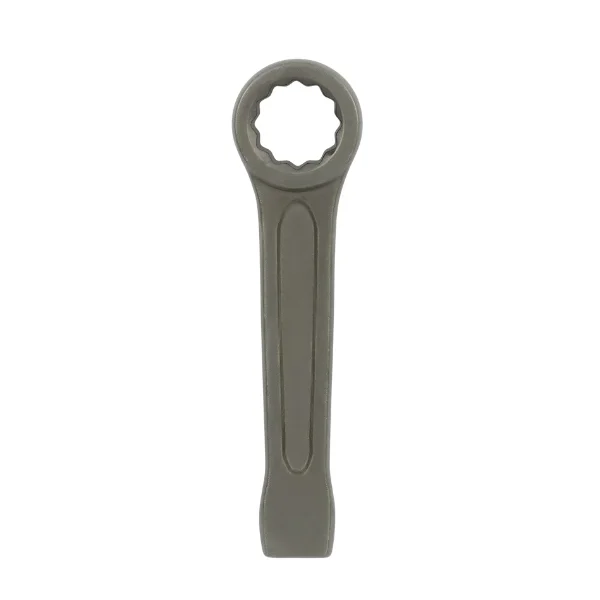
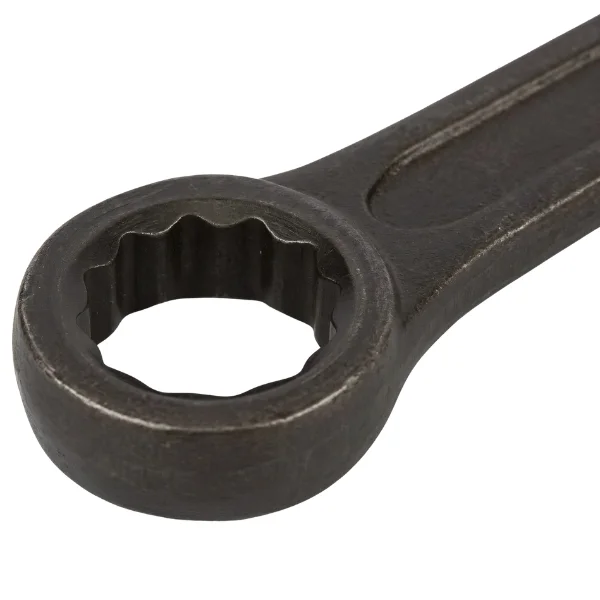
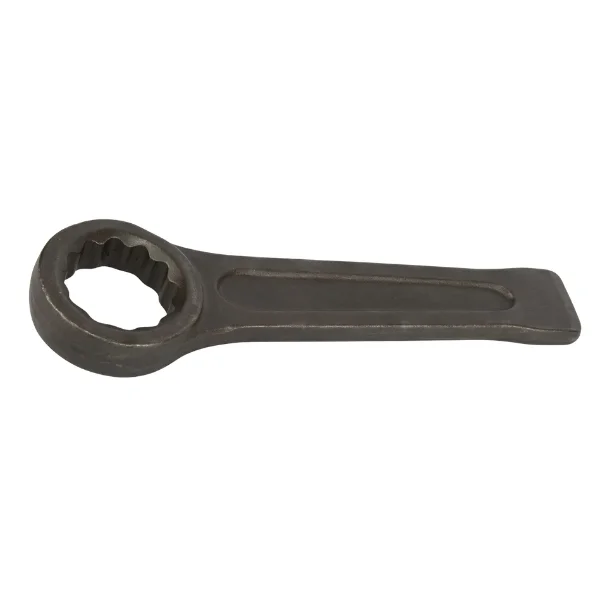
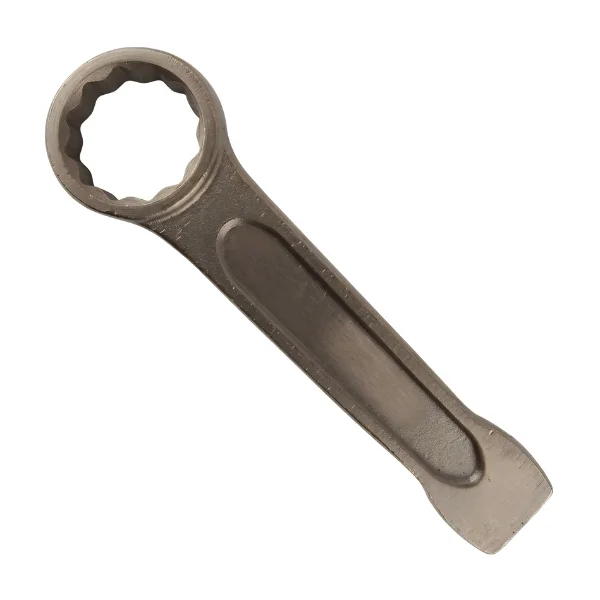


This tool is commonly used in heavy industrial maintenance where conventional wrenches cannot generate sufficient torque.
Application Context & Use Cases
Industrial slogging spanners are used where large diameter fasteners must be tightened or removed during heavy equipment maintenance. The 80 mm size is typically required for structural bolts, large mechanical assemblies, and industrial machinery installations.
Typical Industrial Environments
Steel manufacturing plants
Cement production facilities
Mining equipment maintenance sites
Power plant turbine maintenance
Oil & gas refinery shutdown maintenance
Heavy engineering workshops
Typical Maintenance Tasks
Large Structural Bolt Removal
Used when large nuts must be loosened after extended service exposure.
Equipment Assembly
Common during installation of heavy machinery.
Industrial Shutdown Maintenance
Maintenance teams frequently use slogging spanners during planned plant shutdowns when large mechanical components are disassembled.
Corrosion-Affected Fasteners
Hammer-driven torque helps loosen bolts affected by rust, thermal expansion, or heavy mechanical load.
Selection Guidance
Choosing the correct slogging spanner requires evaluating fastener size, torque demand, and maintenance environment.
Key Selection Criteria
Fastener Size
The spanner size must match the nut or bolt head dimension exactly. An 80 mm slogging spanner is designed for fasteners with an 80 mm across-flats dimension.
Impact Torque Requirement
Hammer-driven torque must be sufficient to overcome:
Thread friction
Corrosion resistance
Preload tension
Work Environment
Maintenance environments influence tool selection:
Outdoor industrial plants
Confined maintenance areas
Elevated equipment platforms
Operator Safety
Closed ring slogging spanners are generally chosen when secure fastener grip is required during impact loading.
Capacity & Calculation Example
Industrial torque requirements vary depending on fastener diameter and preload conditions.
Example Maintenance Scenario
A maintenance team must loosen a large structural bolt assembly during plant shutdown.
Conditions
Bolt diameter: heavy structural fastener
Nut size: 80 mm
Environment: high temperature industrial equipment
Bolt exposure: corrosion and thermal expansion
Tool Selection Logic
Fastener measurement confirms 80 mm across flats.
Maintenance torque requirement exceeds standard hand wrench capacity.
Hammer-driven torque is required.
Result:
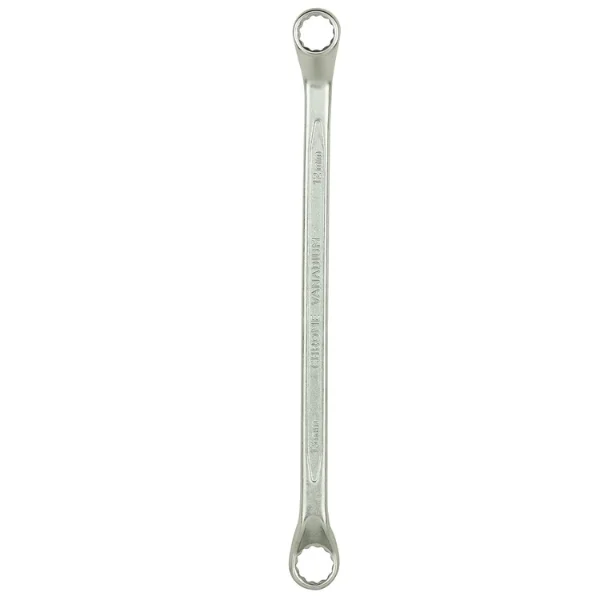
An 80 mm ring-end slogging spanner provides controlled impact torque while maintaining secure fastener engagement.
Failure Conditions & Misuse Risks
Slogging spanners are designed for impact use, but incorrect usage can cause tool damage or operator risk.
Common Misuse Conditions
Incorrect Size Selection
Using a slightly oversized spanner may cause:
Fastener rounding
Tool slippage
Impact instability
Excessive Impact Force
Repeated high-energy hammer strikes can damage the tool if used outside intended capacity.
Improper Fastener Engagement
Partial engagement increases the risk of:
Ring deformation
Bolt head damage
Non-Industrial Use
These tools are not intended for:
Precision mechanical assembly
Delicate fastener applications
Material & Compatibility Table
|
Tool Feature |
Industrial Requirement |
Compatibility |
|
Ring Head |
Secure fastener grip |
Heavy bolts |
|
Striking End |
Hammer impact surface |
Industrial torque |
|
Straight Handle |
Operator control |
Maintenance environments |
|
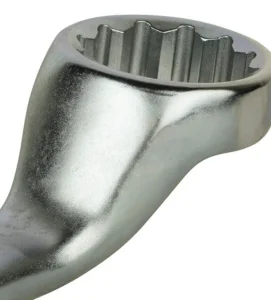
Closed Ring Design |
Prevent slippage |
High-torque operations |
Operational Handling & Installation Considerations
Proper handling improves both tool life and operator safety.
Recommended Handling Practices
Secure Fastener Seating
Ensure the ring head sits fully on the nut before striking.
Controlled Hammer Strikes
Use a suitable hammer with controlled impact force.
Stable Operator Position
Operators should maintain stable footing during hammer impact to avoid accidental slips.
Inspect Fastener Condition
Damaged or deformed nuts may require replacement before removal attempts.
Commercial Clarity
Lead Time
Lead time depends on current stock availability and dispatch scheduling.
Dispatch Capability
Industrial tools can be dispatched to locations across India depending on order confirmation and logistics availability.
Minimum Order Quantity
MOQ depends on procurement requirements. Single-unit supply may be possible for maintenance orders.
Customization Availability
Standard branded tools are supplied as per manufacturer specifications. Custom tool fabrication is generally not applicable.
Compliance & Certification
Products are supplied as genuine branded industrial tools with manufacturer identification.
Tender Compatibility
Supply documentation such as:
GST invoicing
Product identification
Commercial quotation
Can be provided when required for procurement processes.
Procurement Process
Industrial buyers usually follow an RFQ-based procurement approach.
Information Typically Required
Product model or size
Quantity required
Delivery location
Company name and GST details
Contact information
Typical Procurement Steps
Submit product enquiry
Supplier confirms availability
Commercial quotation issued
Purchase order placement
Dispatch coordination
Comparison Table – Common Alternatives
|
Tool Type |
Torque Capability |
Fastener Grip |
Industrial Use |
|
Ring-End Slogging Spanner |
High |
Secure closed grip |
Heavy maintenance |
|
Open-End Slogging Spanner |
High |
Moderate grip |
Limited access areas |
|
Standard Combination Spanner |
Low |
Moderate |
Light mechanical work |
|
Socket Wrench |
Medium |
Secure |
Controlled torque operations |
Selection Checklist
Use this checklist before purchasing an 80 mm slogging spanner.
Fastener size confirmed at 80 mm across flats
High torque required for bolt removal or tightening
Hammer-driven torque operation acceptable
Work environment suitable for impact tools
Operator trained in industrial maintenance tools
No precision torque requirement for the application
If all conditions are met, an 80 mm ring-end slogging spanner is appropriate.
High-Intent FAQs
What is the primary use of an 80 mm slogging spanner?
It is used for loosening or tightening large industrial fasteners using hammer-driven torque during heavy equipment maintenance.
When is a ring-end slogging spanner preferred over an open-end version?
Ring-end designs are preferred when maximum grip on the fastener is required to prevent slippage during impact operations.
Can this tool replace a torque wrench?
No. Slogging spanners generate impact torque and are not suitable for precise torque measurement.
Is this tool used during plant shutdown maintenance?
Yes. Maintenance teams frequently use slogging spanners during industrial shutdowns to remove large bolts from heavy machinery.
What industries commonly use 80 mm slogging spanners?
Industries include steel manufacturing, cement plants, mining operations, oil & gas refineries, and power generation facilities.
Can the tool be used for rusted or seized bolts?
Yes. Hammer-driven torque is often used to loosen fasteners affected by corrosion or thermal expansion.
Is exact size matching important?
Yes. The spanner must match the nut dimension exactly to avoid fastener damage and tool slippage.
Technical Specifications
Core Product Data
|
Parameter |
Specification |
|
Brand |
STANLEY |
|
Model |
STMT96971 |
|
Tool Type |
Ring-End Slogging Spanner |
|
Size |
80 mm |
|
Operation Type |
Hammer-driven torque |
|
Application |
Heavy industrial maintenance |
|
Tool Category |
Impact hand tool |
Physical Characteristics
|
Feature |
Details |
|
Spanner Head Type |
Closed ring |
|
Impact Area |
Reinforced striking end |
|
Torque Generation Method |
Hammer strike |
|
Grip Type |
Straight handle design |
|
Industrial Use |
High-torque fastener operation |
Typical Industrial Compatibility
|
Fastener Type |
Compatibility |
|
Hex nuts |
Yes |
|
Heavy structural bolts |
Yes |
|
High-tension bolts |
Yes |
|
Flange bolts |
Yes |
|
Precision fasteners |
Not recommended |






Customer reviews