



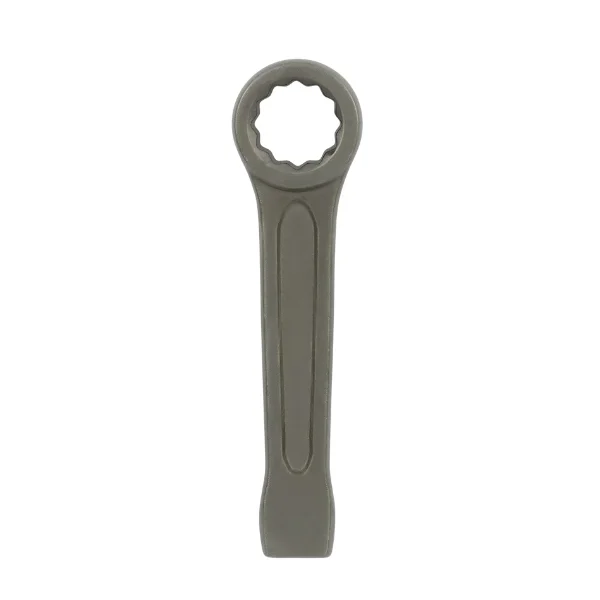
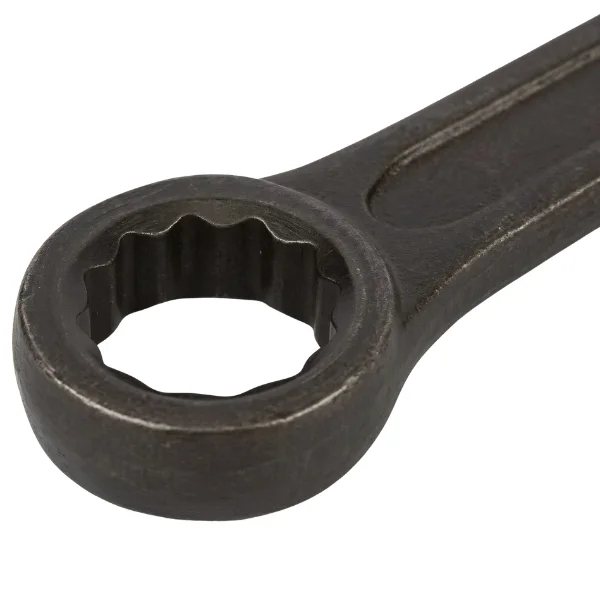
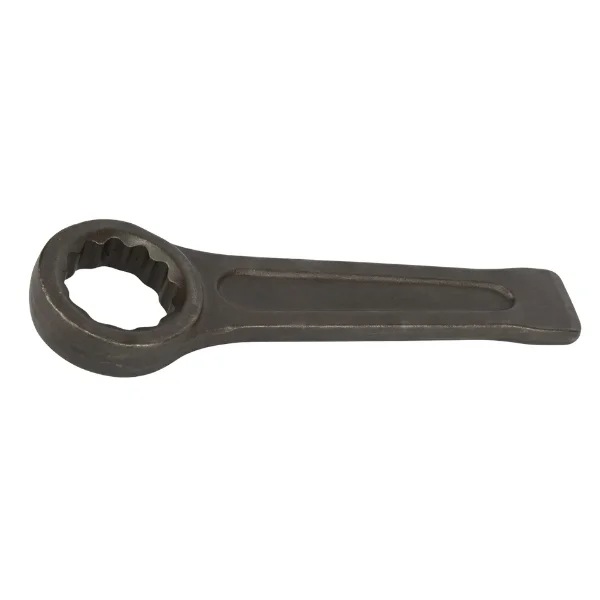
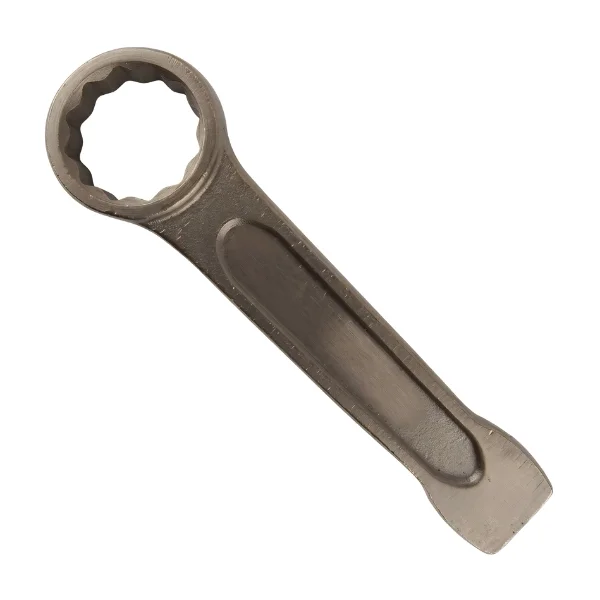


This tool is typically used in steel plants, refineries, heavy machinery assembly, power generation facilities, and infrastructure maintenance operations where conventional spanners cannot generate sufficient torque.
Application Context & Use Cases
Large-diameter bolts used in industrial structures require tools capable of transmitting high mechanical torque without deformation or slippage. Slogging spanners address this requirement through a ring-end grip combined with a striking surface for hammer-driven torque application.
Heavy Industrial Maintenance
Typical maintenance environments include:
Oil and gas refinery turnaround shutdowns
Steel plant rolling mill maintenance
Cement plant kiln assembly work
Thermal and hydroelectric power station turbine housing bolts
Large flange bolts, anchor bolts, and structural fasteners often exceed torque capacity achievable by hand tools.
Heavy Equipment Assembly
Industrial equipment assembly requires torque on large bolts during:
Mining equipment installation
Wind turbine tower assembly
Shipyard propulsion systems
Bridge structural bolting
The 65 mm ring size corresponds to heavy structural bolts where torque must be applied gradually through repeated impact.
Mechanical Contractors and Shutdown Crews
Maintenance contractors performing shutdown jobs rely on slogging spanners when:
Hydraulic torque tools are unavailable
Impact tools cannot access confined spaces
Manual torque application is required in remote environments
Selection Guidance – Choosing the Correct Slogging Spanner
Selecting the correct slogging spanner requires matching the tool precisely to the bolt head dimension and torque requirement.
Verify Bolt Size
The ring dimension must match the exact bolt head width across flats.
Example:
Bolt Size |
Typical Spanner Size |
|
M42 bolt |
65 mm spanner |
Using a smaller or larger tool can result in:
bolt rounding
tool slippage
excessive wear
Evaluate Access Space
Slogging spanners are effective when:
Bolt access allows hammer swing
Hydraulic torque tools cannot be used
Restricted environments may require offset striking tools instead.
Consider Impact Frequency
If bolts must be opened frequently, consider whether:
Hydraulic torque tools
Pneumatic impact tools
May provide better operational efficiency.
Slogging spanners are most suitable for periodic heavy maintenance tasks.
Capacity & Torque Calculation Example
Understanding torque generation helps determine when slogging spanners are appropriate.
Torque generated through hammer impact depends on:
Hammer weight
Striking velocity
Handle length
Example Scenario
Bolt specification:
Bolt: M42 structural bolt
Typical tightening torque: ~2600 Nm
Using a slogging spanner:
Handle length: approx. 600 mm
Torque generated from a hammer strike may reach several hundred Nm per impact.
Multiple controlled strikes gradually achieve required bolt movement.
Practical Torque Logic
Operators typically follow this sequence:
Initial hammer strikes loosen static friction
Progressive strikes rotate bolt incrementally
Once loosened, the spanner rotates manually
This method allows safe torque transfer without continuous manual force.
Failure Conditions & Misuse Risks
Although robust, slogging spanners can fail if used incorrectly.
Using Incorrect Hammer Type
Using hardened steel hammers can damage the striking surface.
Recommended:
Soft-faced hammer
Heavy-duty engineer hammer
Mismatched Bolt Size
Using a 65 mm spanner on a worn or undersized bolt head may cause:
Slippage
Ring deformation
Excessive Lateral Force
Slogging spanners are designed for axial hammer strikes, not side leverage.
Applying side force with pipes or extensions increases fracture risk.
Material Fatigue from Improper Striking
Repeated misaligned hammer blows may cause:
Handle distortion
Striking face damage
Proper hammer alignment is essential.
Alternative Tools May Be Better When
Situation |
Recommended Tool |
|
Precision torque required |
Torque wrench |
|
Repetitive bolt tightening |
Hydraulic torque wrench |
|
High-speed assembly |
Impact wrench |
Slogging spanners remain best suited for manual heavy-duty maintenance operations.
Material & Compatibility Table
|
Parameter |
Compatibility |
|
Bolt type |
Hex bolts |
|
Nut type |
Standard industrial hex nuts |
|
Application |
Structural and heavy machinery bolts |
|
Operating environment |
Industrial maintenance environments |
|
Compatible hammer types |
Engineer hammer, soft-faced hammer |
Operational Handling & Installation Considerations
Correct handling improves both safety and tool lifespan.
Operator Positioning
The operator should stand clear of the hammer swing arc and maintain stable footing.
Strike Alignment
Hammer strikes should be directed:
Squarely on the striking surface
Aligned with handle axis
This prevents bending stress on the tool.
Controlled Impact Application
Avoid uncontrolled repeated strikes.
Recommended approach:
Apply controlled hammer strike
Verify bolt movement
Repeat if required
This prevents overloading the tool.
Commercial Clarity
Industrial procurement teams often require operational details before requesting quotations.
Lead Time
Lead time depends on stock availability and order volume. Standard industrial tools are typically dispatched within standard supply timelines.
Dispatch Capability
Supply is available for Pan-India industrial locations including manufacturing plants, infrastructure sites, and maintenance contractors.
Minimum Order Quantity
For most industrial hand tools:
Single-unit supply may be possible
Bulk supply available for maintenance contracts
Customization
Stanley tools are standardized products.
Customization is generally not applicable.
Compliance & Certification
Stanley hand tools are manufactured to meet recognized industrial tool standards and quality benchmarks.
Documentation may include:
Product identification details
Brand authenticity verification
Tender Compatibility
For industrial tenders requiring branded tools, the product may be referenced using:
Brand: Stanley
Model: STMT96968
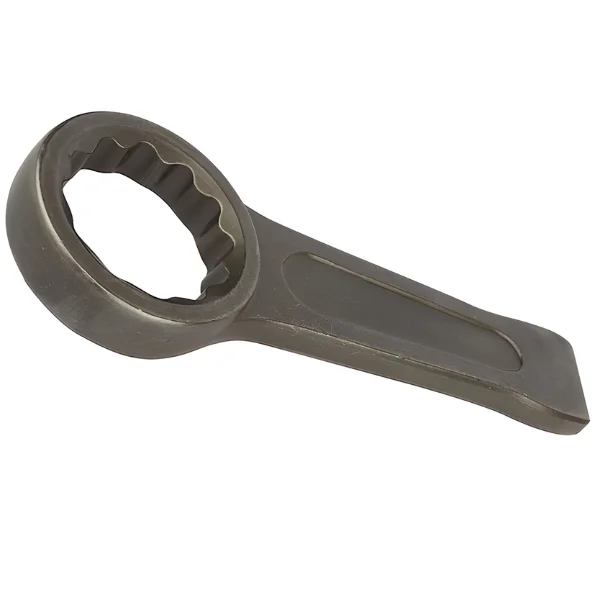
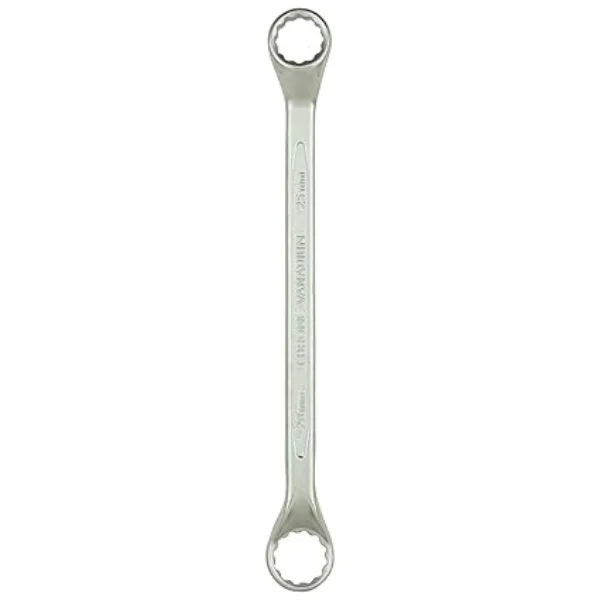
Tool Type: Ring-End Slogging Spanner
Procurement Process
Industrial buyers typically provide the following information during enquiry:
Required Information
Information |
Purpose |
|
Tool model |
Product identification |
|
Quantity |
Order preparation |
|
Delivery location |
Freight calculation |
|
Required delivery timeline |
Dispatch planning |
Typical Procurement Steps
Buyer confirms tool specification
RFQ submitted to supplier
Supplier confirms availability
Quotation issued
Order confirmation and dispatch
Comparison – Common Alternatives
|
Tool Type |
Advantage |
Limitation |
|
Ring-End Slogging Spanner |
High torque with hammer impact |
Requires swing space |
|
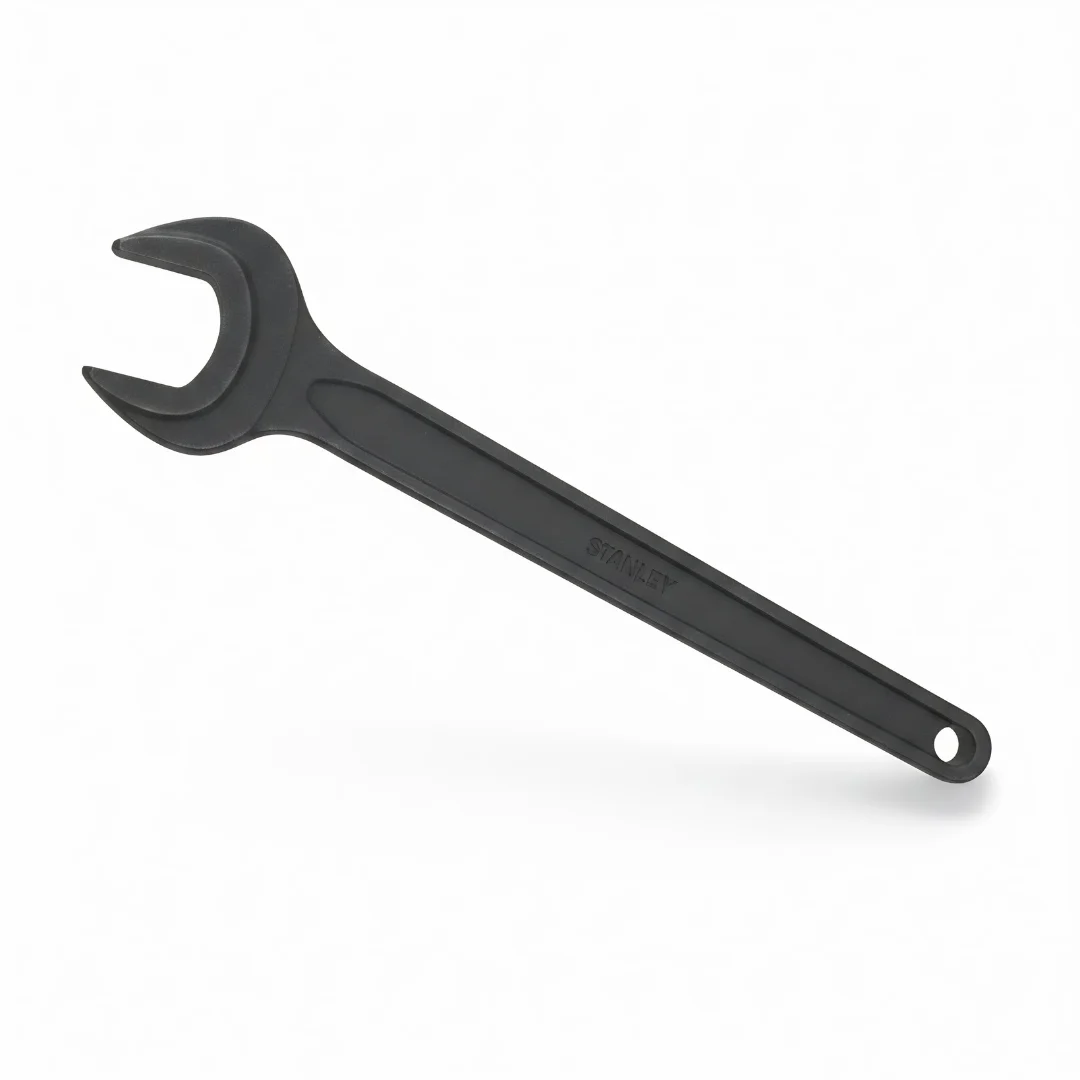
Open-End Slogging Spanner |
Easier bolt access |
Lower grip security |
|
Hydraulic Torque Wrench |
Precise torque control |
Expensive equipment |
|
Impact Wrench |
High speed |
Requires power source |
Slogging spanners remain practical where portable manual torque application is required.
Selection Checklist
Before purchasing a 65 mm slogging spanner, verify the following:
Bolt head dimension matches 65 mm
Bolt torque requirements justify hammer-driven tools
Adequate hammer swing space is available
Tool access around bolt head is unobstructed
Application environment allows manual torque operation
Operator safety procedures are in place
If all conditions are satisfied, a ring-end slogging spanner is typically appropriate.
High-Intent FAQs
What bolt size requires a 65 mm slogging spanner?
A 65 mm slogging spanner is typically used with large structural bolts where the bolt head dimension across flats measures approximately 65 mm.
Is a ring-end slogging spanner better than an open-end type?
Ring-end slogging spanners provide better load distribution and reduce the risk of bolt rounding compared to open-end striking spanners.
Can a slogging spanner replace a torque wrench?
No. Slogging spanners apply torque through impact and cannot provide calibrated torque values required for precision tightening.
What industries commonly use slogging spanners?
Common industries include steel manufacturing, oil and gas refineries, heavy equipment assembly, mining operations, and infrastructure construction.
Can this tool be used with pneumatic hammers?
No. Slogging spanners are designed for manual hammer strikes. Pneumatic hammer use may damage the tool.
How do operators prevent bolt rounding?
Ensure the ring size matches the bolt head exactly and apply hammer strikes in alignment with the tool axis.
Is the tool suitable for confined spaces?
No. Slogging spanners require sufficient clearance for hammer swing.
Technical Specifications
Product Identification
|
Parameter |
Specification |
|
Brand |
Stanley |
|
Model |
STMT96968 |
|
Tool Type |
Ring-End Slogging Spanner |
|
Nominal Size |
65 mm |
|
Application |
High-torque bolt tightening or loosening |
|
Operating Method |
Hammer striking |
Dimensional Characteristics
|
Specification |
Value |
|
Nominal Ring Size |
65 mm |
|
Profile Type |
Closed Ring |
|
Handle Type |
Extended striking handle |
|
Usage |
Industrial bolt applications |
|
Torque Method |
Hammer-driven impact |
Structural Design Characteristics
|
Feature |
Functional Benefit |
|
Ring-end profile |
Even load distribution across bolt faces |
|
Thick handle section |
Resistance to deformation during impact |
|
Reinforced striking end |
Allows repeated hammer impact |
|
Industrial steel construction |
Durability under high torque |







Customer reviews