



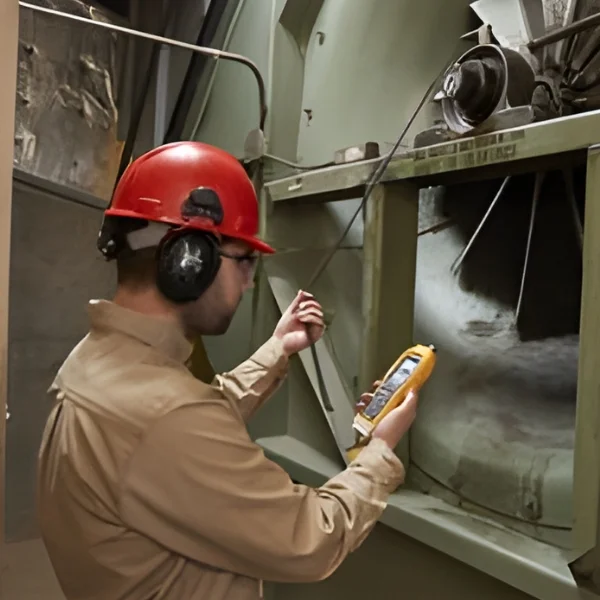
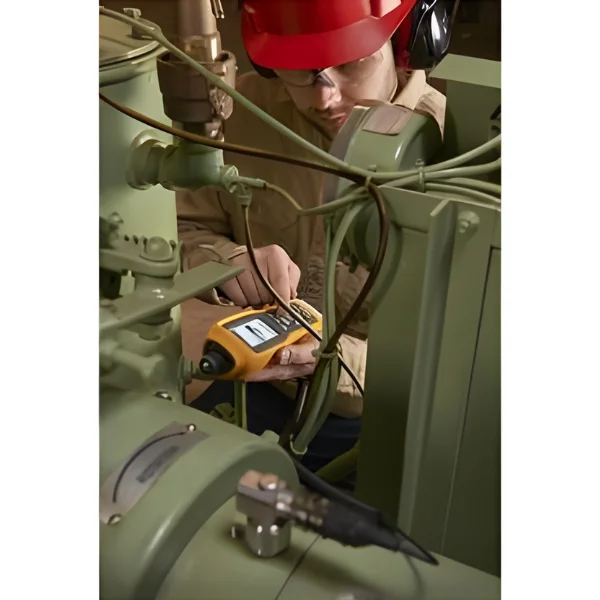
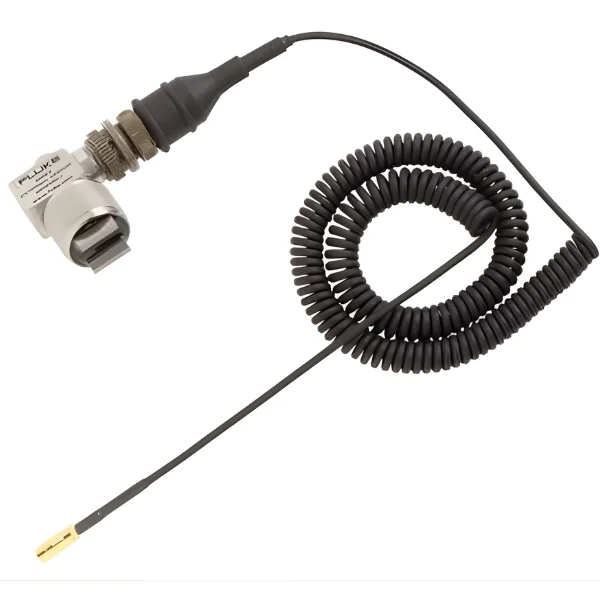


The Fluke 805ES External Vibration Sensor is an accessory sensor designed to extend vibration measurement capability beyond handheld devices. It enables consistent and repeatable vibration data collection from hard-to-reach or hazardous machine locations, improving diagnostic accuracy in industrial maintenance and condition monitoring programs.
What is Fluke 805ES External Vibration Sensor
In practical plant environments, vibration measurement often requires access to points that are not ergonomically suitable for handheld tools. The Fluke 805ES External Vibration Sensor addresses this by allowing measurement at a distance while maintaining signal integrity. It is typically used alongside compatible vibration meters or analyzers to collect data from mounted points, rotating equipment housings, or enclosed systems.
This approach reduces operator exposure to moving components and allows more consistent readings, especially in predictive maintenance workflows where trend reliability is critical.
Applications of Fluke 805ES External Vibration Sensor
• Monitoring motors in restricted enclosures
Used where direct handheld access is limited, such as enclosed drive systems or compact motor assemblies. The external sensor allows measurement without dismantling guards.
• Pump vibration diagnostics in process lines
In chemical or water treatment plants, pumps are often installed in tight layouts. The sensor helps capture readings without interrupting operation.
• HVAC system condition monitoring
Mounted equipment in ducting systems or rooftop installations benefits from remote measurement, especially where access is intermittent.
• Gearbox health assessment
Used in gear-driven systems where measurement points are near rotating shafts or hot surfaces.
• Conveyor system maintenance
Allows safe measurement near rollers and drive motors without requiring shutdown or close proximity.
• Utility equipment monitoring
Applied in compressors, blowers, and auxiliary systems where vibration trends indicate wear or imbalance.
Industries Using Fluke 805ES External Vibration Sensor
The Fluke 805ES External Vibration Sensor is widely used across sectors where rotating machinery reliability directly impacts production:
• Manufacturing plants (automotive, metal processing, fabrication)
• Power generation and distribution facilities
• Oil & gas and petrochemical processing units
• Cement and heavy material handling industries
• Water and wastewater treatment plants
• Facility management and large commercial infrastructure
Each of these environments benefits from safer, more consistent vibration data collection.
Operational Considerations
When integrating the Fluke 805ES External Vibration Sensor into a maintenance program, several factors influence effectiveness:
• Mounting surface quality affects signal transmission
• Cable routing should avoid electrical interference
• Measurement consistency requires fixed or repeatable placement
• Environmental exposure (dust, moisture, temperature) impacts longevity
• Compatibility with vibration analyzers must be verified
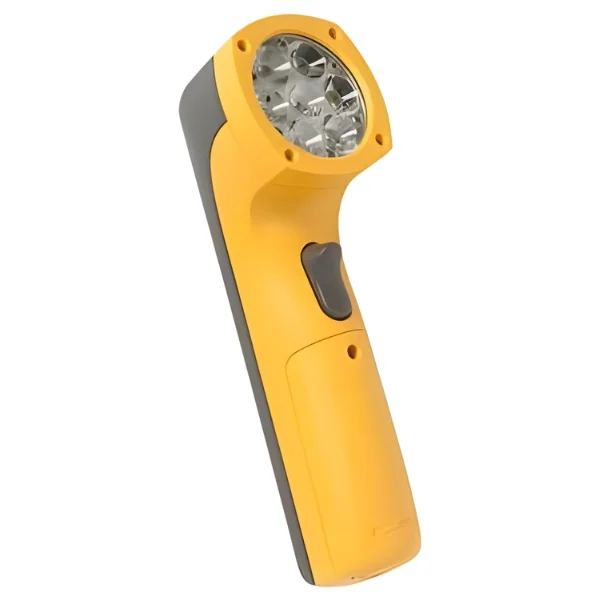
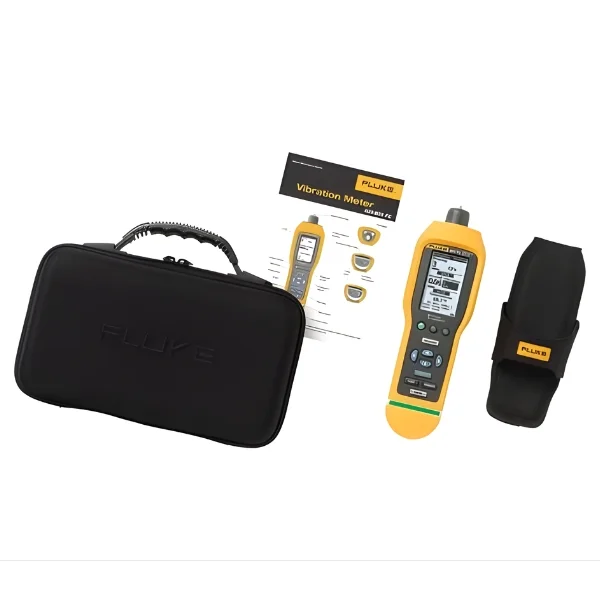
For broader condition monitoring strategies, this sensor is often used alongside vibration meters such as the Fluke 805 FC Vibration Meter.
Customization Options
Indus Megamart supplies the Fluke 805ES External Vibration Sensor as a standard product without modification. However, procurement teams can configure their overall setup through:
• Selection of compatible vibration meters
• Choice of mounting accessories or adapters
• Cable length considerations based on machine layout
• Integration into predictive maintenance systems
Product Supply & Distribution Capability
Indus Megamart operates as a supplier and distributor of industrial test and measurement instruments. The Fluke 805ES External Vibration Sensor is sourced through authorized procurement channels and supplied with necessary documentation for industrial use.
Support includes:
• Product sourcing and availability confirmation
• Technical coordination with OEM specifications
• Documentation support for procurement approval
• Logistics planning for bulk or project orders
More about the company can be found here:
https://www.indusmegamart.com/about-us
Supply Across India
Indus Megamart supports Pan India supply, covering industrial zones, project sites, and plant locations.
Supply capability includes:
• Dispatch coordination to metro and tier-2 industrial regions
• Support for urgent maintenance requirements
• Handling of bulk procurement for plant-wide deployment
• Coordination with project timelines and shutdown schedules
Export Capability
For international requirements, Indus Megamart can support export-oriented supply based on order volume and compliance requirements. Export coordination typically includes documentation, packaging standards, and shipment planning aligned with destination regulations.
How to Choose the Right Fluke 805ES External Vibration Sensor
When evaluating this sensor for procurement, consider the following:
• Compatibility with existing vibration measurement tools
• Accessibility of measurement points in your facility
• Need for repeatable measurement locations
• Environmental conditions where the sensor will be used
• Cable length and routing constraints
• Maintenance strategy (predictive vs reactive)
For deeper evaluation, buyers often refer to internal guides on vibration monitoring strategies and sensor placement best practices.
Comparison Table
The Fluke 805ES External Vibration Sensor is typically evaluated alongside standard handheld measurement methods.
Criteria |
External Sensor (805ES) |
Direct Handheld Measurement |
|
Accessibility |
Suitable for remote points |
Limited to reachable areas |
|
Safety |
Reduced operator exposure |
Requires proximity |
|
Repeatability |
High (fixed points possible) |
Operator-dependent |
|
Setup Complexity |
Moderate |
Low |
|
Measurement Consistency |
More stable |
Variable |
Typical Use Case Scenarios
• Scenario 1: Enclosed motor assembly
A plant engineer installs the sensor on a motor housing inside a guarded enclosure to monitor vibration without removing safety covers.
• Scenario 2: Pump skid in process plant
Maintenance teams use the sensor to capture vibration trends during operation without disrupting fluid flow.
• Scenario 3: Rooftop HVAC system
Facility teams measure vibration remotely in elevated locations where frequent access is not practical.
• Scenario 4: Gearbox in material handling system
Sensor enables periodic monitoring without stopping conveyor systems.
Procurement Process
To procure the Fluke 805ES External Vibration Sensor:
- Identify compatibility with your existing equipment
- Define application and installation requirements
- Request a quotation from Indus Megamart
- Review technical and commercial details
- Confirm delivery timelines and dispatch
For enquiries, visit:
https://www.indusmegamart.com/contact-us
Common Buyer Concerns Before Ordering
• Will the sensor work with existing vibration tools?
Compatibility should be verified with current instruments.
• Is installation complex?
Typically straightforward, but mounting method matters.
• Does it improve measurement accuracy?
It improves consistency rather than raw accuracy.
• Can it be used in harsh environments?
Industrial design supports typical plant conditions, but environment should be assessed.
• What about maintenance?
Periodic inspection of cable and mounting integrity is required.
FAQ Section
What is the main purpose of the Fluke 805ES External Vibration Sensor?
The Fluke 805ES External Vibration Sensor is used to collect vibration data from locations where direct handheld access is difficult or unsafe. It helps improve measurement consistency and supports predictive maintenance by enabling repeatable readings from fixed points.
Is the Fluke 805ES External Vibration Sensor compatible with all vibration meters?
No, compatibility depends on the specific vibration meter or analyzer being used. It is important to confirm interface and signal compatibility with your existing equipment before procurement.
How does an external vibration sensor improve maintenance practices?
By allowing measurements from fixed positions, it improves repeatability in vibration monitoring. This helps maintenance teams track trends more reliably and detect early signs of machine issues.
Where should the sensor be mounted on equipment?
The sensor should be mounted on stable, clean, and representative points such as bearing housings or motor casings. Proper placement ensures accurate vibration transmission.
Can this sensor be used in continuous monitoring systems?
It can be used in periodic or semi-permanent setups. For continuous monitoring, integration with dedicated systems should be evaluated.
Does using an external sensor reduce safety risks?
Yes, it reduces the need for operators to approach moving or hazardous equipment, especially in confined or high-temperature environments.
What factors affect vibration measurement reliability?
Mounting quality, surface condition, environmental interference, and cable integrity all influence measurement reliability.
Is calibration required for the sensor?
Calibration requirements depend on the measurement system it is connected to. Periodic validation is recommended as part of maintenance procedures.
Request a Quote for Fluke 805ES External Vibration Sensor
Indus Megamart supplies the Fluke 805ES External Vibration Sensor with procurement support, technical coordination, and reliable dispatch across India.
For pricing, availability, or technical clarification, connect with the team through the contact page.
Contact Information
For enquiries related to:
• Pricing and bulk orders
• Technical compatibility
• Application discussion
Visit: https://www.indusmegamart.com/contact-us
Exact performance parameters may vary based on system configuration and measurement setup.
Product Specifications
Since configuration depends on the compatible vibration measurement system, specifications are typically defined by integration requirements.
Parameter |
Description |
|
Sensor Type |
External vibration sensor (industrial use) |
|
Compatibility |
Designed for use with compatible vibration meters |
|
Mounting Method |
Contact or fixed mounting depending on application |
|
Cable Interface |
Shielded cable for signal stability |
|
Measurement Role |
Remote vibration sensing |
|
Build Design |
Industrial-grade for field conditions |







Customer reviews