





Application Context & Use Cases
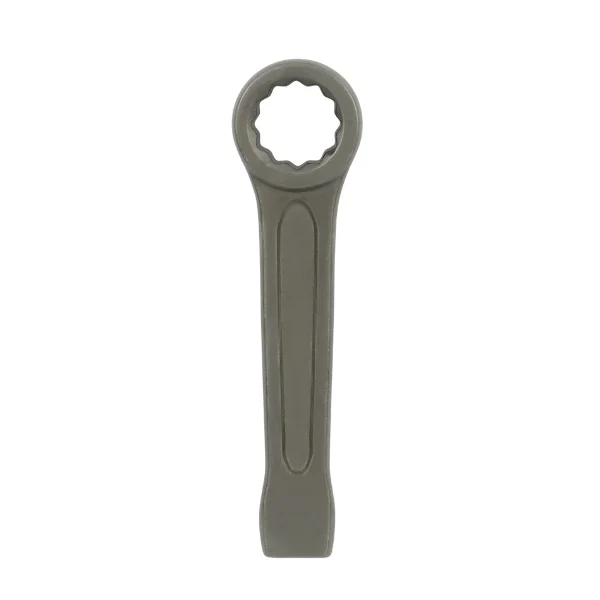
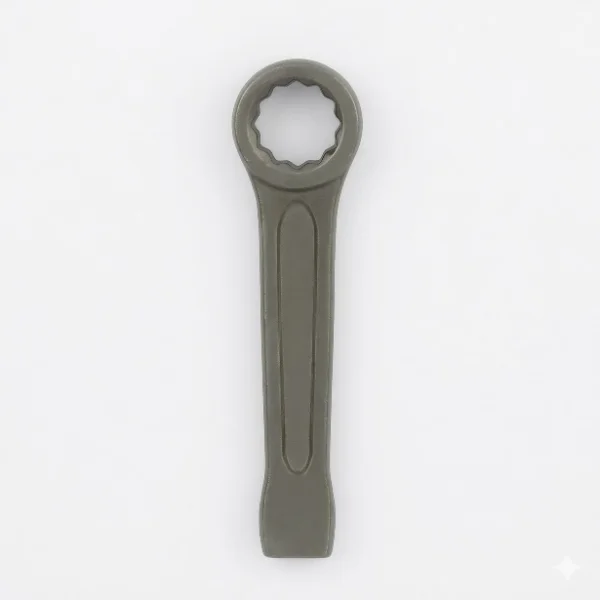
Ring-end slogging spanners are used where standard spanners cannot generate sufficient torque. Instead of relying on manual leverage alone, the tool transfers hammer impact energy into rotational force.
Typical Industrial Applications
Heavy Equipment Maintenance
Used in maintenance departments where large fasteners require impact force to break static friction.
Common sectors include:
Steel plants
Cement manufacturing
Mining equipment workshops
Heavy fabrication yards
Power Plant Maintenance
Large turbine housings, pumps, and pipe flanges often use large hex bolts exceeding 50 mm.
Maintenance teams rely on slogging spanners during:
turbine overhaul
pump casing removal
flange disassembly
Oil & Gas Refineries
Large diameter fasteners exposed to heat cycles often seize. Hammer-driven torque allows technicians to loosen these bolts without cutting or heating.
Construction & Structural Fabrication
Large anchor bolts or structural fasteners often require controlled impact tightening or loosening.
Selection Guidance (Choosing Correctly)
Selecting a slogging spanner is not only about bolt size. The tool must match fastener geometry, access conditions, and required torque levels.
Size Compatibility
A 55 mm spanner is suitable for hex fasteners with a 55 mm across-flats dimension.
Incorrect sizing causes:
fastener rounding
spanner slippage
impact damage
Access Constraints
Ring-end slogging spanners require sufficient clearance for:
hammer swing
handle rotation
safe operator stance
If clearance is limited, alternative torque tools may be required.
Fastener Condition
Slogging spanners are particularly effective when:
bolts are rusted
threads are seized
thermal cycling has tightened joints
Torque Requirement
Hammer impact provides incremental torque bursts, which are effective for overcoming static friction in large fasteners.
Capacity / Calculation Example
Understanding typical bolt torque requirements helps determine when a slogging spanner is appropriate.
Example Scenario
A maintenance technician must loosen a M36 structural bolt.
Typical torque requirement may exceed 1500–2000 Nm, depending on lubrication and installation conditions.
Manual Spanner Limitation
Using a conventional long wrench:
operator force ~300 N
handle length ~0.6 m
Maximum torque generated:
Torque = Force × Distance
Torque = 300 N × 0.6 m
Torque ≈ 180 Nm
This is insufficient to loosen the bolt.
Hammer Impact Advantage
Repeated hammer strikes create short high-energy impulses, which overcome static friction without requiring continuous operator force.
This makes slogging spanners suitable for large fasteners beyond manual torque capability.
Failure Conditions & Misuse Risks
Even heavy-duty striking spanners can fail if used incorrectly.
Undersized Tool Usage
Using a smaller spanner on a larger fastener causes:
ring deformation
tool cracking
Excessive Hammer Force
Repeated high-energy blows from large sledge hammers may:
damage striking block
fracture metal structure
Incorrect Hammer Type
Sharp-edged hammers concentrate force and may chip the striking surface.
Flat-faced striking hammers are recommended.
Worn Fasteners
Rounded bolt heads reduce ring contact area, increasing slip risk.
Material / Compatibility Table
|
Component |
Material / Feature |
Compatibility |
|
Spanner Body |
Forged alloy steel |
High impact environments |
|
Ring Head |
Hardened steel |
Large hex fasteners |
|
Striking End |
Reinforced steel block |
Hammer impact |
|
Surface Finish |
Corrosion-resistant coating |
Industrial environments |
Operational Handling & Installation Considerations
Safe operation depends on correct handling practices.
Positioning
The ring head must fully seat over the hex fastener before striking.
Partial engagement can lead to:
slippage
bolt damage
operator injury
Hammer Strike Direction
Hammer blows must be delivered squarely onto the striking block.
Angled strikes may:
bend the tool
chip the striking surface
Operator Safety
Personnel should use:
safety gloves
eye protection
controlled hammer swings
These tools generate high impact forces.
Commercial Clarity
The following procurement details help industrial buyers plan supply logistics.
Lead Time
Availability may depend on stock position or manufacturer supply cycle.
Typical procurement involves:
immediate dispatch if stocked
short sourcing period if not stocked locally
Dispatch Capability
Industrial tools can be supplied across major industrial regions in India, depending on logistics arrangements.
Minimum Order Quantity (MOQ)
Single unit procurement is generally possible for maintenance requirements.
Bulk quantities may be required for project procurement or distributor supply.
Customization Availability
This product is a standard manufacturer model, therefore customization is not normally applicable.
Compliance / Certification
Industrial tools supplied correspond to manufacturer specifications and quality standards applicable to heavy-duty hand tools.
Tender Compatibility
Industrial buyers may include the exact model number in procurement tenders. Suppliers may support tender submissions when the tool specification matches project requirements.
Procurement Process
Industrial procurement typically requires a few key details.
Information Required in Enquiry
Buyers should provide:
product model confirmation
quantity required
delivery location
procurement timeline
Typical Procurement Steps
Product identification
Quantity confirmation
Supplier quotation
Delivery arrangement
Dispatch confirmation
Providing accurate details ensures faster quotation processing.
Comparison Table (Common Alternatives)
|
Tool Type |
Suitable Application |
Limitations |
|
Ring-End Slogging Spanner |
Impact loosening of large hex bolts |
Requires hammer access |
|
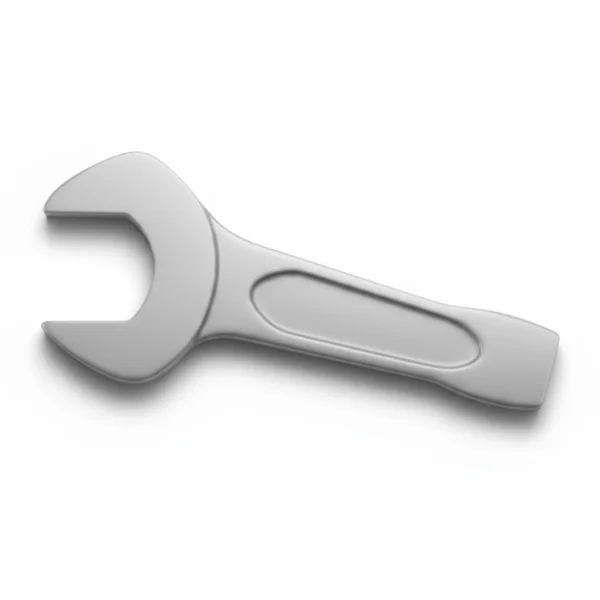
Open-End Slogging Spanner |
Fasteners with limited head clearance |
Less secure grip |
|
Hydraulic Torque Wrench |
Precision high torque tightening |
Expensive equipment |
|
Long Lever Spanner |
Moderate torque applications |
Limited maximum torque |
Selection Checklist (Decision Validation)
Before purchasing a 55 mm slogging spanner, confirm the following:
Bolt head across-flats dimension is 55 mm
Impact striking method is acceptable for the maintenance task
Adequate hammer clearance is available
Bolt condition allows ring engagement
Required torque exceeds manual wrench capability
Operator safety conditions permit hammer striking
If these conditions are satisfied, a ring-end slogging spanner is typically appropriate.
High-Intent FAQs
Is the STANLEY STMT96966 suitable for loosening rusted industrial bolts?
Yes. Slogging spanners are commonly used to loosen seized or rusted fasteners because hammer impact creates short bursts of torque that help overcome static friction.
Can this spanner be used for tightening bolts as well?
Yes, although tightening should be controlled carefully. Impact tightening may exceed recommended torque limits for some fasteners.
What hammer weight is typically used with a slogging spanner?
Industrial maintenance teams commonly use club hammers or small sledge hammers, depending on bolt size and required impact energy.
Is a ring-end slogging spanner better than an open-end type?
Ring-end designs provide full hex engagement, which distributes force evenly and reduces the risk of fastener rounding.
What happens if the spanner size does not match the bolt exactly?
Using an incorrect size increases the risk of:
bolt rounding
tool slippage
tool damage
Always match the spanner size exactly to the bolt across-flats dimension.
Can this tool replace a hydraulic torque wrench?
No. Slogging spanners are used for loosening or rough tightening, while hydraulic torque wrenches are used when precise torque control is required.
Technical Configuration Overview
Technical Specifications
Core Product Data
Parameter |
Specification |
|
Product Model |
STANLEY STMT96966 |
|
Tool Type |
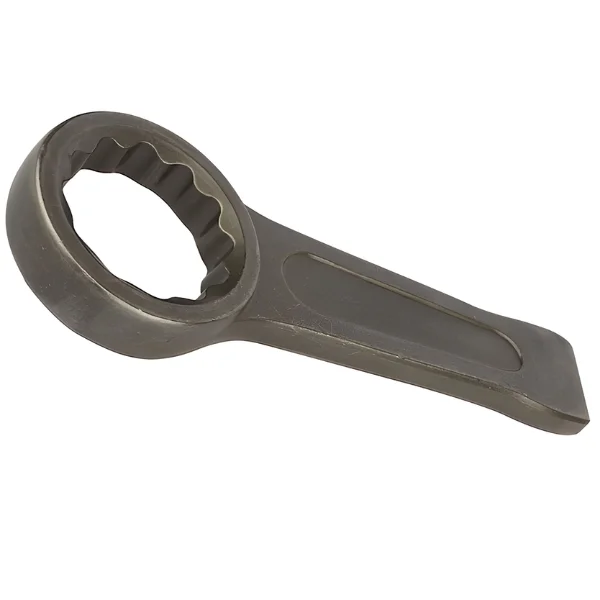
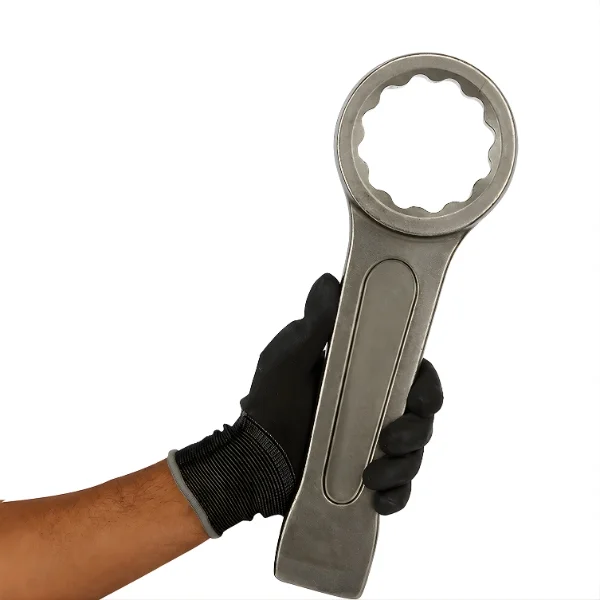
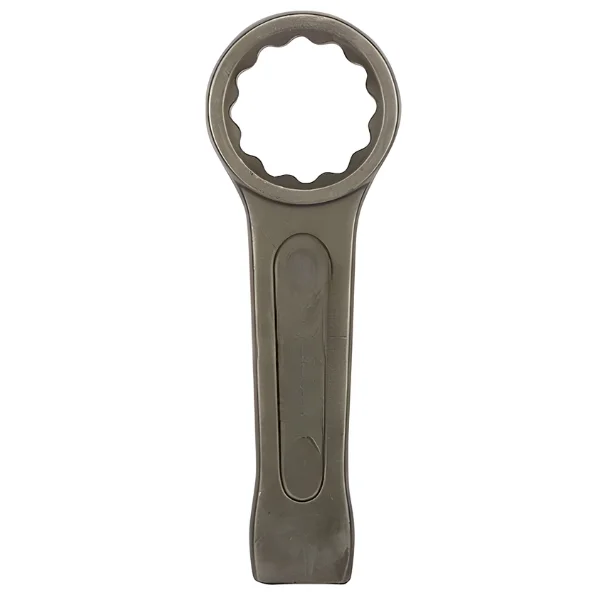
Ring-End Slogging Spanner |
|
Size |
55 mm |
|
Application |
Impact-driven tightening or loosening |
|
Construction |
Forged alloy steel |
|
Head Type |
Ring-end striking wrench |
|
Operation Method |
Hammer impact |
Dimensional Characteristics
Feature |
Purpose |
|
Ring Head |
Fully enclosed hex engagement |
|
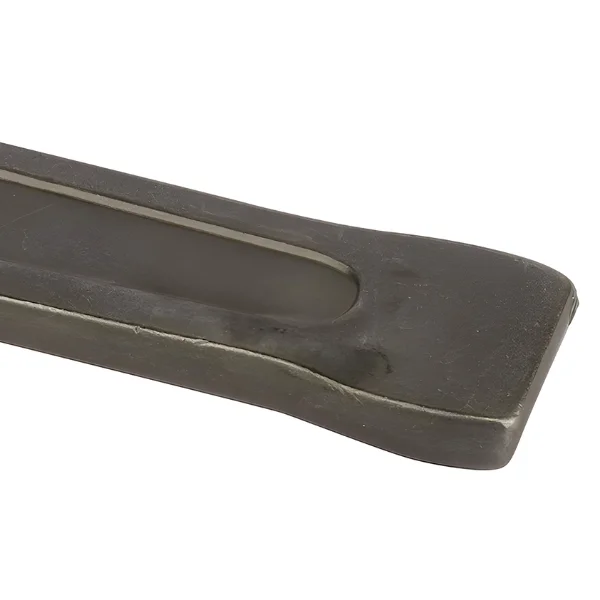
Reinforced Striking Block |
Absorbs hammer force |
|
Extended Handle |
Allows safe hammer clearance |
|
Heavy Section Body |
Prevents deformation during impact |






Customer reviews